
KAIA Ran 84% When Upbit Opened a KRW Market — the $0.0582 Retrace Decides $0.0680 or $0.0472
Upbit opened KRW, BTC and USDT markets for KAIA on 9 October and the token ran 84% in a session on 20x its usual volume. The $0.0582 retrace is the decider.
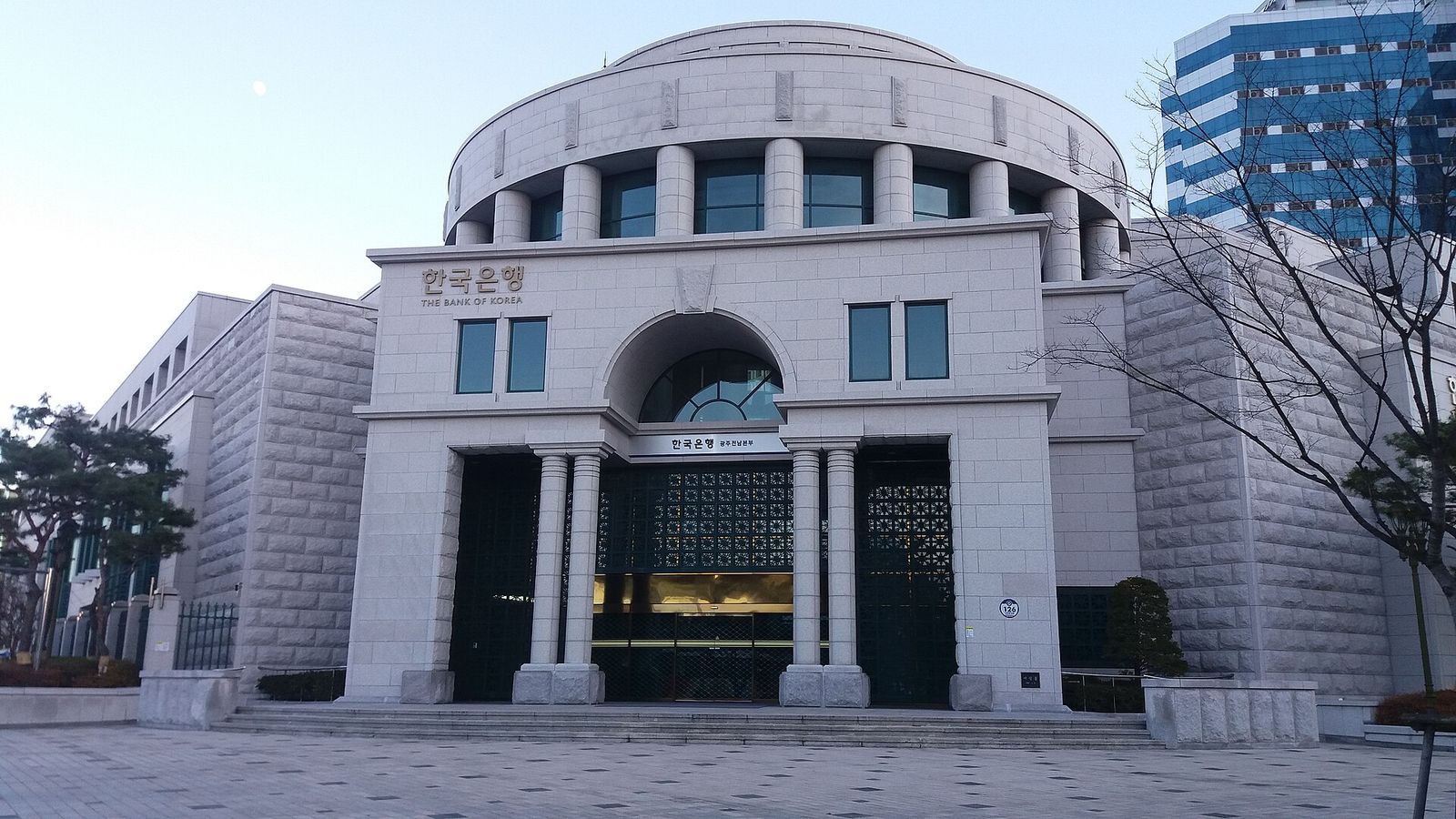
On 9 October, Upbit — the largest crypto exchange in South Korea by trading volume — added KAIA to three markets at once: KRW, BTC and USDT. The exchange's own notice also flagged a temporary initial-buy restriction on the KAIA/BTC pair, the standard guard Upbit bolts onto a new quote in the Bitcoin book.
The KRW line is the one that matters. It gives Korean retail a direct route into the token on the country's deepest won order book, and Korean venues have carried a serious share of KAIA's volume for a while now — the token was already trading on Bithumb, Coinone, Binance, Bybit, OKX, Gate, KuCoin, MEXC and Bitget. Upbit adds reach, not a debut.
Advertisement
The tape answered inside one session. On Binance, KAIA/USDT opened 9 October at $0.0370, printed $0.0680 and closed at $0.0605 — an 84% range in a single day and a 63.5% move from the previous close. Volume says the same thing: 599.8 million KAIA changed hands on Binance against an average near 26 million a day over the previous 20 sessions, and CoinGecko logged $374.6 million of 24-hour volume against a $392.6 million market cap.
What Kaia Actually Is
Kaia is not a new ticker. It is the chain that came out of the 2024 merger of Klaytn, built by Kakao — the company behind KakaoTalk — and Finschia, built by LINE. Mainnet went live in late August 2024, and the network's whole pitch is the two messengers behind it: more than 250 million users across Asia, by Kaia's own documentation. The chain is EVM-compatible, runs one-second blocks and quotes roughly 4,000 transactions per second.
Advertisement
The tokenomics are the part that matters for what happens next. Every existing KAIA is already in circulation — about 6.44 billion tokens, which is also the entire reported supply, so fully diluted value and market cap are effectively the same number. There is no insider cliff sitting on the calendar. New KAIA is issued through block rewards at about 5.2% a year, split 50% to validators and stakers, 25% to the Kaia Ecosystem Fund and 25% to the Kaia Infrastructure Fund, per the foundation's token page.
The Won Stablecoin Rails Under the Listing
The more interesting half of the story is not the exchange line — it is what Kaia is being built to settle. The chain has completed a pilot with KB Kookmin, South Korea's largest bank, covering KRW stablecoin issuance, offline merchant payments and cross-border remittances, and it names KB Financial Group, iM Bank and BNK Busan Bank among its partners on its won-infrastructure page.
Issuance comes through an alliance Kaia calls K-STAR: OpenAsset for regulated, 1:1-backed issuance and minting, AhnLab Blockchain for KYC, KYT and MPC-secured wallets, and Lambda256 for node infrastructure and on-chain analytics.
Distribution runs through LINE NEXT's Unifi wallet. More than 100 companies have adopted Unifi wallet payments, and in August NHN KCP — one of Korea's biggest payment processors — signed an agreement to bring Unify Pay into its merchant checkout for overseas shoppers, as DigitalToday reported. Japan is already live in a small way: HashPort's wallet integration in September gave more than a million Japanese users direct access to Kaia-based JPYC and USDT.
The missing piece is legal, not technical. Korea has no licensed won-pegged stablecoin yet, and the Digital Asset Basic Act is the framework the market keeps pricing in. That is the reason a Korean bank partnership and an exchange listing landed on the same chain in the same quarter — see the same pattern in Shinhan's Orca pick.
Kaia is the foundation where stablecoins become capital.
The Levels That Decide What Holds
KAIA's push ran off a 30-session low of $0.0265 and stopped at $0.0680 on 9 October. Measuring that leg gives the map: $0.0582 is the 23.6% retrace, $0.0521 the 38.2%, $0.0472 the 50% and $0.0424 the 61.8%. The token is trading around $0.059–$0.061, which means it is sitting on the first of those lines rather than above them.
Two other numbers frame the trend. The 20-day average is $0.0382 and the 50-day is $0.0334, so price sits roughly 55% and 78% above them — a gap that closes either through mean reversion or through a long sideways repair. The 14-day RSI is 82.1, and ATR is $0.0048, or 8.1% of spot, so expect the next leg to be large in both directions.
The upside path: hold $0.0582, reclaim $0.0641 — the high of the 10 October session — and the road reopens to $0.0680. A daily close above that clears the 1.618 extension of the month-long $0.0265–$0.0415 base, which lands at $0.0658 and was already overshot on 9 October, then the 2.0 extension at $0.0715 and the 2.618 at $0.0808.
The downside path: lose $0.0582 and the first shelf is $0.0521, then $0.0472 — the exact midpoint of the listing candle. Below that, $0.0415 is the line that carries weight, because it is the top of the six-session coil the market held from 3 to 8 October. A daily close under $0.0415 means the entire listing day has been given back.
Perspective helps here. KAIA's all-time high is $0.4067 from 2 December 2024, so even after this move the token is still about 85% below that peak, and roughly 180% above its low. This is a recovery leg inside a long base, not a new-high breakout.
What Would Prove the Pop Was Borrowed Time
Exchange listings front-load. The honest test is whether the KRW pair keeps printing real size next week, once the initial-buy restriction lifts and the novelty buyers are done — and whether $0.0582 holds on a daily closing basis while that happens.
The second test is fundamental. Every narrative on that list — the KB Kookmin pilot, K-STAR issuance, Unify Pay inside a national payment processor's checkout — is an Asia-scale distribution story waiting on one thing Korea does not have yet: a licensed won stablecoin. Progress there is the difference between a listing pop and a re-rating. CoinGecko is tracking the live numbers here.
Until then the chart is the referee, and it is the same arithmetic that decided the HYPE listing pop in September: the first retrace of the candle is the line that tells you whether the market is buying the story or just the print.
The Short Version
KAIA is up 63% on the day, 66% on the week and 105% on the month. The won market is open, the unlock overhang does not exist, and $0.0582 is the first decision the market has to make. Above it: $0.0641, then $0.0680. Below it: $0.0521, then the candle midpoint at $0.0472. The line that says the move is finished is $0.0415.
Written by
EarnCrypto.dev Editorial
The EarnCrypto.dev editorial team researches and reviews AI mining platforms, pools and earning tools — publishing only what passes our own checks.
Related reading
13 of the OCC's 21 New Trust Banks Are Crypto Firms — ICBA Just Sued and Rain Filed for One Too
Rain filed for a New York national trust bank on Oct 5, three days after ICBA sued to void the OCC charter rule behind 13 of the 21 crypto-heavy approvals.

Thailand Opens the SET to Bitcoin and Ether ETFs on October 16 — and 20% of Its Population Already Holds Crypto
Thailand's SEC finalized rules for Bitcoin and Ether ETFs listed on the SET from Oct. 16: 80% single-asset exposure, no margin loans, SEC-regulated custody.
Starknet Ran 99% in a Week to a 10-Month High — the $0.0836 Retrace Decides $0.1313 or $0.0701
Starknet ran 99% in a week to its highest print since December — and 127 million STRK unlock on October 15. The $0.0836 retrace decides $0.1313 or $0.0701.