
13 of the OCC's 21 New Trust Banks Are Crypto Firms — ICBA Just Sued and Rain Filed for One Too
Rain filed for a New York national trust bank on Oct 5, three days after ICBA sued to void the OCC charter rule behind 13 of the 21 crypto-heavy approvals.
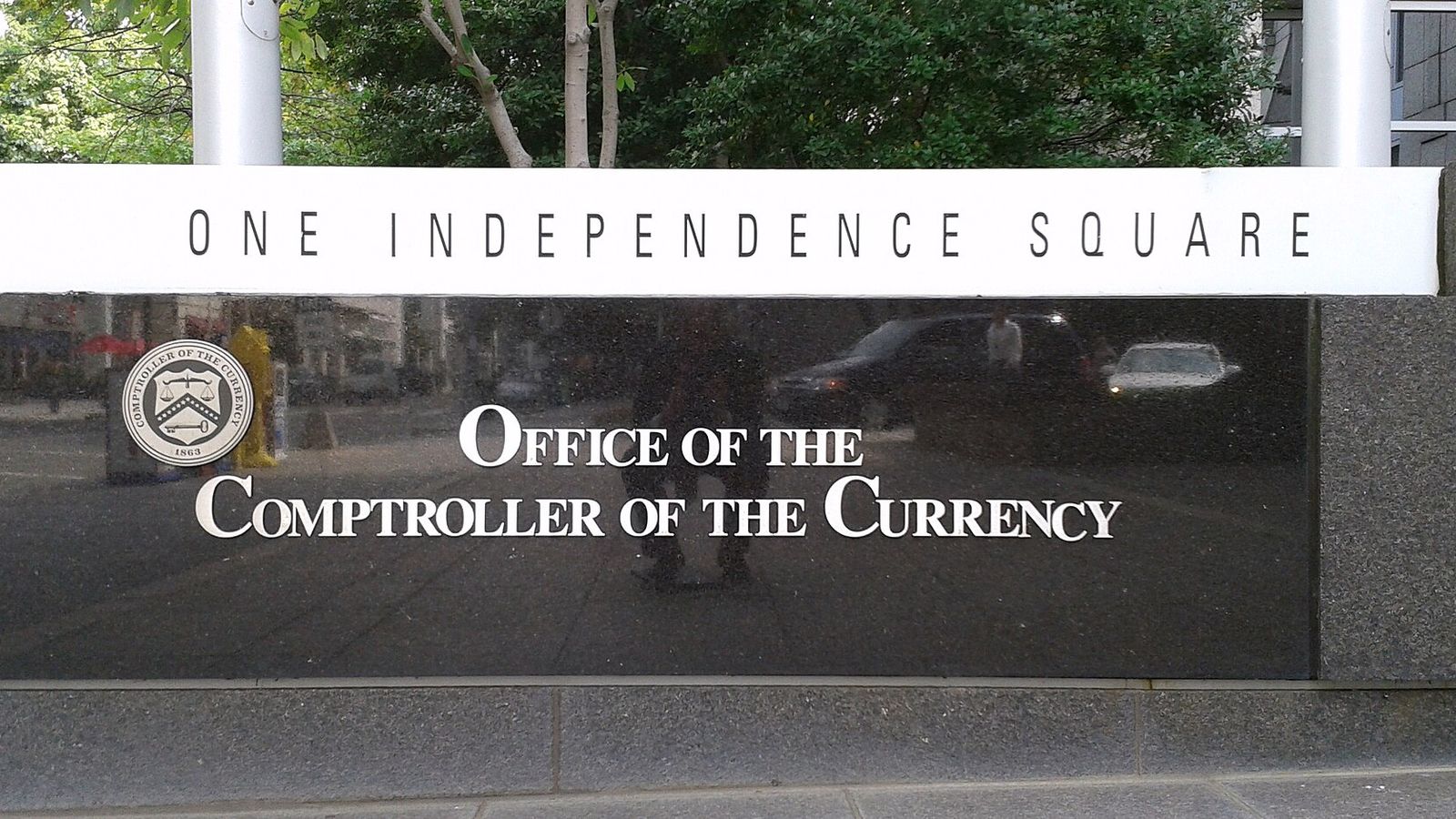
Rain filed an application with the Office of the Comptroller of the Currency on October 5 to create Rain National Trust Bank, a federally supervised subsidiary that would hold client assets, administer stablecoin reserves and issue dollar-backed tokens of its own.
The application landed three days after the Independent Community Bankers of America sued the OCC to kill the same charter pathway. Both moves point at one question: whether a crypto company can hold the credibility of a federal bank charter without the capital, lending and deposit protections that come with an insured bank.
Advertisement
What Rain Actually Asked the OCC For
The proposed bank has three lines of business, all for institutional clients: fiduciary custody of approved digital and fiat assets, reserve management for permitted stablecoin issuers under the GENIUS Act, and issuance and redemption of dollar-backed stablecoins as issuer of record.
What it would not do matters just as much. Rain National Trust Bank would be an uninsured trust bank, with no deposits, no consumer accounts and no commercial loans. Client assets would sit segregated from the bank's own balance sheet, and the reserves behind any stablecoin it issues would not be pledged, lent or reused.
Advertisement
Rain proposed Brandon Soto as president and CEO. He was chief financial officer of Square Financial Services, Block's Utah-chartered industrial bank, where he helped prepare its charter application, and most recently CFO of Coastal Financial Corporation. Rain kept Paul Hastings as counsel, and the application now sits on the OCC's chartering pages for public comment.
Rain itself stays a payments platform and a Visa and Mastercard principal member through its other subsidiaries, with cards accepted at more than 175 million merchant locations in over 200 countries. It raised $250 million in a Series C at a $1.95 billion valuation and holds more than $338 million in total capital, with ICONIQ, Bessemer, Galaxy Ventures, Dragonfly and Lightspeed among the backers.
The Lawsuit That Landed Three Days Earlier
On October 2 the ICBA filed suit in the U.S. District Court for the District of Columbia against the OCC and Comptroller Jonathan V. Gould. The complaint targets the final rule published on March 2, 2026, which rewrote the agency's chartering regulation at 12 CFR 5.20 by replacing the term fiduciary activities with the operations of a trust company and activities related thereto. It took effect April 1.
Congress did not create the national trust charter as a side door into the banking system for crypto firms seeking the credibility of a federal bank charter without the Community Reinvestment Act obligations, consolidated supervision, capital and liquidity standards, and FDIC insurance that apply to insured depository institutions.
That is Rebeca Romero Rainey, the ICBA's president and CEO, in the release announcing the suit, which also argues the rule regulates trust banks far more lightly than traditional banks.
The filing asks the court to find the final rule and Interpretive Letter No. 1176, the January 2021 letter it builds on, unlawful, and to vacate the conditional charter the OCC granted Protego Holdings in February 2026. The ICBA has opposed that application from the start, citing risk controls and governance.
Two numbers in the complaint do most of the work. The OCC has approved or conditionally approved 21 trust banks during the current administration, at least 13 of them crypto companies. Before this wave, the agency had never chartered a national bank that neither took deposits nor conducted fiduciary activities, and it has not run an uninsured bank receivership in nearly a hundred years.
Why a Trust Charter Is Worth Fighting Over
A national trust charter is not a retail banking licence, and that is exactly the point. It preempts many state rules, including parts of state consumer protection law, without carrying the Community Reinvestment Act obligations, consolidated supervision, capital and liquidity standards or FDIC insurance that apply to insured depository institutions.
For a stablecoin issuer, the attraction is the plumbing. Under the GENIUS Act, beginning January 18, 2027 a person generally may not issue a payment stablecoin in the United States unless it holds an appropriate federal or state licence, and reserves must be held for the benefit of the token's holders. The Fed's implementing rules for that framework landed in late September. Fiduciary custody inside an OCC-supervised trust bank answers that requirement with a federal examination attached, which is the part institutional partners check first.
The same argument runs through the stablecoin float this is all being built to hold: $312.4 billion in circulation, $184.1 billion of it USDT and $73.1 billion USDC. A supervised custody and reserve layer under even a slice of that is a revenue line worth litigating over.
The Queue Behind Rain
Rain is not first in line. Paxos resubmitted its charter application in August 2025 and won conditional approval in December 2025. Block applied on September 10, 2026 to custody bitcoin and stablecoins. Bastion Platforms, Catena Trust Bank and Agora National Trust Bank were granted conditional charters in mid-September, and Modern Treasury applied on October 6. World Liberty Financial, the issuer of USD1, won conditional approval in August.
Every one of those applications stands on the same March rule the lawsuit now targets, which is why the outcome in the District of Columbia matters well beyond Rain. A ruling against the agency would put a queue of granted and pending charters back in front of the OCC with the rule that carried them in question.
The Numbers That Decide It From Here
Bitcoin traded at $83,834 and ether at $2,552 in the session this was written, with total crypto market cap near $2.97 trillion and bitcoin dominance at 56.8%. Nothing in the charter fight moves those numbers today. What it changes is who gets to hold the reserves that keep a dollar token at a dollar.
Two dates matter more than the rest. The OCC's review of the Rain application, public comment period included, runs while the same rule sits in front of a federal judge. And the GENIUS Act's January 18, 2027 effective date is the wall every issuer is running at. If the court vacates the rule, the charters built on it get a harder question instead.
Written by
EarnCrypto.dev Editorial
The EarnCrypto.dev editorial team researches and reviews AI mining platforms, pools and earning tools — publishing only what passes our own checks.
Related reading

Thailand Opens the SET to Bitcoin and Ether ETFs on October 16 — and 20% of Its Population Already Holds Crypto
Thailand's SEC finalized rules for Bitcoin and Ether ETFs listed on the SET from Oct. 16: 80% single-asset exposure, no margin loans, SEC-regulated custody.

Starknet Ran 99% in a Week to a 10-Month High — the $0.0836 Retrace Decides $0.1313 or $0.0701
Starknet ran 99% in a week to its highest print since December — and 127 million STRK unlock on October 15. The $0.0836 retrace decides $0.1313 or $0.0701.

KAIA Ran 84% When Upbit Opened a KRW Market — the $0.0582 Retrace Decides $0.0680 or $0.0472
Upbit opened KRW, BTC and USDT markets for KAIA on 9 October and the token ran 84% in a session on 20x its usual volume. The $0.0582 retrace is the decider.