
Starknet Ran 99% in a Week to a 10-Month High — the $0.0836 Retrace Decides $0.1313 or $0.0701
Starknet ran 99% in a week to its highest print since December — and 127 million STRK unlock on October 15. The $0.0836 retrace decides $0.1313 or $0.0701.
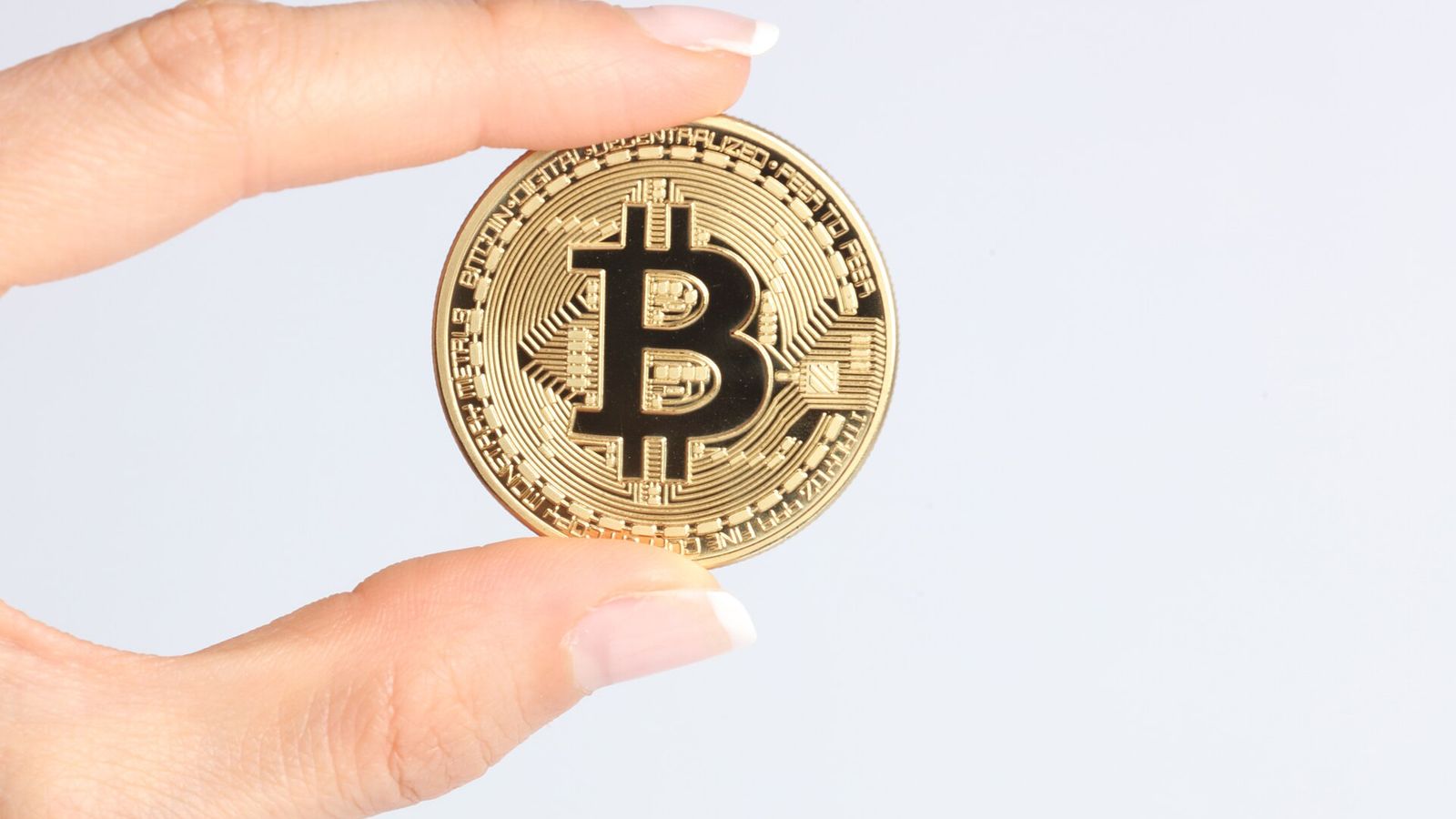
Starknet's STRK token closed October 7 at $0.04907. Three sessions later it printed $0.10541, the highest price the pair has traded since December 15, 2025. That is a 99% move in a week on Coinpaprika's seven-day reading and 45% in the last 24 hours — and it landed on the chain that has spent the past five months teaching Bitcoin how to leave its own blockchain without giving up the assumptions that make it worth holding.
This is not a slow reallocation. It is four candles and a product that finally works.
Advertisement
Four Sessions, One Direction
Binance daily data tells the story cleanly. October 7 closed at $0.04907 after three sessions coiling between $0.04825 and $0.05970. October 8 added 13.2% to $0.05557. October 9 added another 31.6%, closing at $0.07310 — its highest close since January 22. October 10 ran to $0.10541 before easing back, and at the time of writing the pair sits at $0.10202, +44.9% on the day.
Volume says this was not a thin-venue wick. The latest session traded 673.8 million STRK on Binance against a 30-day median of 112.3 million — 6.0x normal. Binance booked $62.5 million of USDT turnover over the last 24 hours, while Coinpaprika logs $409 million across venues against a $750.8 million market capitalisation. Turnover that approaches the entire market value in one day is what a speculative repricing looks like, not a reallocation.
Advertisement
The momentum gauge is stretched. A 14-day RSI computed on Binance daily closes reads 85.0, the highest of 2026, and STRK ranks 99th by market cap — still roughly 97% below the February 2024 record that Coinpaprika carries at $3.59.
What Actually Changed: Bitcoin Can Now Move Onto Starknet
The product behind the move is strkBTC, live since May 12. It is an ERC20 on Starknet backed one-to-one by BTC locked on Bitcoin, and it is the first asset built on STRK20, StarkWare's privacy framework. Two modes matter: a public mode that behaves like any other ERC20, and a shielded mode that hides balances and transfers from public view through a viewing key shared with an independent third-party auditor — scoped disclosure on a legitimate request, nobody else's activity touched.
On October 2 the network went a step further and said it would cover bridge fees for the first 100 Bitcoin moved onto the rollup through strkBTC, which is roughly $8 million of BTC at current prices. That is the difference between a roadmap and a live product: somebody has to bridge, and the network is paying for the first hundred to do it.
The yield side is wired. strkBTC can be staked through Endur for a native protocol yield near 3% paid in STRK, deposited into automated market maker pools on Ekubo, or pledged as collateral to borrow USDC on Vesu. Starknet also runs Bitcoin staking at the consensus level: BTC wrappers such as WBTC, tBTC and SolvBTC carry 25% of staking power while STRK keeps 75%, and stakers accept a seven-day unstake lock. Delegators can start with no minimum; validators need 20,000 STRK.
The network also shipped v0.14.4 to mainnet on October 5 — block-sized proofs under SNIP-36 that support up to 1.1 billion layer-2 gas, plus the deprecation of legacy gateway endpoints. Baseline user costs moved by under 1%, so it is plumbing rather than a retail catalyst, but it is the kind of plumbing a Bitcoin rail needs.
The Other Catalyst Has No Vote Behind It
Ask why the chart looks like this and a second answer shows up: StarkWare chief Eli Ben-Sasson has floated converting Starknet from an Ethereum layer 2 into an independent layer 1. The argument, relayed by Bankless, is cryptographic rather than commercial: a chain of its own could change its cryptography on its own timetable. The target he names is quantum resistance by 2027, while Ethereum's own roadmap points at 2029.
Nothing about that is decided. There is no governance proposal, no vote and no published migration path, and the route to one is open. A chain of its own would need its own validator set, its own incentive structure and its own security base — the borrowed security of Ethereum would not come along. Anyone justifying this week's candle with a completed switch is pricing something that does not exist yet.
October 15 Is the Quietest Number in the Story
The dated event everyone is watching is the October 15 unlock: 127 million STRK, exactly 1.27% of the 10 billion total supply, split between early contributors and investors. CoinGecko's schedule breaks it into 66.61 million for early contributors and 60.39 million for investors.
Measured against liquidity it shrinks. At $0.1019 the tranche is worth $12.95 million — about 3% of the $409 million Coinpaprika recorded over 24 hours, or roughly 46 minutes of trading. Against the 7.42 billion circulating supply it is 1.7%.
It is also the 20th instalment of a schedule that has not changed since March 15, 2025. StarkWare originally planned a single 1.3 billion-token cliff in April 2024 — 13% of supply — then split it into 64 million a month and later 127 million a month, as Decrypt reported at the time. Six tranches remain before the series ends on March 15, 2027 — 762 million STRK, or 10.3% of today's float, spread over six months.
The tranche is therefore not the risk. The risk is the turnover: a single day of trading now moves close to the entire market value of the token.
The Levels That Decide
The current leg runs from the October 7 low of $0.04825 to the October 10 high of $0.10541. Everything that matters over the next few sessions sits between the retracements of that range.
$0.10541 is the high, and the last time the pair closed above it was December 15, 2025. $0.09192 is the 0.236 retrace. $0.08357 is the 0.382 and the first real line. $0.07683 is the half. $0.07310 is the October 9 close, the shelf the breakout left behind. $0.07009 is the 0.618. $0.06048 is the 0.786.
Above the high, the overhead supply is December 2025's band between $0.1060 and $0.1313 — the last place the market built a range at these prices before the slide to the August 12 low of $0.02217.
BULL — roughly 55%. Holding a daily close above $0.0919 keeps the leg intact and opens the December band, with $0.1313 as the first target and the leg's own measured move at $0.1626 as the extension. The scenario is cancelled by a daily close back under $0.0836.
BEAR — roughly 45%. Losing $0.0836 puts the 0.618 at $0.0701 in play, with the October 9 shelf at $0.0731 the first place to look for a bid on the way down. Below $0.0701 the leg is fully retraced and the next reference is $0.0605.
What to Watch Next
Three things are public. First, the governance forum at community.starknet.io — a genuine layer-1 proposal would surface there before it surfaces in an interview, and there is nothing there today. Second, the Bitcoin side of the ledger: strkBTC balances and staking participation are the honest measure of whether the fee subsidy bought usage or only attention. Third, the October 15 tranche, small enough to register as noise unless turnover collapses first.
Starknet's total value locked stands at $166.8 million, with $152.5 million of stablecoins sitting on the chain, according to DefiLlama. That is a fraction of the $750.8 million the token is now worth, and the gap is the whole argument in one line: the market is paying for what Bitcoin integration could become, not for what the chain holds today.
It is the second move of the year in STRK. The September leg ran 52% in a single candle to a $0.0509 high before fading back to the low this one started from — that leg is written up in our September STRK breakdown, and the level it was defending sat 2x lower than the one in play now. Ethereum's layer-2 landscape is also thinning, with two chains announcing shutdowns nine days apart this month Blast and Abstract, which makes the question of what Starknet wants to be more than academic.
None of it is a forecast. It is a repricing of a Bitcoin rail that finally works plus an idea that has not been voted on, and the levels above are where the market will tell you which one it believes.
Written by
EarnCrypto.dev Editorial
The EarnCrypto.dev editorial team researches and reviews AI mining platforms, pools and earning tools — publishing only what passes our own checks.
Related reading
13 of the OCC's 21 New Trust Banks Are Crypto Firms — ICBA Just Sued and Rain Filed for One Too
Rain filed for a New York national trust bank on Oct 5, three days after ICBA sued to void the OCC charter rule behind 13 of the 21 crypto-heavy approvals.

Thailand Opens the SET to Bitcoin and Ether ETFs on October 16 — and 20% of Its Population Already Holds Crypto
Thailand's SEC finalized rules for Bitcoin and Ether ETFs listed on the SET from Oct. 16: 80% single-asset exposure, no margin loans, SEC-regulated custody.

KAIA Ran 84% When Upbit Opened a KRW Market — the $0.0582 Retrace Decides $0.0680 or $0.0472
Upbit opened KRW, BTC and USDT markets for KAIA on 9 October and the token ran 84% in a session on 20x its usual volume. The $0.0582 retrace is the decider.