
XRP Got Its Federal Bank Charter and Gave the Whole 7.2% Back in One Session — 1.2546 Is Now the Line That Decides 1.3444 or 1.2002
The OCC chartered Ripple National Trust Bank on 26 October and BNY added XRP custody a day later. XRP ran 7.2% and erased it in one session. 1.2546 decides.
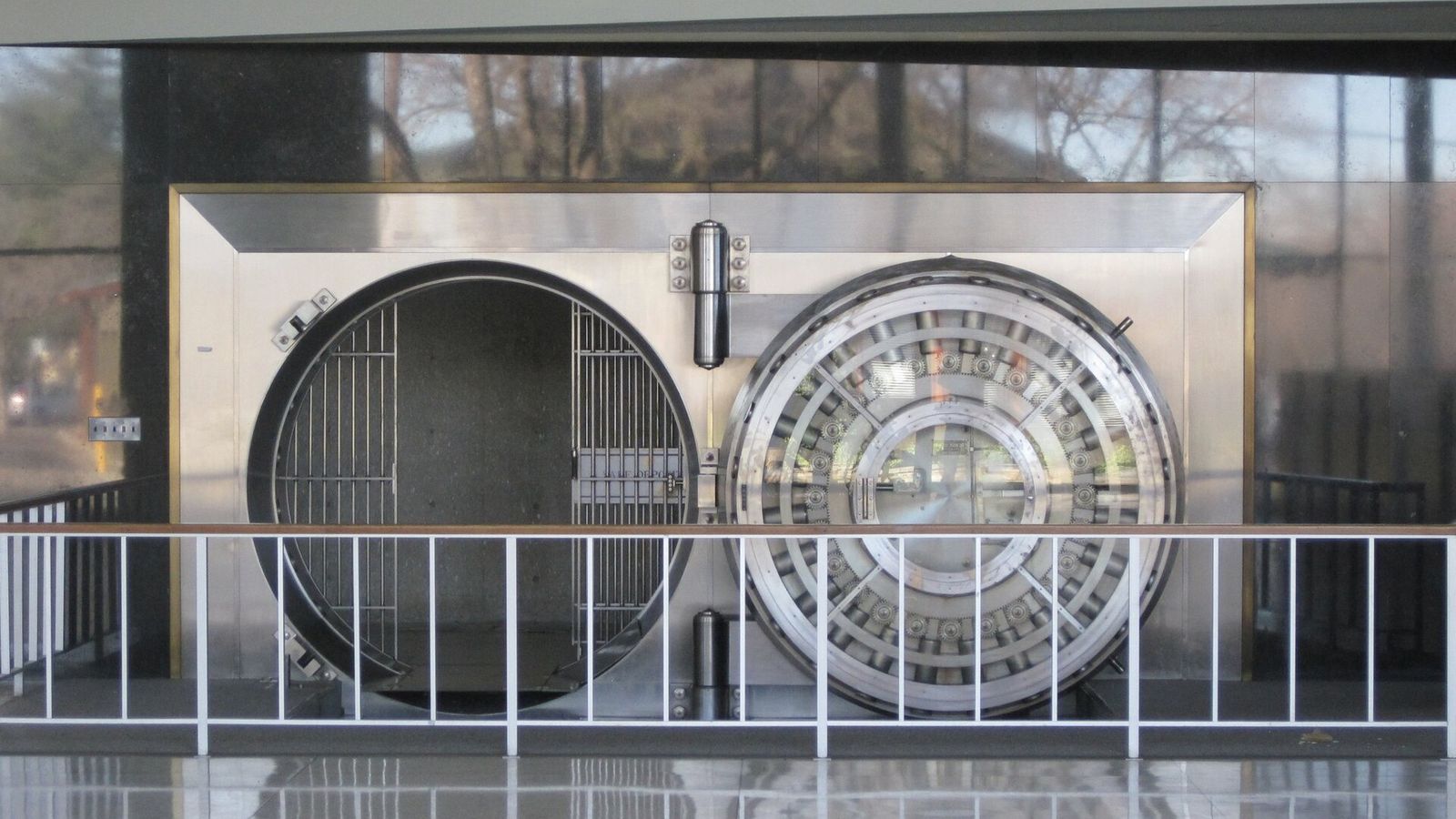
The Office of the Comptroller of the Currency granted final approval on 26 October 2026 for Ripple National Trust Bank, a federally supervised national trust bank. Five sessions later XRP is trading below where it sat the day before the announcement, having run 7.2% on the news and handed every point of it back.
That is the whole story of this charter so far. A real regulatory milestone landed, the token celebrated for two sessions, and then the market treated it as a liquidity event. Both things are true at once, and price is now sitting on the exact level that decides which one gets remembered.
Advertisement
What the OCC charter actually authorises
The final approval closes a process that began with a conditional OCC approval in December 2025. Ripple National Trust Bank is cleared to do three things: manage the segregated reserves that support RLUSD, act as collateral trustee of those reserves for the benefit of RLUSD holders, and provide fiduciary digital asset custody. The company's own announcement of the final approval sets that out plainly, and it is narrower than the headlines suggested.
RNTB is a trust bank, not a commercial one. It is not taking insured deposits and it is not lending. RLUSD continues to be issued by Standard Custody & Trust Company, Ripple's NYDFS-regulated limited purpose trust company. What the charter adds is a second supervisor: federal OCC oversight stacked on top of the existing state framework, covering the reserve side of the stablecoin and the custody side of the business.
Advertisement
For an institution deciding whether to hold a $2.6 billion stablecoin, that is the part that matters. The reserves already sat with BNY as primary custodian and were already attested monthly by an independent third party, fully backed by US dollar deposits, US government securities and cash equivalents. The charter puts a federal banking supervisor in the same room as the state one.
RLUSD launched in December 2024. It was a $2.5 billion market cap on the day of the OCC announcement and $2.6 billion two days later, up more than 88% year to date. That growth happened before the charter, which is worth remembering when the next press release implies the charter caused it.
The second piece nobody priced: BNY added XRP and RLUSD to custody
A day after the OCC approval, Ripple and BNY expanded their collaboration: BNY now supports XRP and RLUSD on its Digital Asset Custody platform, intends to broaden support for tokenized assets and investment products issued on the XRP Ledger, and is working with Ripple to let BNY clients mint and redeem RLUSD directly. The two firms also intend to push tokenized trade finance onto the XRPL, starting with a supply chain finance initiative alongside C2FO.
BNY is not a crypto-native partner. It oversees $63.4 trillion in assets under custody and administration as of 30 September 2026, and it has been the primary reserve custodian for RLUSD for longer than the charter has existed. Adding XRP itself to that platform is the incremental step, and it is the one that changes who can hold the asset without building their own key management.
At Swell on 28 October Ripple put numbers on the rest of the stack: a $900 million annualised product revenue run rate exiting 2026, 1,700+ institutional customers, more than 85 licences, and an XRP Ledger that has processed over 4.6 billion transactions with settlement in roughly three to five seconds. None of that is new. All of it is the reason the charter is worth more than a headline.
Seven point two percent, gone in one session
The tape tells a harder story. XRP bottomed at 1.2546 on 24 October, the weekend session before the approval. It closed the approval day at 1.3092, up 1.0%, and the next session at 1.3313, up 1.69%. On 28 October it printed a 1.3444 high, its best level since 22 October, and then closed red at 1.3260. That was the first honest signal: the best news day produced the high and the close gave it back.
On 29 October it lost 6.67% to 1.2377 and traded down to 1.2233, below the 24 October low the rally had started from. The Binance exploit broke the whole market that session, so the move is not purely an XRP verdict, but the sequence is still the sequence. A 7.2% run from 1.2546 to 1.3444 was fully erased in a single daily candle.
Friday 30 October produced a 1.54% bounce to 1.2567 after a 1.2002 low. By 05:00 UTC on Saturday it had given the level back and was trading at 1.2453. XRP is now 17.0% below its 7 October high of 1.4996 and 3.9% below its pre-announcement close. October ends with the charter in hand and the price lower than before it.
Why 1.2546 is the line, not 1.30
Measure the whole move. The rally leg ran 1.2546 to 1.3444. The drop that followed ran 1.3444 to 1.2002, and its retracements sit at 1.2342 (0.236), 1.2553 (0.382) and 1.2723 (0.5).
The 24 October low of 1.2546 lands seven ticks under the 0.382 at 1.2553. That is the confluence: the base of the charter rally and the first serious retracement of the selloff are the same price. Friday closed at 1.2567, above it. Saturday is back below at 1.2453. One level, two sessions, opposite answers.
Above 1.2553 the path is 1.2723 to 1.2739, where the 0.5 and Friday's high sit together, then 1.2961, the open of the approval day, and only then 1.3444. Below it, the first support is 1.2342 and the second is the 1.2233 to 1.2002 floor that held on Friday.
What would make the bull case real is not a wick. Two consecutive daily closes above 1.2553, followed by a reclaim of 1.2739, would put 1.2961 back in play and turn the charter week into a base instead of a spike. What kills it is a close under 1.2342, which puts the entire announcement range behind the market and makes 1.2002 the next test with nothing between.
What this is not
It is not a banking licence in the sense most people mean. No insured deposits, no lending book, no balance sheet transformation. It is not a guarantee that RLUSD takes share from USDT and USDC either: $2.6 billion is still a rounding error next to the two incumbents, and the growth curve predates the charter by a year.
And it is not a reason to ignore the tape. The most important number in this article is not the OCC's approval date. It is 1.2546, because the market has now tested it twice in four sessions and refused to hold it once. Until that changes, the charter is a fact about Ripple's regulatory position, not yet a fact about XRP's price.
Written by
EarnCrypto.dev Editorial
The EarnCrypto.dev editorial team researches and reviews AI mining platforms, pools and earning tools — publishing only what passes our own checks.
Related reading
Bitcoin Just Closed Its Worst October Since 2017 — 0 of 19 Majors Finished Green, and 76,325.98 Decides November
Bitcoin closed October at $77,582, down 7.22% — its worst October on Binance. Zero of 19 majors closed green, and both prior red Octobers led to a red November.
Strategy Sold $431.8 Million of Bitcoin to Pay a 12% Dividend — and Every Share Now Backs 3.7% Less BTC
Strategy booked a $20.91 billion digital-asset gain, then reported a negative BTC Yield of 3.7% and $431.8 million of bitcoin sold to fund a 12% dividend.

The NYSE's Owner Signed a Definitive Deal to Run Hyperliquid Perps for US Retail — HYPE Tapped 97.74, 22 Cents Under Its Record, Then Gave Back 8.7 Points
ICE will run a new US retail perp market built on Hyperliquid, pending CFTC approval. HYPE ran 78.19 to 97.74, missed its record by 22 cents, closed 89.06.