
The SEC Just Proposed Crypto Custody Rules for Advisers and Funds — Self-Custody, State Trust Companies and the $85,650 Gate
The SEC proposed a custody framework letting advisers and funds self-custody crypto while Citigroup lifted its Bitcoin target to $113,000 the same day.
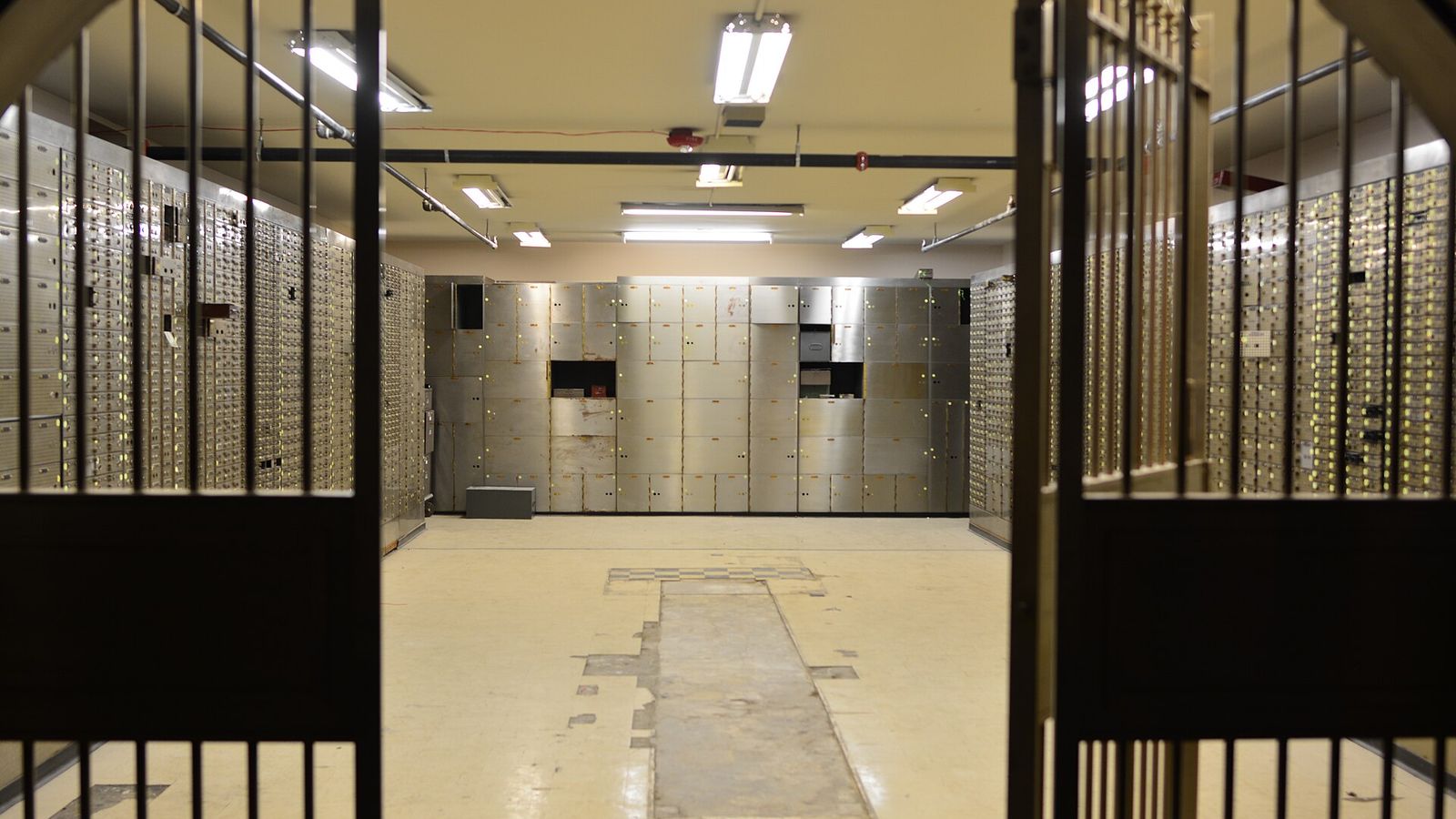
The Securities and Exchange Commission proposed a tailored custody framework on October 1 for registered investment advisers and regulated funds that hold crypto assets — the first time the agency has written rules aimed squarely at digital assets under the Investment Advisers Act of 1940 and the Investment Company Act of 1940. SEC press release 2026-100. The proposal would permit crypto assets to be held in self-custody under certain circumstances and would allow state trust companies to serve as custodians for client and regulated fund crypto assets.
What the Proposal Actually Changes
The release describes the proposal as a modernization of custody rules that expands investor choice and removes regulatory barriers currently limiting an adviser's ability to give crypto-related investment advice. It also updates financial statement audit requirements for registered investment advisers and broker-dealer custodial services for regulated funds, and it targets a specific gap: for some crypto assets, qualified custodial infrastructure does not yet exist The Block.
Advertisement
The public comment window stays open for 60 days after the proposing release is published in the Federal Register, which means the mechanics — self-custody conditions, state trust company standards, audit scope — can still move before anything is final.
Since the advent of Bitcoin in 2008, the crypto asset market has grown from a niche curiosity into a multi-trillion-dollar asset class to which investors actively seek exposure. Unfortunately, our rules and regulations have not kept pace. — SEC Chairman Paul S. Atkins
Why It Landed Two Weeks After CLARITY Died in the Senate
The proposal arrives after the CLARITY Act failed to advance in the Senate, a defeat that narrowed the path to a broad market-structure bill. The agencies moved instead: the SEC followed the vote with its long-awaited innovation exemption, and the CFTC filed crypto asset rulemaking with the White House. Atkins said more proposals are on the horizon and framed the push as an effort to "cement the United States as the crypto capital of the world" The Block, October 1.
Advertisement
Citigroup Raised Its Bitcoin Target to $113,000 the Same Day
In a note dated Wednesday, Citigroup lifted its 12-month Bitcoin target to $113,000 from $82,000 and its Ether target to $3,028 from $2,240, citing stronger crypto market activity, a supportive macro backdrop and an expected resumption of ETF inflows — roughly $5 billion over the next 12 months. The bank tied part of the recovery to a softer dollar after the Treasury's buyback of longer-dated bonds Reuters. Bitcoin traded near $84,100 at 10:50 UTC on October 1, about 35% below the new target, up roughly 40% from its July lows, and still below its October 2025 peak near $126,000.
The Levels That Decide What Happens Next
On Binance, Bitcoin closed October 1 at $84,755 after tagging $85,273.65 intraday, with September 30's $85,649.95 rejection still the ceiling above. The floor is the $82,563.00 low from September 28, backed by $82,874.93 from September 24 — a $3,100 range that has held for six sessions. A daily close above $85,650 opens the late-September shelf above $87,000 and puts Citigroup's $113,000 target about 33% above spot; losing $82,563 turns the range into a lower high.
Ether closed at $2,702.29 against the $2,748.60 high from September 29, with $2,635.69 and $2,600.15 from late September as the supports below Binance ETH/USDT. Citigroup's $3,028 target sits about 12% above the October 1 close, a much shorter climb than Bitcoin's, and it lines up with the $2,807 monthly rail that has capped every rally since August.
The Other Half of the Plumbing: Spending Rules
Custody rules decide who can hold crypto; tax rules decide whether anyone spends it. On September 30, Senator Steve Daines released the 56-page ADAPT Act, which would make dispositions of qualifying dollar stablecoins in exchange for goods and services a non-recognition event starting January 1, 2027. Eligibility ties to Treasury's quarterly list and an acquisition price within 3% of $1.00, while Bitcoin payments keep their cost-basis reporting — with a narrow carve-out for network fees of $10 or less CryptoSlate. The House companion, H.R.10357, cleared Ways and Means 38-5 on September 16.
What to Watch From Here
Three things matter from this point. First, the 60-day comment clock: self-custody conditions and the treatment of state trust companies are the provisions most likely to be rewritten, and custodians build product around the final text, not the proposal. Second, whether the ETF inflow trend Citigroup is underwriting actually resumes — the bank's own path this year went from a $112,000 target to $82,000 with zero expected inflows, back to $113,000. Third, the $85,650 gate on Bitcoin and the $2,748.60 ceiling on Ether: both remain the levels that separate a regulatory repricing from another range week.
Written by
EarnCrypto.dev Editorial
The EarnCrypto.dev editorial team researches and reviews AI mining platforms, pools and earning tools — publishing only what passes our own checks.
Related reading
13 of the OCC's 21 New Trust Banks Are Crypto Firms — ICBA Just Sued and Rain Filed for One Too
Rain filed for a New York national trust bank on Oct 5, three days after ICBA sued to void the OCC charter rule behind 13 of the 21 crypto-heavy approvals.

Thailand Opens the SET to Bitcoin and Ether ETFs on October 16 — and 20% of Its Population Already Holds Crypto
Thailand's SEC finalized rules for Bitcoin and Ether ETFs listed on the SET from Oct. 16: 80% single-asset exposure, no margin loans, SEC-regulated custody.

Starknet Ran 99% in a Week to a 10-Month High — the $0.0836 Retrace Decides $0.1313 or $0.0701
Starknet ran 99% in a week to its highest print since December — and 127 million STRK unlock on October 15. The $0.0836 retrace decides $0.1313 or $0.0701.