
Nillion's Blacklight L1 Mainnet Goes Live Monday: Every Node Must Stake 70,000 NIL — and $0.0814 Decides 0.0995 or 0.0770
NIL is coiled at $0.0831 two days before Blacklight L1 goes live on Ethereum with a 70,000 NIL node stake: the $0.0814 retrace decides 0.0995 or 0.0770.
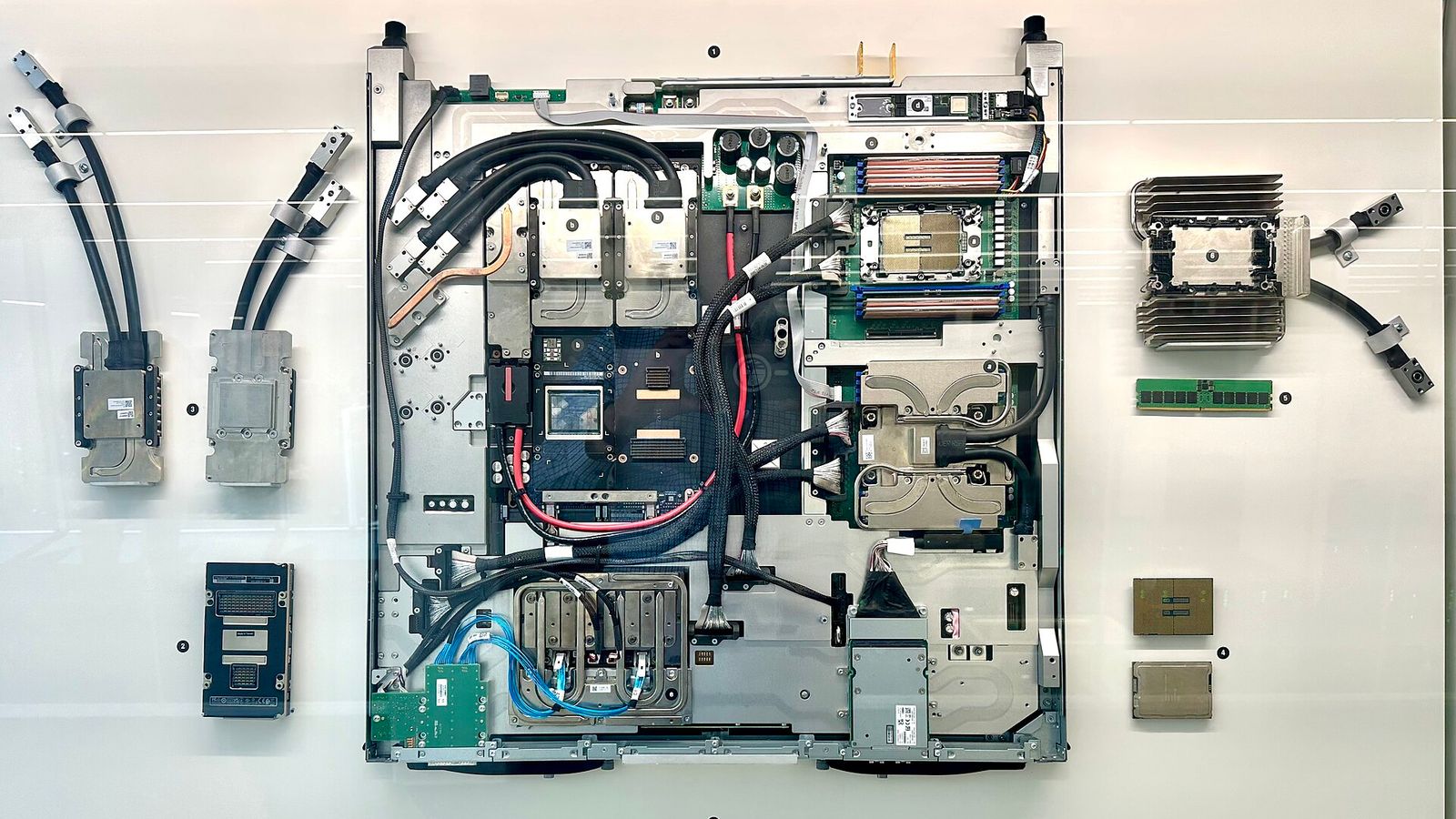
Blacklight L1 Goes Live on Ethereum on Monday
Nillion's Blacklight verification layer leaves its own chain on Monday, October 5. The new L1 runs directly on Ethereum mainnet, and node operations, staking and rewards all begin around the launch. The operator migration window has been open since September 26.
The old L2 becomes the legacy network and gets retired later this year. Rewards already earned on it stay claimable until the halt, so operators have time to move their NIL and ETH back to Ethereum through the Nillion Bridge — a step that takes around nine days.
Advertisement
What a Blacklight Node Actually Does
Blacklight is the verification layer for Nillion's Blind Computer, a network that stores and computes on data without ever decrypting it. Its primitive is the Covenant: an encrypted instruction that stays sealed until a condition is met. When a Covenant is created, its payload is split into encrypted shares and distributed across a committee of nodes, so no single operator can reconstruct it alone.
Those nodes watch for the condition. Once it is met they publish their shares onchain, and when enough shares are available the payload is reconstructed and verified on Ethereum before any downstream action happens. That is the difference between hiding a transaction and hiding intent until execution is unavoidable.
Advertisement
Blacklight L1 nodes help Covenants stay sealed until the condition attached to them is met.
The stack underneath is unchanged: nilDB for encrypted storage, nilVM and nilCC for blind computation built on MPC, homomorphic encryption and trusted execution environments, and nilAI for private inference. Every one of those operations is paid for in NIL.
The 70,000 NIL Stake Is the Number That Matters
Registering a fresh L1 mainnet node requires a minimum stake of 70,000 NIL — about $5,816 at Monday's prices — plus roughly 0.01 ETH on the operator address to cover gas. Sepolia testnet registrations do not carry over, so every operator starts from zero on Monday.
Rewards come from 0.5% annual inflation on the total supply, about 5.05 million NIL a year, plus trigger fees. Returns depend entirely on how much NIL ends up staked: the formula is 0.5% of supply divided by total Blacklight stake, which works out near 5% if 100 million NIL is staked and closer to 2.5% at 200 million.
With 507.6 million NIL circulating, a thousand nodes alone would lock 70 million tokens — roughly 13.8% of the float. The minimum is high enough that participation is weighted toward larger holders, which is why node registrations are the first real demand signal to watch.
The Run Into the Launch, in Real Numbers
NIL has already been repriced once this month. It closed September 17 at $0.04179 and printed a $0.14950 high on September 24 — a 257% move in five sessions, with 309.7 million NIL traded on September 23, the heaviest session in the series on Binance's NIL/USDT market.
Then the giveaway: five red days took it to $0.07700 on October 2, a 48.5% retrace of the leg off the September 15 low at $0.03930. That put the price right on the 0.618 retrace at $0.08140, which is the line the whole setup now hangs on. The bid held it into the weekend, and NIL trades at $0.0831 now, up 2.7% in 24 hours.
Above $0.08140 the shelf is $0.0858, then the September 22 high at $0.08750, the October 1 high at $0.09200 and the $0.09948 tag from September 30. Below it, $0.07700 and the September 29 low at $0.07630 are the last supports before the $0.0685 and $0.0616 closes from the run-up.
Context for scale: the token trades 90.7% below its March 2025 all-time high of $0.8971, with a $41.8 million market cap against an $83.3 million fully diluted value, on 507.6 million tokens circulating out of 1.01 billion, per CoinGecko.
What to Watch After Monday
Three things decide whether the launch is a bid or a sell-the-news: how many nodes register and how much NIL is staked, whether L1 rewards start on schedule, and whether the retired L2 drains cleanly.
Further out, the Encrypted Markets roadmap is the real test. Dusk, the first phase, puts condition-based encrypted instructions on Ethereum L1 and is already live on Sepolia. A credits model follows, with NIL credits allocated to nodes for nilDB and nilCC and Stripe payments for nilAI, which lowers the barrier for developers to route private compute through the network.
Nillion is not asking traders to believe a narrative on Monday. It is asking operators to lock 70,000 NIL each and keep a machine, Docker and an archive Ethereum RPC running. That is a measurable commitment, and the chain will show it.
Written by
EarnCrypto.dev Editorial
The EarnCrypto.dev editorial team researches and reviews AI mining platforms, pools and earning tools — publishing only what passes our own checks.
Related reading
13 of the OCC's 21 New Trust Banks Are Crypto Firms — ICBA Just Sued and Rain Filed for One Too
Rain filed for a New York national trust bank on Oct 5, three days after ICBA sued to void the OCC charter rule behind 13 of the 21 crypto-heavy approvals.

Thailand Opens the SET to Bitcoin and Ether ETFs on October 16 — and 20% of Its Population Already Holds Crypto
Thailand's SEC finalized rules for Bitcoin and Ether ETFs listed on the SET from Oct. 16: 80% single-asset exposure, no margin loans, SEC-regulated custody.

Starknet Ran 99% in a Week to a 10-Month High — the $0.0836 Retrace Decides $0.1313 or $0.0701
Starknet ran 99% in a week to its highest print since December — and 127 million STRK unlock on October 15. The $0.0836 retrace decides $0.1313 or $0.0701.