
Nasdaq Handed Pyth Its Real-Time U.S. Equity Feed — Then PYTH Ran 41% in Seven Days as Switchboard Went Dark
Nasdaq approved Pyth as a distributor of its real-time U.S. equity feed and rival oracle Switchboard shut down the same week. PYTH ran 41% in seven days.
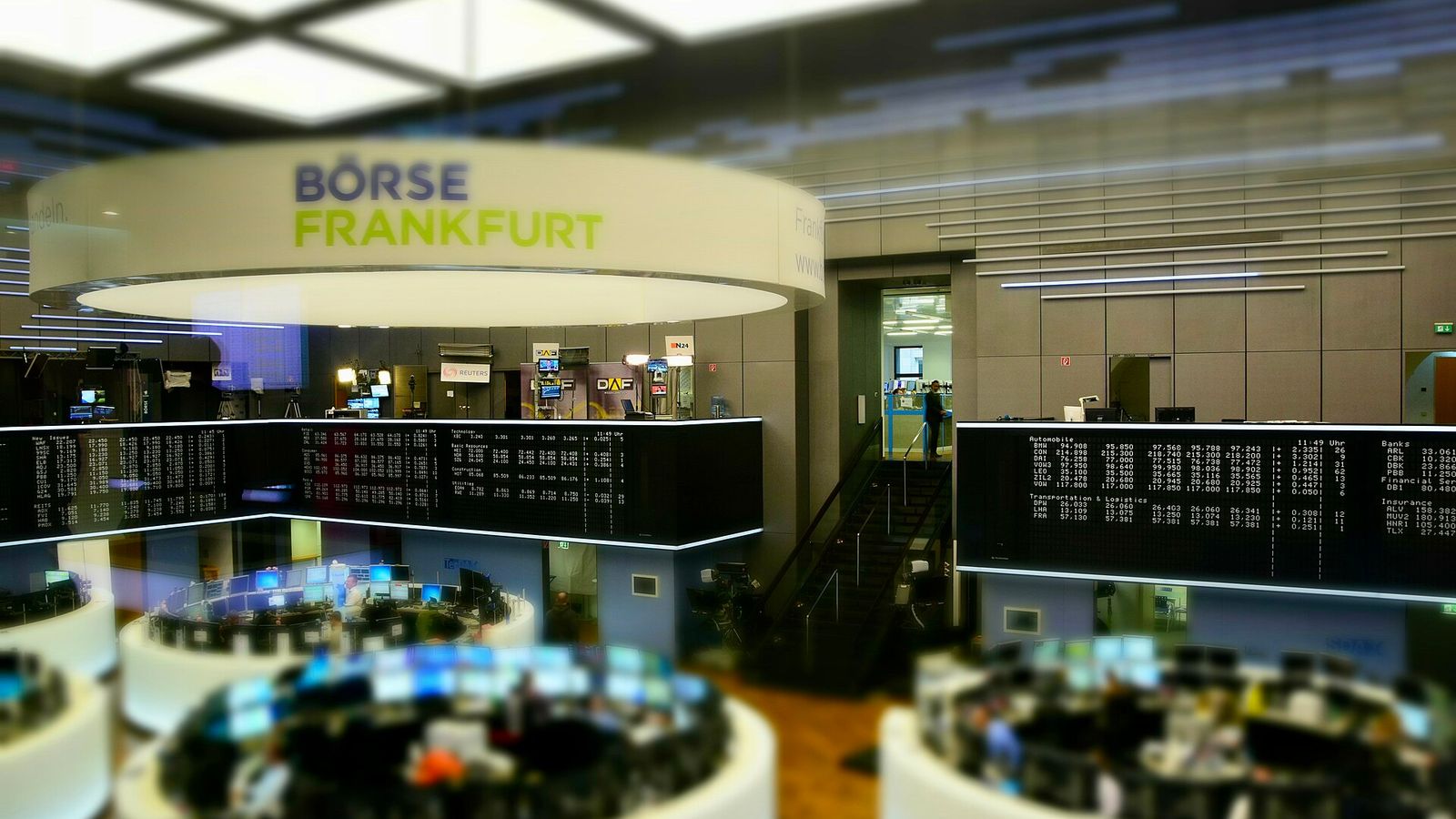
Two events repriced the oracle layer inside five days. On September 19 the Switchboard Foundation announced that every Switchboard implementation was deprecated with immediate effect and that all support would end on September 25. Three days later, on September 22, Pyth was approved as an external distributor of Nasdaq Basic — the exchange's real-time quote and trade product for U.S. equities. PYTH went from $0.0636 that day to $0.0743 on September 26, printed a $0.0846 high on September 27 and now trades at $0.0824: 41% higher in seven days and 68% higher in thirty.
What Nasdaq Actually Approved
Nasdaq Basic is not an exotic product. It carries best bid, best offer and last sale for every U.S. exchange-listed security — the top-of-book tier that brokerages, banks and fintech platforms have licensed for more than a decade. What changed on September 22 is the distribution channel. Pyth is now an approved external distributor, and Nasdaq Basic can be licensed by clients through the Pyth Data Marketplace, the direct layer Pyth opened in April 2026 between first-party data providers and software-native destinations. Nasdaq keeps control of the commercial relationship: any client consuming the feed through Pyth needs prior written approval from Nasdaq. Pyth is the pipe, not the owner of the data — and as Markets Media reported, the exchange gains a channel into applications that never touch a terminal.
Advertisement
It is also the second leg of a relationship that already exists. In June 2026 Nasdaq joined the Pyth Data Marketplace as a publisher of TotalView, its full depth-of-book product — the first time Nasdaq's most granular order data was reachable through a blockchain-accessible feed. TotalView proved the model at the deepest data tier. Nasdaq Basic is the tier with far more licensed users, and that is what makes this leg commercially interesting.
The Same Week a Rival Oracle Switched Itself Off
The shutdown notice landed on September 19 and gave Solana protocols about six days to move. Switchboard Technology Labs deprecated all implementations immediately and ended support on September 25, naming two replacement paths in its own guidance: Pyth and RedStone. Kamino, Jito, MarginFi and Drift were among the protocols working against that deadline. The stated reasons were cumulative rather than dramatic — AI-assisted development made bespoke oracles cheaper to build, the long bear market compressed protocol budgets, venues increasingly strike data deals directly with providers, security incidents damaged trust in the category, and contributors and node operators had already walked.
Advertisement
Strip the narrative away and the mechanical result is simple. Every feed that used to be contested now has one default destination on Solana, and that destination is Pyth. One less competitor is not automatically a better product, but it is unambiguously more volume routed to the oracle that survived — which is the half of this story the price is actually trading.
The Revenue Line Under the Price
Pyth reports like a data company now. Douro Labs' August update put annual recurring revenue above $10.4 million, with August the strongest commercial month on record: roughly $2.9 million of gross new ARR against $1.7 million in July. Pyth Indices added $1.28 million of fixed ARR in the same month, and OKX, Kraken and Binance have adopted the index product — three exchanges paying for the same feed DeFi protocols consume. The network sources from more than 130 publishers and serves 3,000+ price feeds across 40+ blockchains. Protocol revenue is routed into the PYTH Reserve, which buys tokens monthly, so the commercial line and the token are connected by design rather than by narrative.
The Regulated Product Nobody Filed as Marketing
The strongest institutional proof point is a live contract, not a press release. Kalshi's GOLDPERP and SILVERPERP went live on September 10, the first non-crypto perpetual futures to trade on a U.S. regulated exchange, and Pyth is the named price source in the filings — those contracts settle in cash against a Pyth print. The mechanism deserves precision: Kalshi self-certified under CFTC Regulation 40.2(a) instead of winning an affirmative Commission vote, and CME has sued the CFTC over the perpetuals structure itself. Kalshi has also filed for equity-index, copper and FX perpetuals that would reference the same feeds. A U.S. designated contract market is settling metals exposure against a Pyth print today; the litigation is an argument about the venue, not about the data.
The Tape, the Float and the Two Dates Ahead
PYTH trades at $0.0824 with a $648 million market cap, an $823 million fully diluted valuation and $60 million of 24-hour volume. The token bottomed at $0.0360 on June 30 — this price is 129% above that low — and it is still 93% below the $1.20 all-time high from March 2024. The supply sheet is the other half of the trade: 7.87 billion PYTH circulates against a 10 billion hard cap, so just under 79% of supply is float and roughly 2.13 billion tokens remain on the 2026-2027 schedule.
Two dates sit in front of that. Kalshi's equity-index and FX filings are still with the CFTC, and Pyth's Q3 review lands on October 8. Neither is a supply event and neither is a promise — the Nasdaq arrangement earns through licensed clients, one at a time. But in five days the oracle category lost a competitor and Pyth gained an exchange's top-of-book feed. That is a strange sentence to be able to write about an oracle with a $648 million market cap.
If you want the practical side of oracle-priced markets instead of the theory, the tools we track on EarnCrypto cover live pricing, payout and mining calculators that run on exactly this kind of external data.
Written by
EarnCrypto.dev Editorial
The EarnCrypto.dev editorial team researches and reviews AI mining platforms, pools and earning tools — publishing only what passes our own checks.
Related reading
13 of the OCC's 21 New Trust Banks Are Crypto Firms — ICBA Just Sued and Rain Filed for One Too
Rain filed for a New York national trust bank on Oct 5, three days after ICBA sued to void the OCC charter rule behind 13 of the 21 crypto-heavy approvals.

Thailand Opens the SET to Bitcoin and Ether ETFs on October 16 — and 20% of Its Population Already Holds Crypto
Thailand's SEC finalized rules for Bitcoin and Ether ETFs listed on the SET from Oct. 16: 80% single-asset exposure, no margin loans, SEC-regulated custody.

Starknet Ran 99% in a Week to a 10-Month High — the $0.0836 Retrace Decides $0.1313 or $0.0701
Starknet ran 99% in a week to its highest print since December — and 127 million STRK unlock on October 15. The $0.0836 retrace decides $0.1313 or $0.0701.