
MSCI Publishes Its Deletion List on November 11 — Four of Five Ratio Flags and Two Annual Filings Decide Who Actually Leaves
MSCI's non-operating-company screen lands at the November review, effective 30 November. The final list arrives on 11 November — and Strategy is the test case.
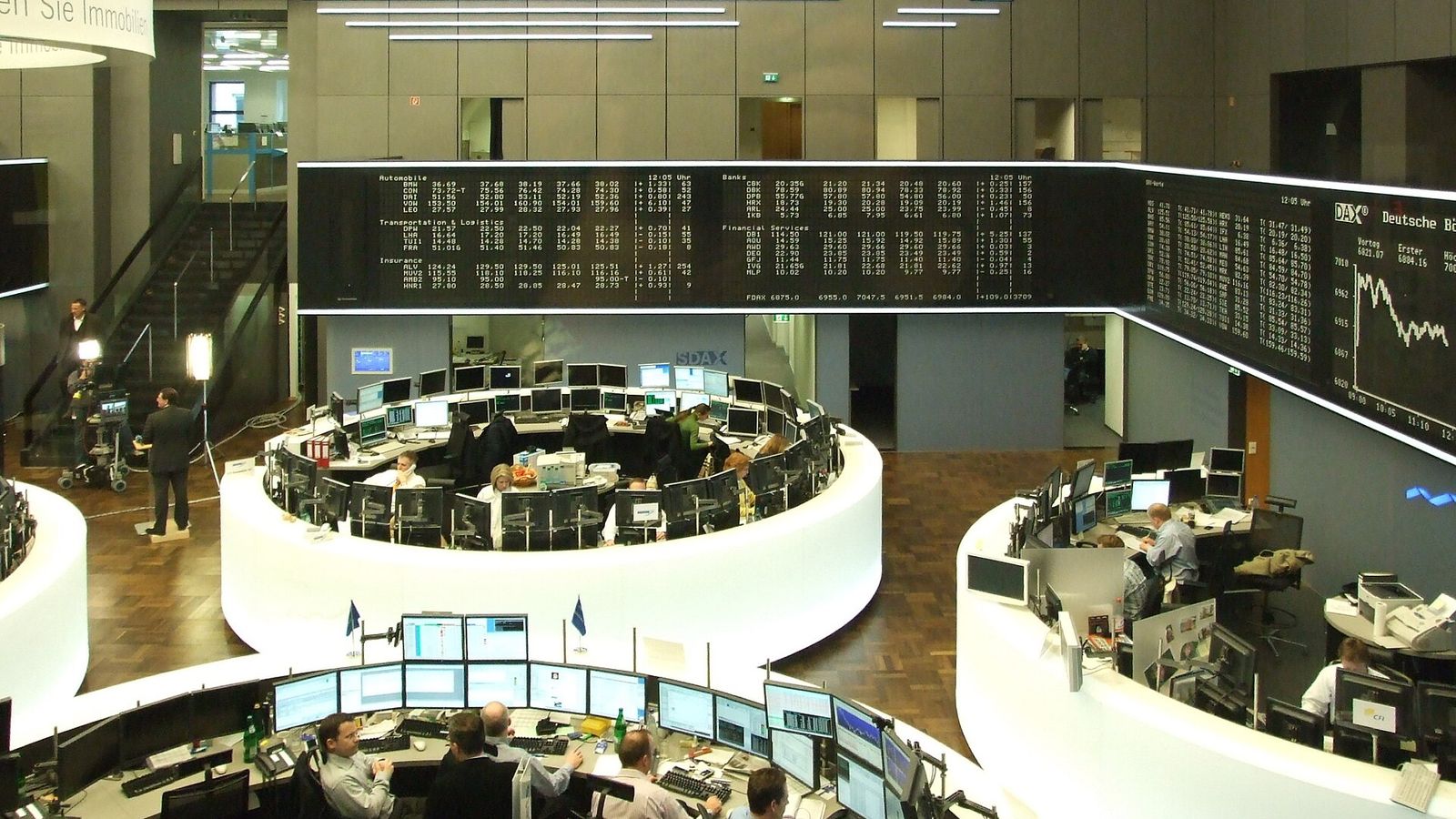
MSCI adopted its non-operating-company methodology on 15 October. It takes effect with the November 2026 Index Review, as of the close of 30 November, and the final list of affected constituents is published on 11 November. Six days out from that list, bitcoin is printing its lowest low since mid-September and the companies that hold it are falling harder than the coin.
What MSCI actually adopted
Two gates, no crypto-specific language. The first is a core screen asking whether an issuer has substantial operating assets. An issuer that fails it then faces an exclusion screen built on five non-industry-specific financial ratios, and a security is ineligible for the MSCI Global Investable Market Indexes if it is flagged on four or more of them. Nothing in the test asks what the company owns or what the coin is worth. It asks whether the balance sheet looks like an operating business instead of an investment vehicle.
Advertisement
The buffers are where the dates come from. A company outside the index stays out if it fails the screen in either of its two most recent annual filing periods. A current constituent is removed only if it fails in both, and MSCI may also use the most recent interim filing. That asymmetry is deliberate: it limits index turnover, and it means a first failure starts a clock rather than an eviction.
The announcement also retired the interim measures MSCI put in place on 10 October 2025 for companies whose digital asset holdings were 50% or more of their total assets — the freeze on Number of Shares, Foreign Inclusion Factor and Domestic Inclusion Factor increases, and the deferral of additions and size-segment migrations. From the November review onwards, every one of those names is assessed on the new screen instead. Nothing is grandfathered, and nothing is exempted.
Advertisement
The names that are actually exposed
MSCI does not name a single company in the announcement. The list of potentially impacted constituents sits on its index consultations page, built on financial data as of 30 September. Reporting on that list has Strategy, Yellow Cake and Metaplanet in line for deletion, adds Iceland's Skel Fjarfestingafelag and Upexi, and places SharpLink among seventeen names on a watchlist alongside SUI Group Holdings, TON Strategy and Solana Company.
Strategy is the test case because of where it sits: the largest corporate bitcoin holder, and a constituent of MSCI USA and MSCI World. Those are benchmarks passive money tracks by mandate rather than by opinion. A deletion would not be a verdict on bitcoin. It would be an instruction to every fund tracking the index to stop holding the stock and rebalance at the review, on a fixed date, at whatever price the market offers that day.
The two-filing rule is the part that gets skipped
Read the removal condition again, because it decides what 11 November actually means. A current constituent leaves only after failing the screen in each of its two most recent annual filing periods. The list published on 11 November is therefore a list of candidates, not a deletion notice. A company flagged once keeps its place through this review, and its next annual filing decides the following one.
The interim-filing clause is the live wire inside that buffer. Where a company has reported since its last annual period, MSCI can use the newer numbers — which shortens the wait for anyone whose balance sheet has already deteriorated, and lengthens it for anyone whose asset mix moved on paper only.
It arrives on the weakest tape of the quarter
The 5 November session opened at 80,504, printed 80,918, then broke to 75,568 — the deepest low since 16 September — before steadying near 75,990, roughly 5% lower on the day. Bitcoin is 14.5% below the 88,839 it started the year at, and 39.8% under the 126,199 record set in October 2025.
The equity side did worse than the coin. Coinglass put 24-hour liquidations at $1.08 billion, $954 million of them longs. Strategy fell more than 10% for its worst session in nine months, Bitmine Immersion 12%, Coinbase 10%, Circle 12.5%, Robinhood 12%, and the miners between 14% and 20%, while the Nasdaq slid into correction territory more than 10% below its record. The screen MSCI adopted is aimed at valuations built on treasury holdings, and it is landing in the middle of a repricing of exactly those valuations.
Three dates to watch
11 November is the list. 30 November is implementation, at the close, when the rebalance actually executes. In between, annual and interim filings decide which of the candidates on that list have already failed twice, and which are only halfway through the test.
None of that requires a view on where bitcoin trades next. The screen is arithmetic, the calendar is fixed, and the funds that track MSCI USA and MSCI World do not get to argue with either — which is why the next three weeks of crypto equity will be driven by paperwork as much as by price.
Written by
EarnCrypto.dev Editorial
The EarnCrypto.dev editorial team researches and reviews AI mining platforms, pools and earning tools — publishing only what passes our own checks.
Related reading

Russia Opens Bitcoin, Ether and USDT to Retail on November 17 — the 300,000-Ruble Cap Is Per Broker, Not Per Person
Russia cleared Bitcoin, Ether and USDT for retail trading from November 17 with a 300,000-ruble yearly cap that applies to each intermediary, not each person.

FinCEN Cut MEXC Off From the US Banking System Over $16.7 Billion — the 30-Day Clock Starts at the Federal Register
FinCEN ordered US banks to stop moving funds to or from MEXC Global over $16.7 billion of illicit flow. The 30-day clock starts at the Federal Register.
Democrats Took Both Chambers and the CLARITY Act Now Has 60 Days to Live Before It Resets to Zero
Democrats took both chambers of Congress. H.R. 3633 failed 49-50 on an ethics clause, and 3 January 2027 resets crypto's market-structure bill to zero.