
ZKsync Proved 99% of 7,200 Ethereum Blocks on One GPU — Vitalik Called the Speed Race Won, and 0.01400 Decides 0.0157 or 0.0124
ZKsync's Airbender Prime proved 99% of 7,200 Ethereum blocks on a single GPU. ZK gave back 23% of its October spike — 0.01400 decides 0.0157 or 0.0124.
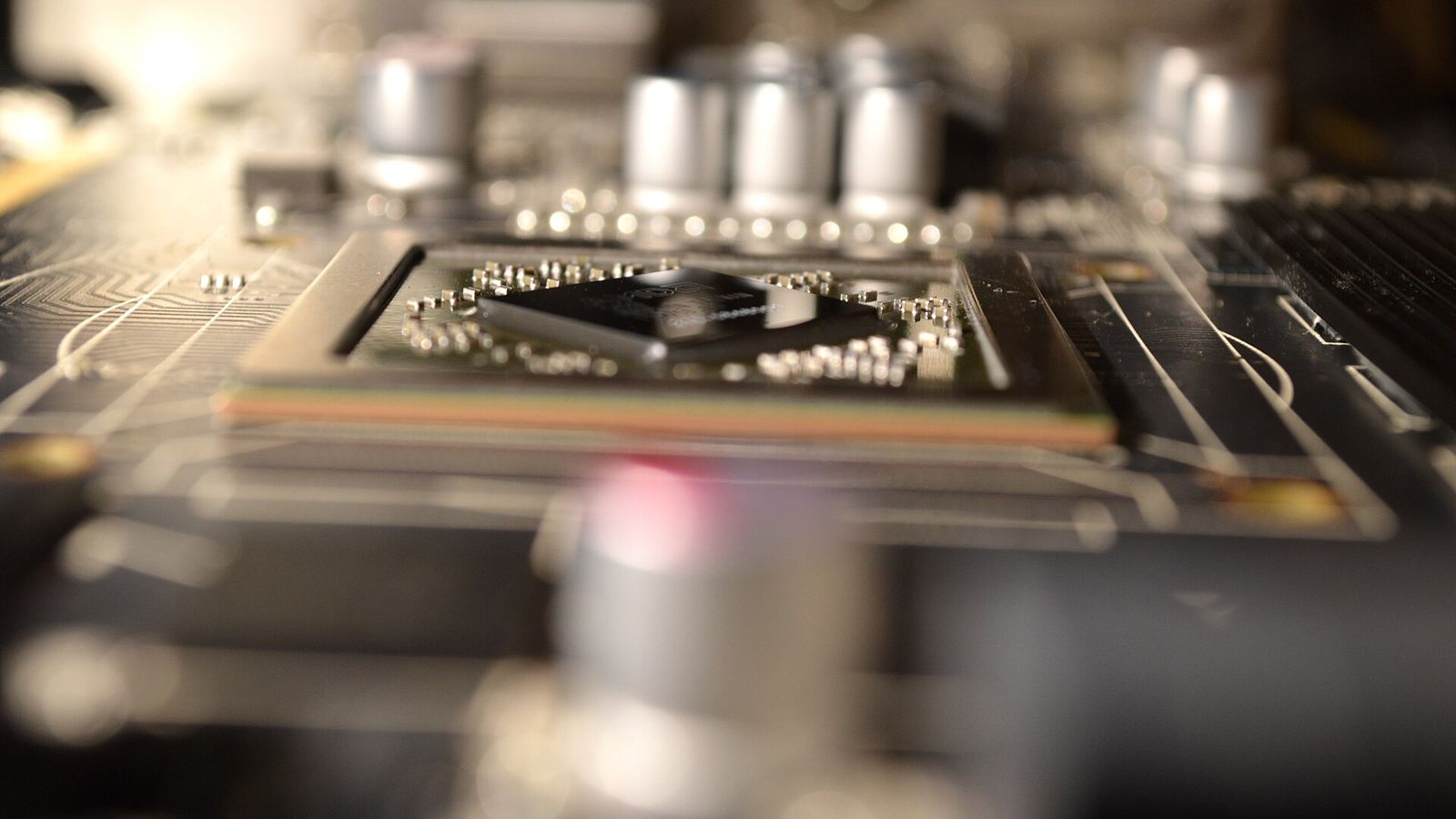
ZKsync published Airbender Prime on October 13, and the claim in the headline is unusually specific: the first Ethereum prover, to the team's own knowledge, to demonstrate real-time proving on a single GPU. Not a throughput number on a rented cluster, not a benchmark against a synthetic block. One card keeping pace with the chain it is proving.
The test set was 7,200 consecutive Ethereum mainnet blocks. A single NVIDIA RTX PRO 6000 Blackwell proved 99% of them in under ten seconds each, with witness preparation included, and every block in the set finished inside twelve seconds. The full disclosure and the methodology sit in ZKsync's Airbender Prime announcement, and the leaderboards it points to are public on ETHproofs.org, where Airbender currently leads on average proving time, GPU efficiency and cost.
Advertisement
What Is Actually Different Under the Hood
Airbender Prime is built on hash-based STARKs rather than elliptic-curve constructions. That means GKR sumcheck, WHIR polynomial commitments and BLAKE2s hashing, with L1 proofs committing through Keccak-256 instead of BN254 pairings. ZKsync's pitch is that this makes the prover post-quantum secure by design rather than by future migration.
It runs on the open RISC-V instruction set, ships a standalone verifier so a third party can check a proof without trusting the prover's own software stack, and is designed to run on hardware an operator can actually buy. The previous Airbender iteration posted 21.8 MHz of throughput on an H100. The new version moves the argument from raw speed to something more useful: staying live with Ethereum blocks on one, two or four commodity GPUs, all three configurations already deployed.
Advertisement
Vitalik Called the Speed Battle Won — Then Moved the Goalposts
Two days after the announcement, on October 15, Vitalik Buterin publicly commended the result and immediately changed what the race is about. Speed, in his framing, is settled. What he wants next is formal verification that the prover faithfully matches Ethereum's own specification, and published bounds on how much proving can cost relative to the gas fees it is meant to secure.
Speed battle… definitively won
That is a friendlier verdict than most infrastructure launches get, and a harder one. It tells you the competitive axis for zkEVMs over the next two quarters is not who proves fastest, but who can prove correctness to a regulator, an auditor or a counterparty. ZKsync's own framing leans the same way: if ledger updates require a proof, a compromised execution server cannot push through an update that violates the ledger's encoded rules.
Airbender is not landing in isolation either. It follows ZKsync's Atlas upgrade, and the prover is already running across the chains ZKsync supports, which is the difference between a lab result and shipped infrastructure.
What This Does and Does Not Do for the ZK Token
Here is the distinction that matters for anyone holding the token. The prover does not pay fees to ZK. Value accrues to the token through the chain and its ecosystem — sequencer economics, governance, the validiums and paymasters built on top — not through proving revenue. What Airbender changes is the cost floor of the entire category: if a real-time proof costs one GPU instead of a rack, then ZK rollups, private validiums and proof-based settlement stop being premium products and start being default architecture.
That cuts both ways, and it is worth saying plainly. Open-source proving breakthroughs lift every zkEVM, not only the one that shipped them. The bull case is that cheaper proofs expand the total number of chains and institutional ledgers that need ZKsync's stack. The bear case is that proving becomes a commodity before the token captures any of the demand it creates.
Supply is the other half of the picture. ZK has 10.8 billion tokens circulating against a 21 billion cap, a market value near $156.7 million and a rank around 211, with the all-time high of $0.3210 set back in June 2024 still 95% above today's price. Half the supply is still to come, and the schedule is public.
The Chart: 76% in Eight Sessions, Then Five Red Closes
The market already voted once on this story. ZK bottomed at $0.01069 on October 8, then ran to $0.01885 on October 16 — a 76% advance in eight sessions, with October 15 printing 1.56 billion ZK of volume, more than four times the 30-day average of 357 million. That was the biggest volume bar in sixty sessions, and it came with an upper wick rather than a close at the highs.
October 15 and 16 left a double top at $0.01880 and $0.01885. Since then there have been five consecutive red daily closes and the price has given back 23% of the spike. ZK trades near $0.01450, down 10.8% on the week but still up 23.9% on the month — a rally that has paused, not a rally that has been erased.
0.01400 Is the Line
The level is not subtle. ZK printed a low of exactly $0.01400 on both October 13 and October 18, and that double low sits just above the 0.618 retrace of the entire October leg at $0.01381. Two tests, one number, and a Fibonacci level directly underneath it.
Above it, the path of least resistance runs through $0.01490 and $0.01509 — the highs of the last two sessions — then $0.01573, the 0.382 retrace, before the $0.01660 shelf and a retest of the $0.01885 top. Below it, a daily close under $0.01400 opens $0.01381, then $0.01244 at the 0.786, with the $0.01069 October base as the last structural floor.
The honest read: the setup is a coil, not a trend. Volume has collapsed from 1.56 billion to a fraction of the monthly average, which is what a post-spike consolidation looks like on the way to a decision — and the decision is being made at $0.01400. A reclaim of $0.01573 on rising volume would put the double top back in play. A close below $0.01381 invalidates the bullish structure and turns the October rally into a completed impulse that already failed.
What to watch from here is not another proving record. It is whether ZKsync publishes formal verification progress against the Ethereum specification and a prover cost bound tied to gas, because those are the two items Vitalik asked for, and they are the two things that would convert a benchmark win into institutional demand.
Written by
EarnCrypto.dev Editorial
The EarnCrypto.dev editorial team researches and reviews AI mining platforms, pools and earning tools — publishing only what passes our own checks.
Related reading
Seven of 77 Top-100 Tokens Are Green This Week — Bitcoin's 1.4% Loss and the 79,800 Floor Are the Whole Bull Case
Seven of 77 real top-100 tokens are green on the week while Bitcoin lost just 1.38% and the stablecoin float shrank $1.72 billion. The 79,800 floor decides.
6.04 Million Bitcoin Are Quantum-Exposed — Nine Firms Just Wrote the Test, and March 2028 Is on the Clock
Nine firms launched the Quantum Alliance on 15 October, counting 6.04 million BTC — 30.2% of supply — as quantum-exposed. March 2028 is the date on the clock.

Bitcoin Is Now Under the Average Spot ETF Cost Basis of $81,500 — and the $80,000 Bid Wall Is the Last Line
Bitcoin slipped under the $81,500 average cost basis of US spot ETFs after five sessions of outflows. The $80,000 bid wall stands between $84,000 and $78,000.