
Sparkassen Opened Crypto Trading to 50 Million Customers on Monday — €0.99 a Trade, Five Coins, Zero Private Keys
Germany's 337 Sparkassen switched on crypto trading inside the banking app on Oct 19 — BTC, ETH, XRP, SOL and POL at €0.99 an order, with Deka custody.
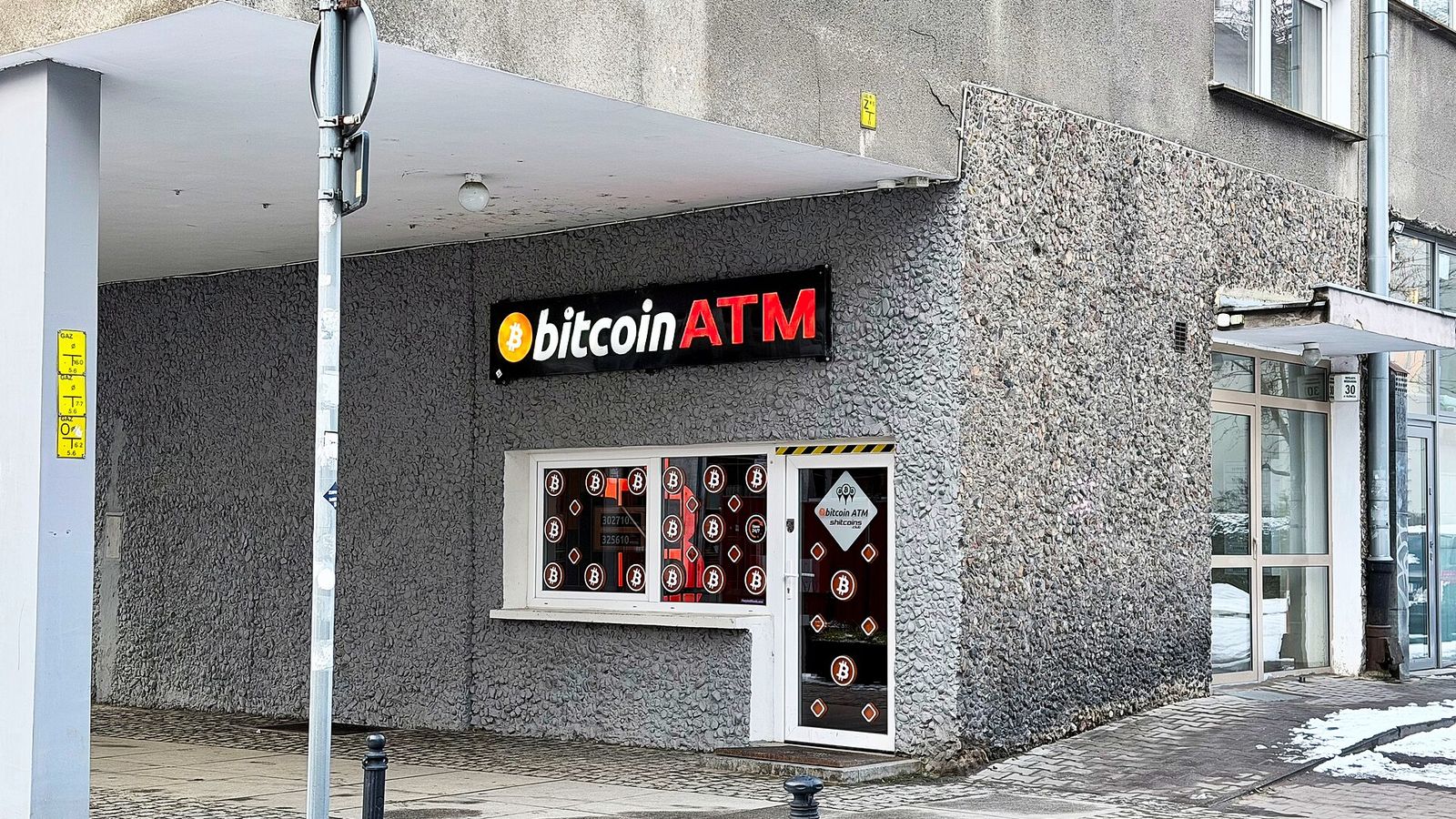
What Actually Went Live on Monday
On Monday, 19 October, five German savings banks started letting customers buy and sell crypto inside the App Sparkasse — the same app that holds their current account, their debit card and their standing orders. The five are Frankfurter Sparkasse, Taunus Sparkasse, Sparkasse Karlsruhe, Sparkasse Rottal-Inn and Niederrheinische Sparkasse RheinLippe. The product is branded Krypto, powered by Deka, and trading and custody run through DekaBank, the securities house owned by the savings banks themselves.
The asset list is short and deliberate: bitcoin, ether, XRP, solana and Polygon's POL. No privacy coins, no memecoins, no long tail of listings. You do not open an exchange account, you do not ship documents to an offshore entity, and you do not leave the banking app you have used since you were a teenager. You tap a tab, get a quote, and the position sits next to your savings plan.
Advertisement
337 Institutions, Five Live, 30 to 40 a Month
The German Savings Banks Association counted 337 Sparkassen in August. Only a handful are live, because every institution is legally independent and decides for itself whether and when to switch the product on. That is not a footnote, it is the entire rollout: the association expects 30 to 40 more savings banks to join every month, with the aim of connecting a large share of interested institutions in the first half of 2027.
Maximilian Wirth, who accompanied the project at the association, put the number of banks that expressed interest at more than 230. Run the arithmetic and the shape of the next twelve months becomes visible. Thirty-five institutions a month from a base of five gets the network close to a hundred by spring and most of the way through the interested list before autumn. Every one of those switches adds a customer base that has never had to download a crypto app in its life.
Advertisement
€0.99 Is the Sticker Price. The Spread Is the Real Fee.
Deka's price sheet, dated September 2026, is blunt about the mechanics: no minimum order, a cap of €250,000 per trade, and every order handled as a request for quote. Deka returns a binding price for a limited window, built from a market reference price plus a spread of its own. The sheet does not disclose that spread, and it lets Deka adjust pricing when volumes are large or volatility rises.
So compare two orders. On a €1,000 buy, a spot exchange at 0.1% costs about €1, and the €0.99 flat fee wins by a cent. On a €10,000 buy, 0.1% costs €10 while the flat fee stays €0.99 — but a 0.5% spread on the same order is €50, five times the fee. The app is cheap for small tickets, and the spread is what you actually pay at size. That is not a scandal, it is how bank-sold products have been priced for forty years, and it is the number to watch once customers can compare quotes side by side.
You Own a Claim, Not a Key
The custody model is the part retail buyers skim. Positions sit in pooled custody at the bank, customers never see a private key, and withdrawals are restricted to approved crypto-asset service provider addresses. For the saver who wants bitcoin next to the savings account and does not want to think about seed phrases, that is the feature, not the compromise. For anyone who wants to move coins to a hardware wallet at 2am, self-custody, DeFi or an airdrop claim, the App Sparkasse is the wrong door, and the terms say so quietly.
Both models can exist in the same market. What changed this week is that the default option for fifty million people is now a custodial bank account rather than a link to a crypto exchange.
Why XRP and POL Made the First Five
Bitcoin and ether are the obvious pair. Solana earns its slot on throughput and retail familiarity. The interesting names are XRP and POL. XRP has spent a decade being the token institutions talk about and retail brokers ignore; on 21 October it traded at $1.34, up 2.34% on the day, and it now sits inside a mainstream European banking app for the first time. POL is the cheapest of the five to move and the one closest to a payments pitch. The list reads like a compliance committee's shortlist: liquid, audited, no privacy features, no cult followings.
The Same Week, Europe Licensed Its First DLT Settlement Venue
Four days earlier, on 16 October, ESMA listed Baden-Württembergische Wertpapierbörse GmbH as the operator of Seturion — the first exchange group in Europe to hold a DLT Trading and Settlement System licence under the DLT Pilot Regime, granted by BaFin after a process run with ESMA and the ECB. Börse Stuttgart, which initiated the platform, estimates blockchain-based delivery and payment can settle minutes after a trade instead of days, with operational costs around 90% lower. Seturion is open to banks, brokers and trading venues across Europe, with flatexDEGIRO, Nasdaq's European venues and Société Générale among the partners.
Put the two stories side by side. The same German financial group that custody the coins in the Sparkasse app sits at the centre of the venue that will settle tokenised securities. Retail distribution, custody and market infrastructure are converging inside one regulated stack, and it happened in a single week in October.
The Market Side: $83,230 Is the Gate
The price did not celebrate. Bitcoin traded at $83,032 at 08:00 KST on 21 October, up 1.17% on the day with dominance at 59.81%. Ether was $2,453, solana $107, and Zcash — the outlier of the month — $1,262 after a 9.73% session. Bitcoin ran into the 21-day simple moving average at $83,230 and was pushed back toward $82,000 by sell orders sitting on that level.
The flow behind the move was narrower than the headline. US spot bitcoin ETFs took in $526.6 million on Monday, but BlackRock's IBIT accounted for $665.16 million of it — its biggest day since October 2025 — while Fidelity and Grayscale bled. Ether ETFs lost $103.3 million, their fourth straight day of outflows. That is bitcoin-specific demand, not a broad crypto bid, and it is exactly the kind of demand a bank-app on-ramp is built to widen.
In our own chart work from 17 October, the 82,940 gate and the 80,400 confluence were the levels that mattered after three separate rejections at 87,220. A daily close back above 83,230 turns the 85,000 to 87,220 shelf into the next target; a failure keeps the 80,400 retest live.
What to Watch
Three things. Whether the ramp actually runs at 30 to 40 institutions a month, because that number is a target, not a print. Whether Deka widens the asset list past five — the moment a mid-cap token appears in a Sparkasse app, the distribution argument for the entire market changes. And the FOMC meeting on 27 and 28 October, with the 10-year yield above 5% and Brent near $110, which decides whether the ETF bid that carried Monday survives the week.
JPMorgan Asset Management went the other way and put bitcoin into its long-term capital market assumptions for the first time, at a 10% annualised return over 10 to 15 years against 7.5% for US large caps and 5.5% for gold, with volatility around 55%. Forecasts are not flows. But when the largest retail banking network in Europe starts selling the asset inside its own app and the largest asset manager starts publishing a ten-year return for it, the argument is no longer whether crypto gets distribution. It is who owns the customer when it does.
Written by
EarnCrypto.dev Editorial
The EarnCrypto.dev editorial team researches and reviews AI mining platforms, pools and earning tools — publishing only what passes our own checks.
Related reading
IOST Doubled in 24 Hours on a Mandatory Hard Fork — 37 Billion Tokens Changed Hands and $0.00105 Is the Line That Decides
IOST ran 106% in a day after v4.0.0 became a mandatory hard fork, with 37 billion tokens traded and the $0.00105 fork-day close deciding what comes next.
Zcash's NU7 Call Lands Today: 25-Second Blocks, 60% of Fees Sealed to 2031 — and ZEC Is Up 8.9% at the 1,296.92 Gate
Zcash fixes the NU7 mainnet height today ahead of a 5 November target: 25-second blocks and 60% of fees reserved to 2031. ZEC is up 8.9% into 1,296.92.
Crypto Lending Vaults Just Passed $10 Billion — and S&P Built the Six-Part Scorecard That Decides What Pays 3% and What Pays 20%
Crypto lending vault deposits jumped from $4 billion to over $10 billion, paying 3% to 20%. S&P's new six-part scorecard and the SEC now grade the risk.