
The SEC Just Opened Onchain Trading for US Stocks - 75 Symbols, a Five-Year Clock and a $3.2 Billion Market Already Running
The SEC approved a five-year Innovation Exemption letting Tokenized Securities Venues trade real US stocks onchain, with volume caps and an issuer veto.
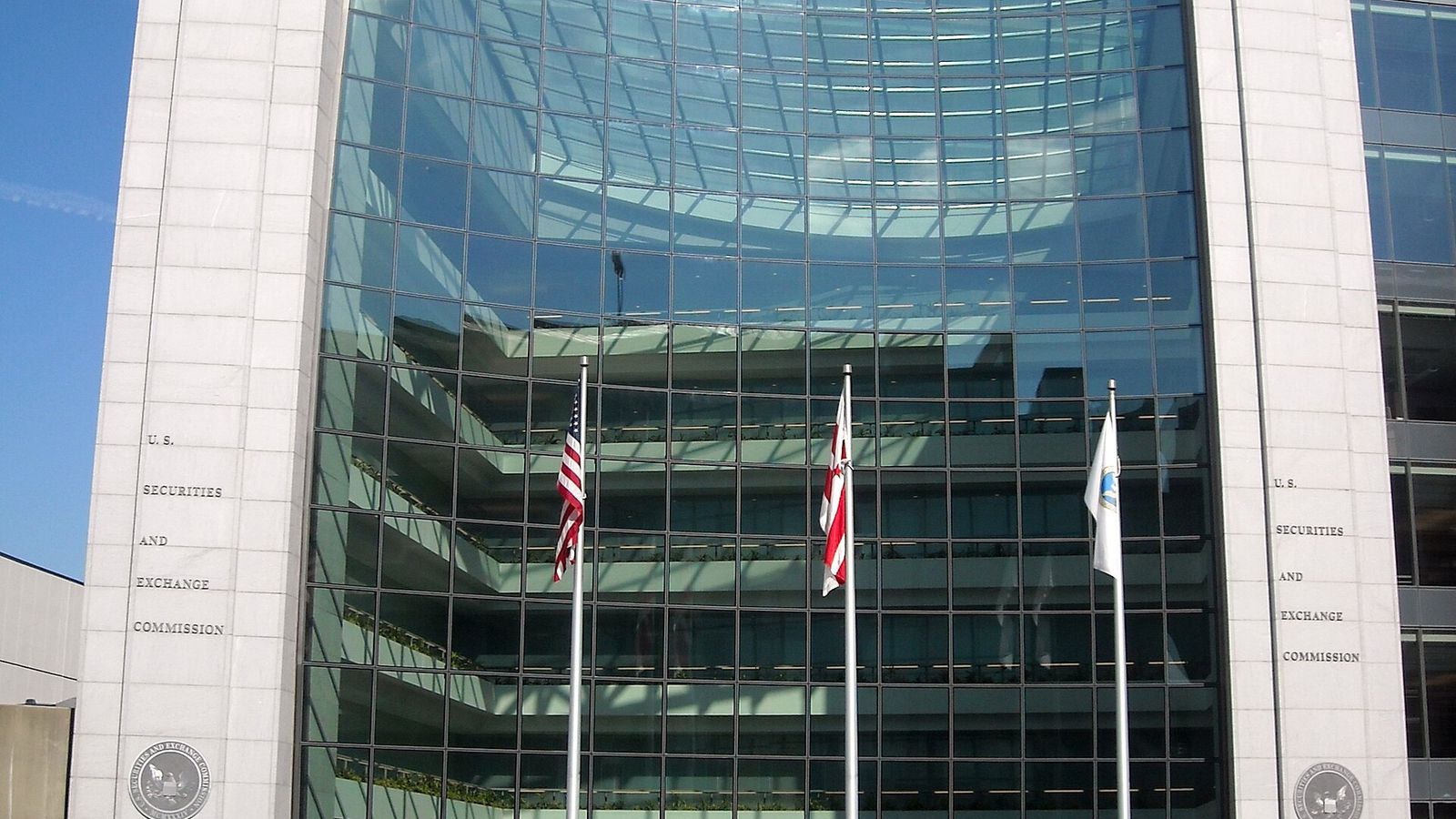
On September 17 the U.S. Securities and Exchange Commission did something it had never done before: it wrote relief that lets real American stocks - the same shares that trade on the Nasdaq and the New York Stock Exchange - change hands on blockchain rails, inside the United States, on permissioned venues, under a five-year clock.
The vehicle has a name: a Tokenized Securities Venue, or TSV. The order is Release No. 2026-90 and it landed two days after the Senate fell short on the CLARITY Act, 49-50 on cloture, leaving the industry without a market-structure statute. So the Commission moved under authority it already had.
Advertisement
What a Tokenized Securities Venue Actually Is
A TSV is an organization that brings buyers and sellers of tokenized NMS stock together through one or more permissioned AMM liquidity pools, and sets the standards for who may access that trading. The relief is narrow and conditional, not a licence to run an exchange: it exempts a qualifying venue from the Exchange Act definition of “exchange” for that covered activity only, and grants a parallel exemption from the “dealer” definition to firms that supply liquidity in the form of tokenized stock using their own proprietary capital.
The exemptions run five years from publication and expire September 17, 2031, unless the Commission extends or replaces them. The full terms sit in the exemptive order (Release No. 34-106402), which doubles as a request for comment. Anti-fraud and anti-manipulation law still applies in full, a TSV must be a U.S. person, and participation is permissioned rather than open to anonymous wallets.
Advertisement
“The Innovation Exemption, while temporary, would allow TSVs to trade tokenized NMS stock in a permissioned environment today while the Commission considers the need for additional action to facilitate onchain trading.” - SEC Chairman Paul S. Atkins
Atkins called the order a bridge toward durable rulemaking, which is the honest way to read it: a controlled experiment that produces real data before any permanent framework is written.
The 75-Symbol Cap and the Issuer Veto
The experiment is deliberately small. In the request for comment the SEC sets Tier 1 limits of 75 symbols and 0.25% of the underlying stock’s prior-month average daily share volume, against Tier 2 limits of 250 symbols and 2.5% of average daily volume. That is a pilot measured in basis points of a $77 trillion equity market - not a new after-hours Nasdaq on day one.
Tokens also have to be the real thing. A qualifying tokenized NMS stock must give holders the same rights and privileges as the traditional share of an equivalent class - dividends, voting, corporate actions. Synthetic wrappers and security-based swaps that merely track a price are outside the framework.
Issuers keep a direct control point. Before a TSV makes a tokenized stock from an unaffiliated third party available, it must give the underlying issuer written notice and an opportunity to object, and a timely objection blocks that token from trading under the exemption. Venues must also halt trading concurrently whenever the primary listing exchange halts the stock, publish notice about their operations and their own (and their affiliates’) trading, and run smart contracts that are auditable, public and deployed on a public permissionless ledger.
Timing matters for anyone waiting to trade: a venue must publish detailed public notice at least 30 calendar days before it operates and notify the Commission. Nothing switches on this weekend.
A $3.2 Billion Market Is Already Trading Off-Hours
Tokenized equities are not a pitch deck anymore. Data from Token Terminal puts the category at a record $3.2 billion market capitalization, up 1,219.3% over the past year, led by BNB Chain, Ethereum and Solana. The same dataset shows $15.75 billion in decentralized-exchange volume over 30 days, including $2.95 billion on weekends when the NYSE and Nasdaq are closed.
Off-hours turnover is the interesting part: weekend volume ran from $360 million to $1.6 billion per weekend in three weeks, a 4.4-fold jump. Token Terminal counts 3.7 million on-chain holders, and $247.8 million of tokenized stock value is already deployed inside DeFi - up 1,960.8% in a year. Grayscale, in late August, estimated only about 5% of the tokenized-equity market had found on-chain financial utility, with lending use on Solana protocols such as Kamino and Jupiter up roughly tenfold year over year. That gap between trading and utility is exactly what a rights-preserving, regulated venue framework could start to close.
The backdrop is alive too. Bitcoin traded around $80,900, Ethereum around $2,603 and Solana around $112.40 on September 18, a relief bounce after the Federal Reserve’s first hike since 2023 - 25 basis points to 3.75%-4.00% on September 16 - and $159.5 million of spot Bitcoin ETF inflows on September 17. CryptoSlate’s read on the exemption, after Congress killed its landmark crypto bill, and CoinDesk’s report on the venues. Both make the same point: the same publicly listed equities that institutions already trade are now being wired to rails that never close.
The CFTC Opened the Second Door the Same Day
Hours later the Commodity Futures Trading Commission’s Market Participants Division issued Letter 26-25, a no-action position for providers of passive software. In plain terms, software interfaces - including crypto wallet interfaces - can display market and position data, market registered firms and contracts, and transmit user-directed orders to registered futures commission merchants, introducing brokers and designated contract markets without registering as introducing brokers, provided the conditions on disclosures, recordkeeping and marketing are met. It generalises the relief the division granted to Phantom in March under Letter 26-09.
The relief stops precisely where passivity ends: a provider cannot hold customer assets, generate express buy or sell signals, or exercise discretion over routing or execution, and users must onboard directly with the registered firm. It is staff-level guidance, revocable, and lasts only until the Commission adopts rules. In the same week the CFTC sent its own crypto market rulemaking - “Regulation Crypto Asset Transactions and Regulation Crypto Asset Markets”, RIN 3038-AF80 - to the White House Office of Information and Regulatory Affairs, where it sits at the pre-rule stage.
What to Watch From Here
Three things decide how big this gets. First, the notice queue: which operators accept the symbol caps, the disclosure duties and the issuer-objection process, and how quickly the first TSVs publish their 30-day pre-launch notice. Second, the comment file on the order itself, because five years of conditional relief is a long time in crypto and a short time in market structure - the 2031 expiry is a real deadline, not a formality. Third, whether weekend volume holds above $1.6 billion once onshore venues give that activity a compliant home.
For anyone who has watched tokenized stocks trade offshore in wrappers that grant exposure but not ownership, the change is simple to state: the rights-bearing version is now being invited onshore, with caps, audits and issuer consent attached. The rails were already busy before the SEC said yes - now they have a rulebook.
Written by
EarnCrypto.dev Editorial
The EarnCrypto.dev editorial team researches and reviews AI mining platforms, pools and earning tools — publishing only what passes our own checks.
Related reading

ZRO Ran 57% in a Week as America's First Crypto Bank Put Its Stablecoins on LayerZero — the $1.34 Floor Decides What's Next
Anchorage Digital Bank made LayerZero the rail for its stablecoins and Tether's USAT is first through it. ZRO's 57% week printed a five-month high of $1.566.

HBAR Ran 40% Into the $0.1007 Gate It Has Not Closed Above Since June — With $109 Million of ETF Buying Behind It
HBAR ran 40% in six sessions into $0.10072, the gate it has not closed above since June, with $109.1M of ETF inflows and 10 million mainnet accounts behind it.

Helicon Goes Live Today: Avalanche Cuts the Staking Lock-Up From 14 Days to 48 Hours — and AVAX Ran 64% Into It
Avalanche's Helicon upgrade activates today at 15:00 UTC with 48-hour staking, auto-renewal and Continuous Execution — after AVAX ran 64% in five sessions.