
Russia Just Paid Its First Salaries in Digital Rubles: 12 Banks, a 120 Million Ruble Cutoff and a Parallel Crypto Rail
Russia's Finance Ministry paid wages in digital rubles for the first time, a month after 12 major banks and large retailers were required to support the CBDC.
On Friday, Russia's Ministry of Finance said some of its employees had received their wages in digital rubles - the first salary payments made through the Bank of Russia's central bank digital currency. Payments started on Oct. 1 on a voluntary basis, according to the ministry's statement.
The ministry did not disclose how many employees took part or how much money actually moved. What it pointed to instead was the proof of concept: during federal budget spending trials in 2025, about 16 million digital rubles - roughly $192,000 at the exchange rate Cointelegraph cited - were disbursed through the same rails. Bringing the budget process itself onto the platform is being handled by the Bank of Russia together with the ministry.
Advertisement
The Clock Behind This Started on Sept. 1
This is no longer a pilot. Federal Law No. 248-FZ set a binding rollout timetable, and the first mandatory phase took effect on Sept. 1, 2026: the country's 12 systemically important banks had to give clients access to digital ruble accounts, and retail companies that bank with them, with prior-year revenue above 120 million rubles, had to begin accepting digital ruble payments - a schedule confirmed by Interfax in July.
The next phases are already dated. On Sept. 1, 2027, banks holding a universal licence and retailers with revenue above 30 million rubles join. On Sept. 1, 2028, the remaining banks and smaller retailers follow, while outlets taking in under 5 million rubles a year stay exempt.
Advertisement
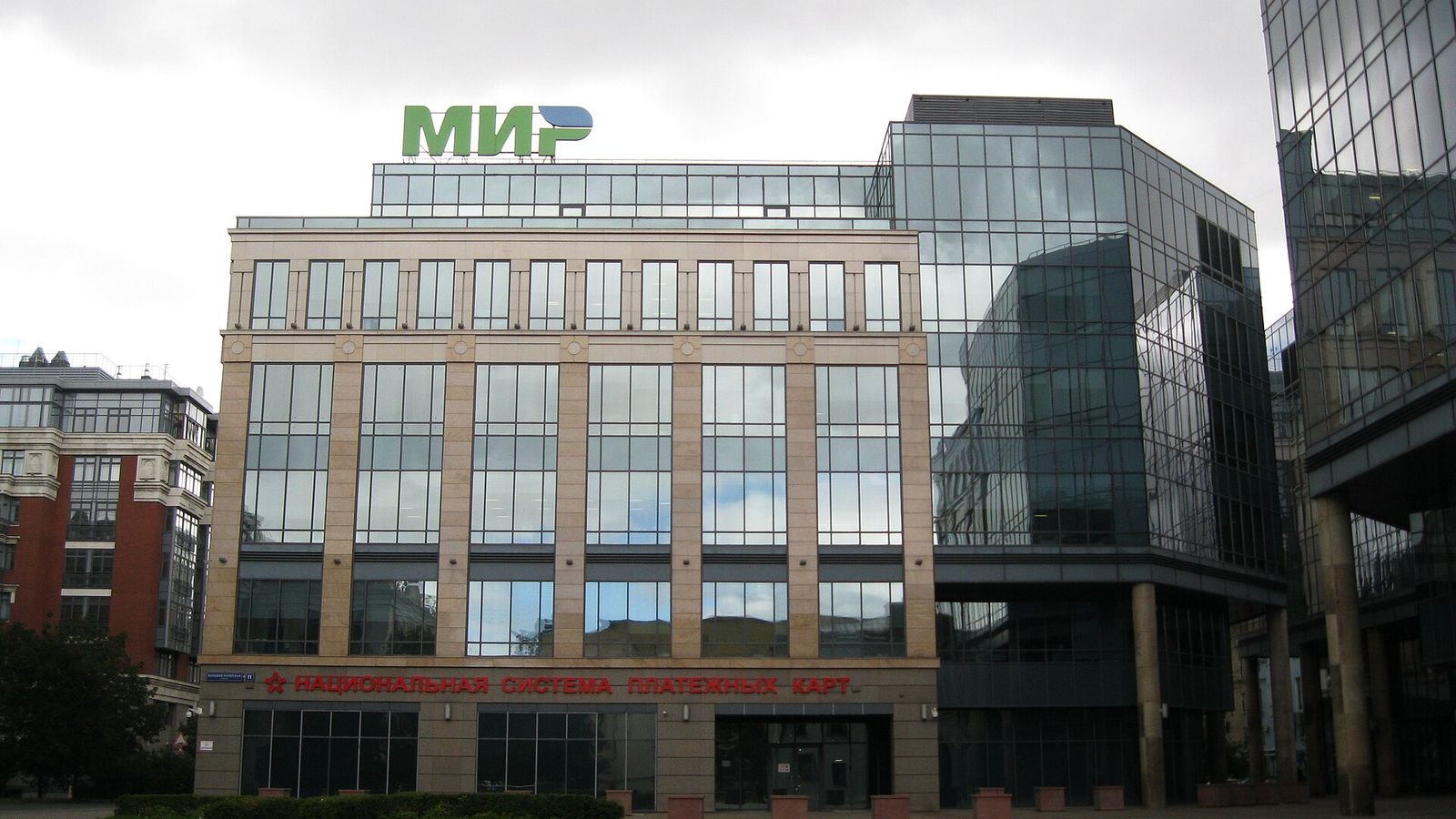
For individuals the process stays voluntary - no salary or pension is converted without consent - and all digital ruble transfers are fee-free for people. The same law also rolls out a universal QR code built on the National Payment Card System, which every bank had to be able to support by Sept. 1, 2026. Digital rubles are designed to become one of the payment options inside that single code, alongside the Faster Payments System, bank platforms and buy-now-pay-later services.
The Design Says Settlement, Not Savings
The Bank of Russia operates the platform and keeps the ledger, while commercial banks are only the access point through their own apps. Two rules make the intent explicit: wallet balances pay no interest, and credit or overdraft in digital rubles is prohibited. This is a payments rail, not a place to park money.
The fee schedule points the same way. Merchant acquiring in digital rubles is capped at 0.3% per transaction, with a ceiling of 1,500 rubles, and at 0.2% with a 10-ruble ceiling for utilities, housing and government payments. A state-run rail with capped fees is aimed directly at the cost of accepting payments rather than at attracting deposits.
It is also not a public blockchain. The platform is a centralised database with distributed ledger components and state-certified cryptography - no yield, no permissionless transfers, and no composability with DeFi. The contrast with a dollar stablecoin is the entire point, and it is the same gap that shows up in USDT's move onto Bitcoin's Lightning network, where settlement speed and open rails are the product.
"Digital rubles will circulate alongside cash and non-cash rubles ... All digital ruble transactions will be fee-free for individuals." - Bank of Russia, July 15, 2025
The Second Rail Went Live the Same Day
Sept. 1, 2026 was also the day Russia's crypto law, "On Digital Currencies and Digital Rights", took effect after Vladimir Putin signed it in early August. It puts crypto exchanges, brokers and digital depositories under Bank of Russia supervision, limits non-qualified investors to a 300,000-ruble annual purchase cap per intermediary after passing a test, and keeps the domestic ban on paying for goods and services with cryptoassets.
The carve-out is what matters for the market. Exporters and importers are explicitly permitted to use cryptocurrencies in cross-border settlements without limits, and foreign stablecoins get their own category - treated not as money but as a non-deliverable foreign instrument. Two rails, then: a state-run CBDC for money moving inside the country, and a supervised crypto channel for trade across its borders.
Both exist in a country whose on-chain footprint is already under sanctions. The EU's April 2026 package included a blanket ban on crypto providers established in Russia, and the ruble's largest on-chain token - A7A5, issued in Kyrgyzstan and backed by deposits at a sanctioned Russian bank - has been designated by the US, UK and EU. It still carries about $557 million of supply, per Elliptic's post-mortem on the token, even after its main trading venues went offline and volumes collapsed.
The Scale Check
Dollar-pegged stablecoins carry about $311.6 billion of supply across 429 assets, according to DefiLlama on Oct. 4 - against the roughly $192,000 that moved through the digital-ruble budget trial. Crypto itself was marking time that day: bitcoin traded near $85,342, ether near $2,701, the total market sat at $3.04 trillion and bitcoin dominance at 56.3%.
What to Watch
Three things decide whether the digital ruble becomes more than a salary experiment. First, the Sept. 1, 2027 phase, when every universal-licence bank and mid-size retailer has to be connected - that is where volume can scale. Second, whether budget and tax payments move onto the rails the Finance Ministry is now integrating, because state payments reach every household at once. Third, whether other central banks copy a template of no interest plus capped fees, which is the opposite of what holders of a $312 billion stablecoin market want from a currency.
A first salary paid in a CBDC is a real milestone, but the number that would settle the argument is the one the ministry did not publish. The design choices - no yield, capped fees, a state-operated ledger - describe a rail built for circulation rather than for holding. That is the part other central banks are reading.
Written by
EarnCrypto.dev Editorial
The EarnCrypto.dev editorial team researches and reviews AI mining platforms, pools and earning tools — publishing only what passes our own checks.
Related reading

Derive Moved Its $14.2 Billion Options Book to Ethereum and Picked Celestia for the Data — TIA Ran 34% to a $0.6333 High
Derive V3 finished its move to Ethereum on October 8 and publishes state data to Celestia. TIA then ran 34% into $0.6333, where $0.5302 decides the next leg.

ESMA Just Closed the Stablecoin Loophole EU Platforms Were Using — January 8 Is the Deadline for $184 Billion of USDT
ESMA's October 8 opinion extends MiCA enforcement to custody, transfers and advice: a January 8 deadline, with $184 billion of USDT the largest asset in scope.

80% of Crypto Trading Was Off-Limits to US Institutions — Coinbase Just Merged It Into One Regulated Order Book
Coinbase folded Deribit into one venue: a single regulated order book for US and global derivatives, $30 billion of bitcoin options and 10x spot margin.