
80% of Crypto Trading Was Off-Limits to US Institutions — Coinbase Just Merged It Into One Regulated Order Book
Coinbase folded Deribit into one venue: a single regulated order book for US and global derivatives, $30 billion of bitcoin options and 10x spot margin.
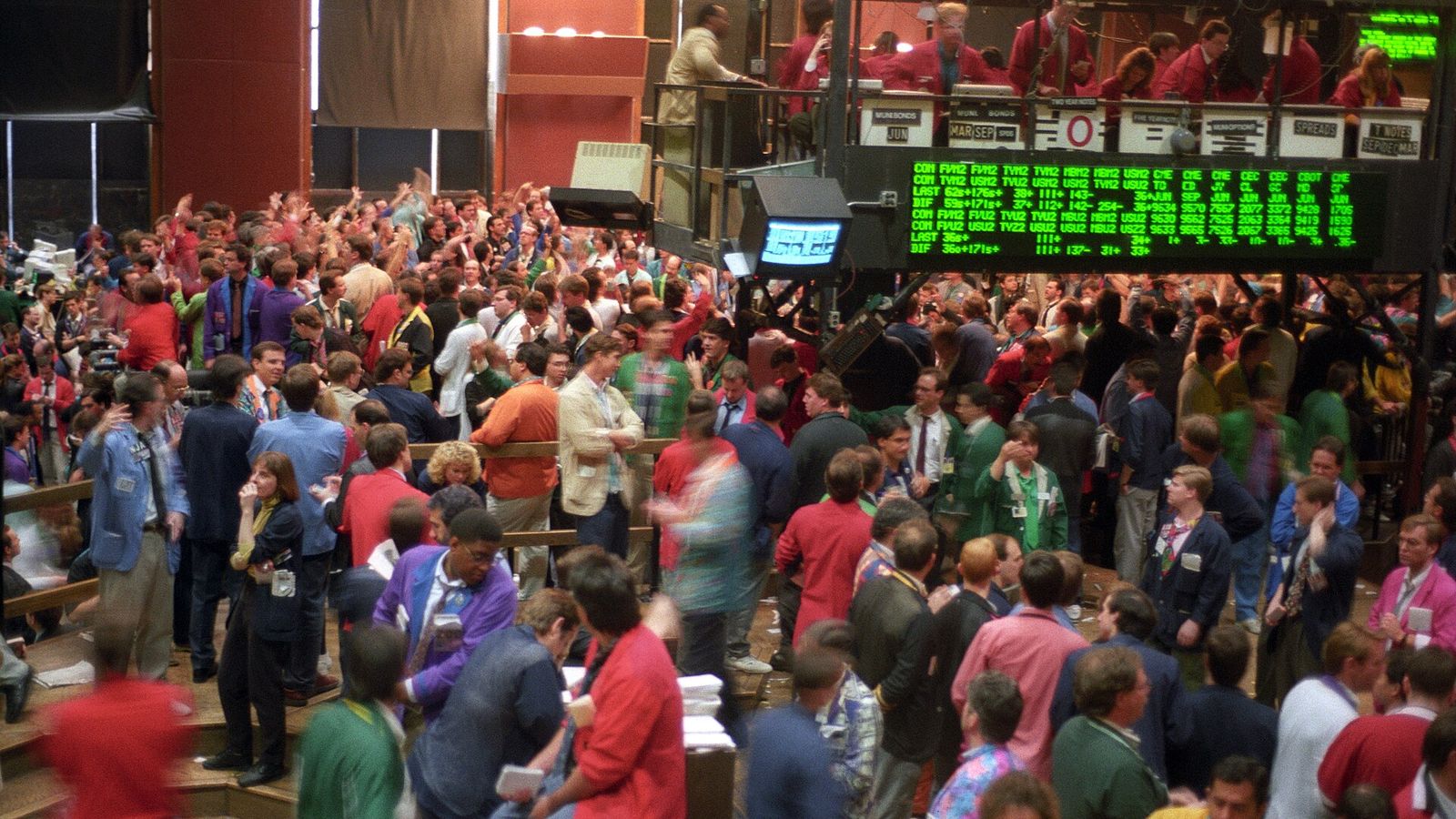
On October 6, at Token2049 in Singapore, Coinbase said the quiet part out loud: its acquisition of Deribit is fully integrated, and the combined venue now runs under a single name, Coinbase Global Exchange.
The company had bought Deribit — one of the largest crypto options exchanges in the world — for roughly $2.9 billion back in August 2025. What closed this month is the plumbing. Perpetuals trading that used to sit on Coinbase International Exchange moved onto Deribit on October 1, and Coinbase Financial Markets is now wiring eligible US institutions into the same book that global traders already use.
Advertisement
That is a bigger deal than it sounds, because of one number: derivatives account for roughly 80% of total crypto trading volume worldwide.
For the first time in market history, we are connecting US and international derivatives markets into a single liquidity pool. — Coinbase
The 80% That Lived Offshore
For years, the deepest crypto derivatives markets — the perps and options where most of the volume actually happens — sat outside US reach. American traders and institutions had the capital and the sophistication, but no compliant, regulated path to those venues. Going offshore meant multiple counterparties, fragmented infrastructure and separate legal entities per strategy.
Advertisement
That gate opened on May 29, 2026. CFTC staff issued an interpretation and a no-action position confirming that the perpetual contracts listed on Deribit FZE — a Dubai foreign board of trade regulated by VARA — can be categorised as foreign futures under Commission Regulation 30.1. The same day, the Commission approved KalshiEX's BTCPERP contract, and the two actions together drew a line between perpetuals on thin, manipulable spot markets and perpetuals on deep, liquid spot markets.
The no-action relief is conditional, and the conditions are specific. Coinbase Financial Markets, Coinbase Bermuda Limited and Deribit must remain wholly-owned subsidiaries of Coinbase Global. Customers must get access to audited financials and a SOC 2 report. None of the entities can carry a criminal disqualification. Meet those terms and the FCM can post customer digital commodities and payment stablecoins with its affiliated foreign broker to margin foreign futures and options positions.
Coinbase describes the result as the first regulated structure of its kind: a US futures commission merchant able to connect American clients to global crypto derivatives liquidity. Regulatory commentary has framed the same letter as the moment perpetual futures came onshore — a framework rather than a one-off exemption.
What Actually Moved on October 1
The migration itself was unglamorous and precise. All perpetuals trading previously powered by Coinbase International Exchange now runs through Deribit by Coinbase. There was roughly an hour of downtime while positions were migrated, and open perpetual futures orders were cancelled and had to be re-entered.
Funding mechanics changed too. Where funding was previously charged or credited once an hour, it now accrues continuously through the day and settles net once daily at 08:00 UTC. Two guardrails were added: a clamp that drops the funding rate to zero when the market price sits within 0.025% of the index price, and a cap on extremes — 0.5% for bitcoin, 1.0% for ether and 5.0% for USDC/USDT pairs per eight-hour period.
Price feeds and market data now come from Deribit, so charts, marks and displayed funding can differ from what members saw before. Identity verification was not repeated, no migration fees were charged, and API traders were moved to a new Deribit-powered gateway with a published migration guide.
What US Institutions Get
For institutional clients, Deribit options and perpetual futures are now reachable through the same Coinbase Prime platform already used for spot trading, futures, custody, financing and staking. One account, one compliance framework and one view of risk across the full derivatives curve, instead of a stack of offshore entities.
The liquidity being connected is not small. Deribit held more than $30 billion in bitcoin options open interest as of September 30 and processed over $1 trillion in trading volume last year. Across Coinbase's derivatives venues, daily open interest stood at $37.58 billion on September 30, with Deribit accounting for $36.16 billion of it.
Onboarding for institutional options access is open now, with trading expected in the coming weeks. Options for eligible non-US traders land in the coming weeks as well. US retail options access is expected later this year, and dated futures may follow. The Coinbase Help documentation spells out the phasing, and notes that eligibility varies by jurisdiction and entity.
What Everyone Else Gets
Retail traders get tooling that used to require a trading terminal. Coinbase Advanced adds a strategy builder that turns a market view into a multi-leg order and executes it in one step, a payoff diagram that shows profit levels and exact breakeven points before entry, and a portfolio screen where greeks, funding costs, order depth and liquidity sit next to the order interface.
Margin gets restructured as well. Spot margin lets eligible traders borrow against collateral — up to 10x on selected major assets and up to 5x on other supported assets, with more than 15 assets accepted as collateral. Because that borrowed exposure lives in the same margin portfolio as derivatives, offsetting positions across an account lower the collateral required to hold everything open.
Underneath all of it, Coinbase swapped in a new matching engine built to handle institutional and retail order flow on a single book, streamlined onboarding down to minutes, and re-cut fee tiers so they activate from $10,000 in qualifying volume — counting spot and derivatives activity together.
Coinbase Pro Is Coming Back
The company also confirmed that Coinbase Pro returns at the end of this year, rebuilt rather than revived: faster order routing, tighter execution flows and the professional tooling that high-volume traders asked for. The original Pro was shut down in 2022 when advanced trading moved into the main app. The new version is pitched as one desk for spot, futures, perpetuals, options and equities.
One more piece landed in September: CFTC approval for Coinbase Clearing LLC, the company's own derivatives clearing organisation. Exchange, futures commission merchant and clearing house under one corporate roof is the part of the stack that exchanges elsewhere have spent years assembling.
What to Watch From Here
Three things decide whether this becomes the new default or just a bigger venue list. First, the options rollout — non-US eligibility in weeks, US retail later this year — and whether the merged book actually sees open interest migrate rather than simply coexist. Second, how the incumbent US venues respond now that a compliant path to offshore-style perpetuals exists. Third, the plumbing details: daily funding settlement and hard caps on extremes change how perp carry trades behave, and traders who built strategies around hourly funding will need to re-fit them.
The broader signal is about structure. For most of crypto's history the venue layer was fragmented by jurisdiction — the deepest markets offshore, the most regulated ones onshore, and traders forced to bridge the gap with VPNs and multiple accounts. A merged US-and-global order book is the first serious attempt to collapse that gap into a single regulated pool.
Whether that pulls the missing 80% of volume onshore, or just gives institutions a cleaner door to the same liquidity, is the part the next two quarters will answer.
Written by
EarnCrypto.dev Editorial
The EarnCrypto.dev editorial team researches and reviews AI mining platforms, pools and earning tools — publishing only what passes our own checks.
Related reading

Derive Moved Its $14.2 Billion Options Book to Ethereum and Picked Celestia for the Data — TIA Ran 34% to a $0.6333 High
Derive V3 finished its move to Ethereum on October 8 and publishes state data to Celestia. TIA then ran 34% into $0.6333, where $0.5302 decides the next leg.

ESMA Just Closed the Stablecoin Loophole EU Platforms Were Using — January 8 Is the Deadline for $184 Billion of USDT
ESMA's October 8 opinion extends MiCA enforcement to custody, transfers and advice: a January 8 deadline, with $184 billion of USDT the largest asset in scope.
Bitcoin's $6,606 Slide Wiped Out $1.16 Billion in Longs — the $85,500 Reclaim That Decides $92,000 or $75,000
Bitcoin lost $6,606 from its October high and $1.16 billion of leveraged longs were liquidated in 24 hours. Here are the exact levels that decide October.