
RENDER Is Up 49% From Its September Low and Tomorrow the Node Bonus Starts Accruing — the $2.095 High Decides the Next Leg
Render's node bonus starts accruing October 1 with claims open October 8, and RENDER holds $1.91 after a 49% run off $1.284. The $2.095 high decides the leg.
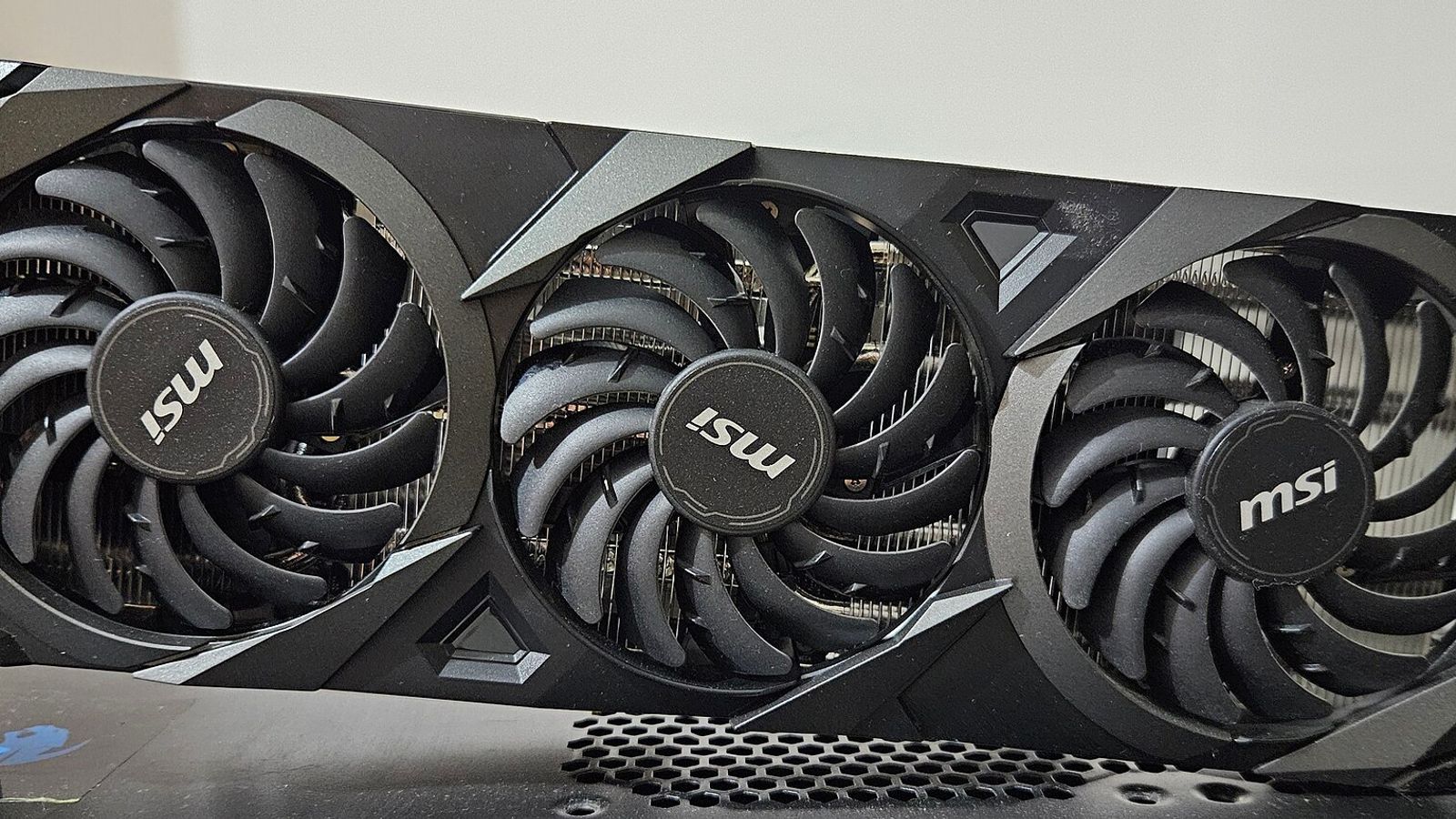
Render has spent September turning a GPU network expansion into a price move. RENDER, the token behind the decentralized compute marketplace that renders frames for studios and runs AI jobs, traded from a $1.284 low on September 16 to a $2.095 high on September 27 — a 63% move — and closed September 30 at $1.914 on the RENDER/USDT pair. Live price data is on CoinGecko.
The next eight days have a date on them. Render's node bonus program begins accruing on October 1, and claims open on October 8. That bonus pays existing rendering node operators an extra RENDER allocation based on the frames they have already rendered — retroactive pay for the supply side of the network, landing in the same window as another onboarding round for new GPU operators.
Advertisement
What The Node Bonus Actually Is
Render runs its node economics on a Burn-and-Mint Equilibrium. Operators draw from an emissions pool — Year 2 emissions were set at 5.9 million RENDER under RNP-018, with weekly node job rewards running near 20,700 RENDER — and the compute subnet pays a per-epoch baseline that was lifted to 25 RENDER per epoch for an RTX 4090-class node under RNP-021.
The bonus sits on top of that as a retroactive layer, according to the program announcement. Accruals begin October 1 and operators can claim from October 8, so anyone who was running frames through the September ramp gets a second payment for work already completed rather than a new subsidy for future uptime.
Advertisement
The GPU Supply Side Keeps Widening
Render also opened a fresh onboarding round for its rendering node pool, and the requirements are deliberately modest: fewer than four GPUs, at least 16GB of VRAM, and reliable weekday availability. That targets the long tail of consumer hardware rather than a handful of data-centre operators.
The compute side carries its own published math in RNP-019: an estimated 100-node first cohort with an RTX 4090 as the baseline spec, an estimated 8,500 RENDER per month pool at near-full capacity, 2 RENDER per epoch per node for availability, and a 10 RENDER per epoch job baseline at 100% utilisation scaled by a specification multiplier. The Foundation is authorised to raise those numbers by up to 3x as the trial meets market forces.
Usage is what turns an emissions story into a demand story. A burn tracker logged 4,588 RENDER retired across 183 transactions in a single day — roughly 28% of that day's emissions — and burned tokens tied to network jobs are up about 279% year over year. AI workloads now account for roughly 35% to 40% of network activity.
Paid In RENDER, Wrapped By Institutions
The clearest sign the token is being spent is on the product side. OTOY merged its Canvas and Studio platforms into a single tool that accepts RENDER for payment across more than 30 AI models spanning image, video, 3D and world generation, work that runs on the decentralized GPU pool rather than a centralized cloud.
On the institutional side, Grayscale's Decentralized AI Fund held roughly 21.6% of its weight in RENDER after the Q2 2026 rebalance — the same basket that carries NEAR and TAO (Bittensor). The wrapper is not a new demand source by itself, but it does keep the AI-infrastructure allocation flowing to the same token the network pays its operators in. Updated fundamentals are tracked on CMC AI.
What The Chart Actually Says
Binance's daily RENDER/USDT candles tell a clean story. A $1.284 low on September 16, a 5.2 million-volume breakout candle on September 18, then six sessions of higher closes and expanding volume into the $2.095 high on September 27. September 20 and 21 both printed above 7.8 million in volume, against under 1.9 million across the September 12 to 14 base.
Since the high, RENDER has coiled rather than dumped: a $1.882 low on September 28, $1.861 on September 29, then a $1.893 to $1.999 range on September 30 with the close at $1.914. That leaves a well-defined $1.861 to $2.095 shelf.
BULL case: reclaim $2.00, then close a daily candle above the $2.064 to $2.095 high. The measured move of that shelf puts $2.30 to $2.33 in play, with the March 2024 all-time high of $13.53 still far overhead. BEAR case: a daily close below $1.861 opens the 0.382 retrace of the entire $1.284 to $2.095 leg at $1.786, and below that the $1.72 to $1.79 zone where the September breakout began. Invalidation: a close under $1.79 cancels the September structure, a close above $2.095 extends it.
The Next Eight Days Decide The Leg
September closes with the token up roughly 34% for the month and the network's supply-side incentives finally paying backward instead of forward. Accruals arrive October 1, claims open October 8, and the 100-node compute cohort still has to fill. If the bonus brings GPU capacity in, the follow-on question is whether AI demand pays for it — and $2.095 is where the market will answer first. The network's own docs are at rendernetwork.com.
Rewards initially incentivize availability, transitioning to usage-based as node utilization scales. — RNP-019, Render Network Proposal
Written by
EarnCrypto.dev Editorial
The EarnCrypto.dev editorial team researches and reviews AI mining platforms, pools and earning tools — publishing only what passes our own checks.
Related reading

Derive Moved Its $14.2 Billion Options Book to Ethereum and Picked Celestia for the Data — TIA Ran 34% to a $0.6333 High
Derive V3 finished its move to Ethereum on October 8 and publishes state data to Celestia. TIA then ran 34% into $0.6333, where $0.5302 decides the next leg.

ESMA Just Closed the Stablecoin Loophole EU Platforms Were Using — January 8 Is the Deadline for $184 Billion of USDT
ESMA's October 8 opinion extends MiCA enforcement to custody, transfers and advice: a January 8 deadline, with $184 billion of USDT the largest asset in scope.

80% of Crypto Trading Was Off-Limits to US Institutions — Coinbase Just Merged It Into One Regulated Order Book
Coinbase folded Deribit into one venue: a single regulated order book for US and global derivatives, $30 billion of bitcoin options and 10x spot margin.