
Raydium Just Printed $440K in Daily Fees — the $1.44 Gate That Decides Whether RAY Reaches the November Shelf
Raydium's StonkFun deal drove $440K in daily fees — its best day since July 2025. A close above the $1.4428 gate opens the $1.50-1.73 shelf; $1.145 holds.
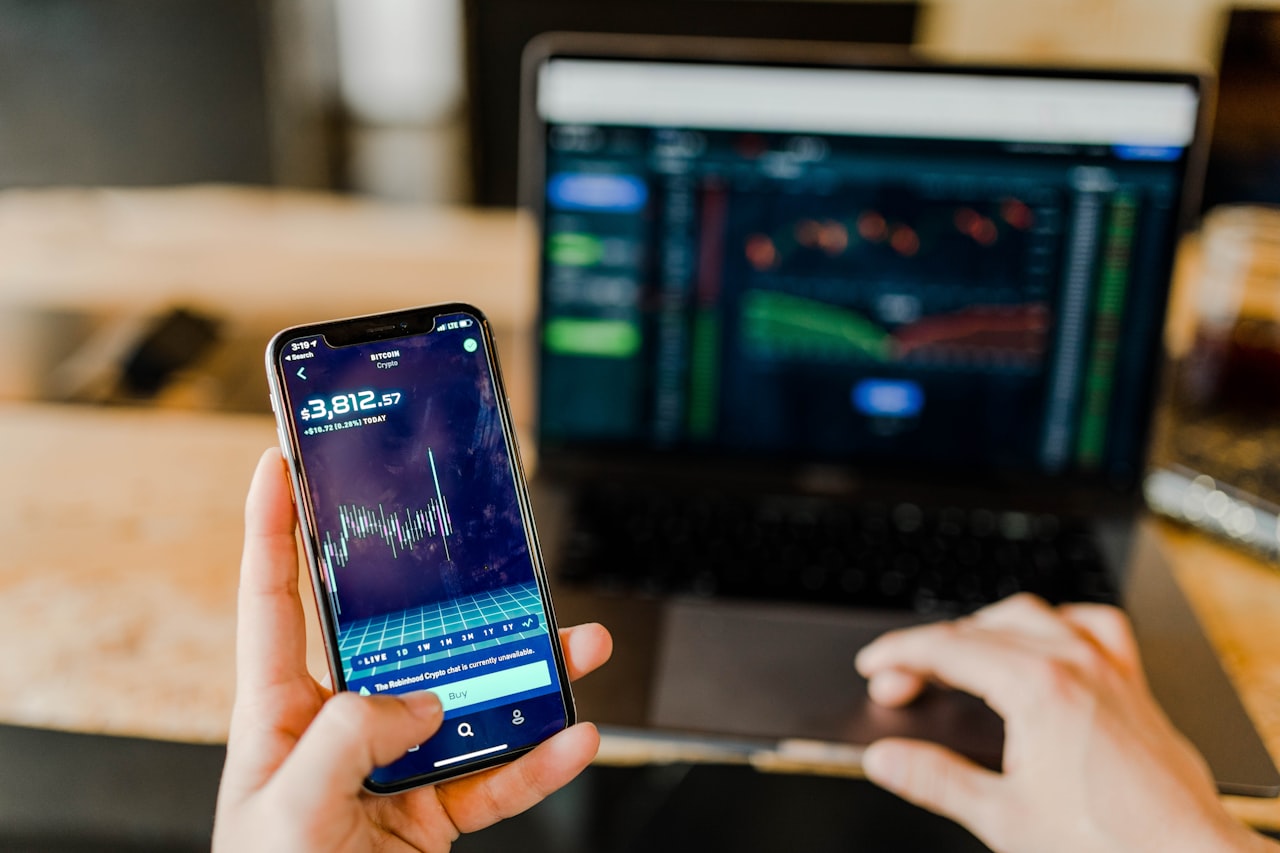
Raydium just printed its biggest revenue day in over a year — and the trigger was an integration, not a token listing. When StonkFun, the Solana launchpad for tokenized stocks and ETFs, switched its issuance rails to Raydium's LaunchLab on September 6, RAY answered with its loudest candle in months: a 41.6% daily close, an intraday tag of $1.4428, and 31.3 million RAY changing hands on Binance — roughly nineteen times the two-week coil volume that preceded the move.
The fee engine moved with it. Raydium pulled in close to $440,000 in protocol revenue on September 6per CryptoBriefing — the platform's best single day since July 2025 — while STONK, StonkFun's own token, ripped more than 250% intraday before settling near a $113 million market cap. Jupiter's JUP rode the same Solana-DEX wave with a roughly 21% gain.
Advertisement
StonkFun Just Funneled Its Launches Into Raydium's Pools
StonkFun builds tokenized versions of stocks, ETFs, commodities and crypto assets on Solana. The upgrade announced on September 6: new token launches now run through LaunchLab, meaning every deployment starts on a bonding curve and, once it graduates, migrates directly into Raydium's CPMM pools with routing handled by the DEX itself. Deployment costs dropped from 0.29 SOL to 0.03 SOL — a roughly 90% cut — and projects can pair against custom quote assets instead of defaulting to SOL or USDC.
Before the switch, StonkFun had already routed about $219 million of its $392 million lifetime volume through Raydium and generated over $1.21 million in platform revenue. LaunchLab, for its part, contributed roughly 21.7% of Raydium's net revenue in Q2 2025. The integration removes the friction between those two numbers — every future graduation now lands its liquidity and its fees directly on Raydium's books.
Advertisement
Whether a project graduates and whether there is trading activity post-graduation will be reflected more quickly in Raydium's pools.
— HTX Research, on the structural meaning of the LaunchLab hookup
The Buyback Engine That Makes Volume Matter
The reason RAY holders read this as a structural shift rather than a pump is the fee loop behind the DEX. Raydium routes 12% of trading fees on every pool typeinto open-market RAY buybacks. On August 31 the protocol announced its fee-funded program has now accumulated more than 30% of RAY's circulating supplyper Solana Compass, with cumulative buyback spending past $190 million and annual new issuance of only about 1.9 million RAY. The bought-back tokens sit in a public on-chain wallet — the entire loop is auditable on Solscan.
More launchpad volume feeds straight into that loop. CLMM and CPMM pools send 84% of fees to liquidity providers, 12% to buybacks and 4% to the treasury, while standard AMM pools split 88/12. With StonkFun funneling new issuances through LaunchLab, Raydium earns at every stage of a token's life — bonding-curve trades, the graduation moment, and the post-launch pairs — and the buyback share scales with the volume.
What the Chart Says: The $1.44 Gate
On the Binance daily, RAY spent most of 2026 grinding inside a range after the October 2025 crash: a $0.50 low in February, a ceiling near $0.91 through the spring, and a summer coil between $0.59 and $0.86. The September 5 close at $0.9075 was already the first daily close above that April shelf. September 6 did the rest — clearing the January 2026 high of $1.277 on a closing basis and tagging $1.4428, the last overhead zone before the November 2025 breakdown (price last closed above $1.28 on November 15, 2025).
The pullback since has been orderly: September 7 dipped to $1.1452 before buyers returned, and the September 8 session is back near $1.25. Above, $1.4428 is the gate — a sustained reclaim opens the November shelf at $1.50-1.73, where eight sessions traded above $1.50 before the December slide. Below, the pivot stack is $1.1452, then the round $1.00, then the $0.9075 breakout shelf that flipped April's ceiling into support. A daily close back under $0.91 would put the coil retest back in play.
What Separates This From a One-Day Pump
The honest tell is fee sustainability: whether StonkFun keeps graduating tokens and whether pool volume stays elevated in the weeks ahead. What is different this time is the wiring — the launchpad volume now settles on Raydium's own pools, and 12% of it mechanically buys RAY off the open market. Even if the first spike cools, the fee loop compounds from a higher baseline than the one the market priced in August. Live data has RAY near $1.25 with a market cap around $334 million and a rank just outside the top 120, per CoinGecko — up more than 50% on the week.
Written by
EarnCrypto.dev Editorial
The EarnCrypto.dev editorial team researches and reviews AI mining platforms, pools and earning tools — publishing only what passes our own checks.
Related reading
ZRO Ran 57% in a Week as America's First Crypto Bank Put Its Stablecoins on LayerZero — the $1.34 Floor Decides What's Next
Anchorage Digital Bank made LayerZero the rail for its stablecoins and Tether's USAT is first through it. ZRO's 57% week printed a five-month high of $1.566.

HBAR Ran 40% Into the $0.1007 Gate It Has Not Closed Above Since June — With $109 Million of ETF Buying Behind It
HBAR ran 40% in six sessions into $0.10072, the gate it has not closed above since June, with $109.1M of ETF inflows and 10 million mainnet accounts behind it.
Helicon Goes Live Today: Avalanche Cuts the Staking Lock-Up From 14 Days to 48 Hours — and AVAX Ran 64% Into It
Avalanche's Helicon upgrade activates today at 15:00 UTC with 48-hour staking, auto-renewal and Continuous Execution — after AVAX ran 64% in five sessions.