
Only Two of 452 Stablecoins Need a Federal Charter — Six Senators Told Treasury the Other 450 Shouldn't Wait on a 2027 Review
Treasury's proposed safe harbor covers issuers waiting on the OCC but not the states. Only USDT and USDC clear the $10 billion line; 450 assets sit below it.
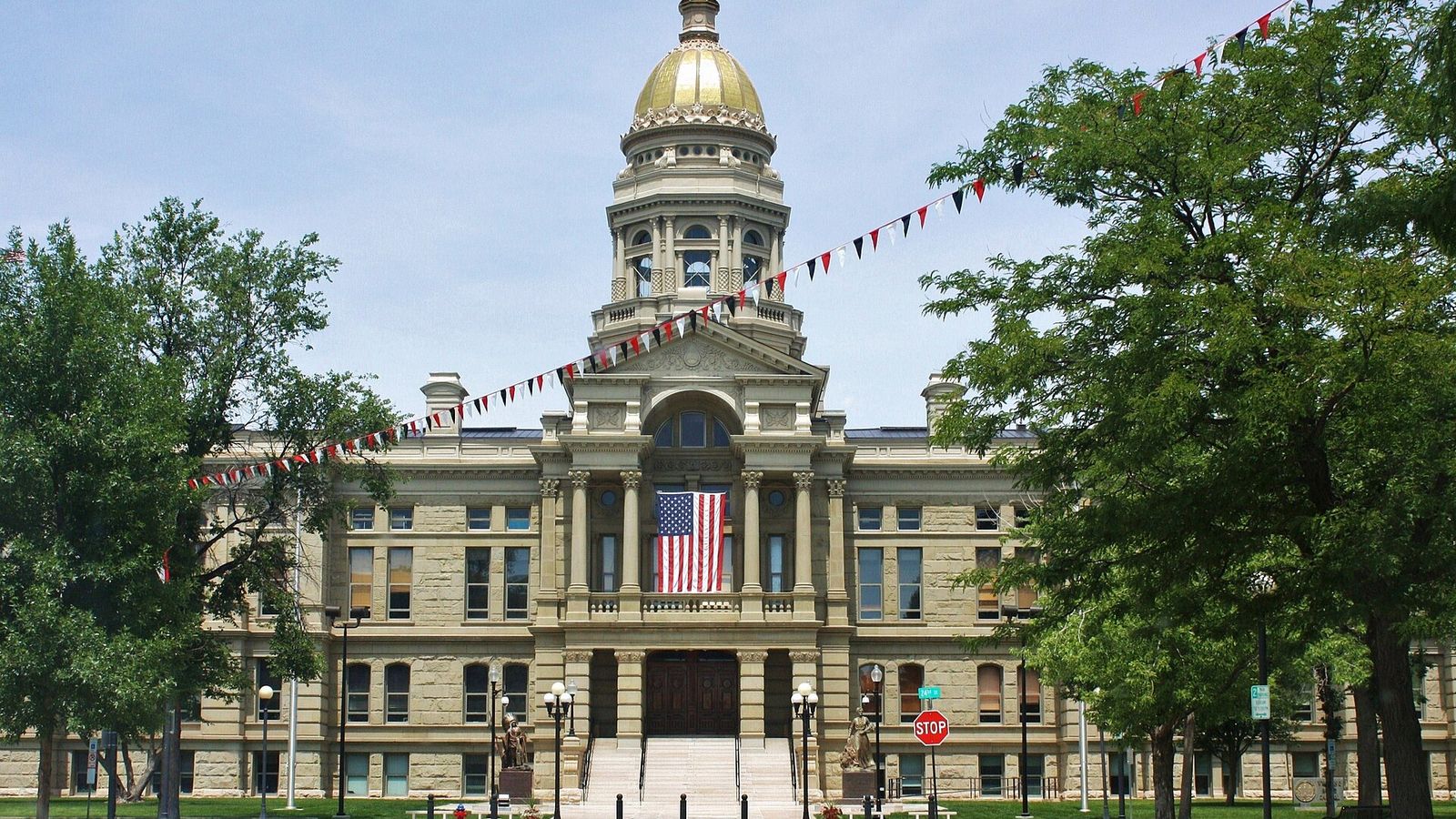
Six United States senators sent a letter to Treasury Secretary Scott Bessent on Wednesday, 18 November, asking him to give state-supervised stablecoin issuers the same protection his department has already proposed for issuers supervised by the Office of the Comptroller of the Currency. It was signed by Cynthia Lummis of Wyoming, who chairs the Senate Banking Committee's digital assets subcommittee, and Kirsten Gillibrand of New York, with Angela Alsobrooks of Maryland, Kevin Cramer of North Dakota, Pete Ricketts of Nebraska and Mark Warner of Virginia. Three Republicans, three Democrats.
None of them is asking for a new law. They are asking Treasury to stop writing a rule that treats two issuers the same way on paper and differently in practice.
Advertisement
What the letter actually asks for
Treasury's proposed rulemaking hands a safe harbor from section 3 of the GENIUS Act to issuers whose applications are pending at a federal regulator, if that regulator grants a waiver. There is no matching language for a state that has certified its regime as "substantially similar" to the federal framework but is still waiting for the Stablecoin Certification Review Committee to sign off during 2027.
"For Treasury to finalize this proposal in a way that reflects Congressional intent, it must allow issuers to choose from state or federal charters, as contemplated by the GENIUS Act, without the risk of business disruption or uncertainty," the six wrote.
Advertisement
The argument is not about the standard. It is about who carries the risk of the gap between a law taking effect and a committee finishing its work. On the federal side that risk has been absorbed by Treasury's own waiver. On the state side it currently sits with the issuer.
The line the law draws is $10 billion
GENIUS lets an issuer with $10 billion or less in outstanding stablecoins operate under a state regime, as long as that regime is substantially similar to the federal one. Above that number, federal supervision. That single threshold decides which issuers are even in this conversation, and the market is not spread evenly around it.
DeFiLlama's stablecoin board counted 452 pegged dollar assets on 19 November holding $286.38 billion between them. Two of those assets are above $10 billion: USDT at $175.08 billion and USDC at $68.49 billion. Together that is $243.56 billion, or 85.05% of the entire category.
The other 450 assets hold $42.81 billion. The largest of them is Sky's USDS at $5.25 billion, roughly halfway to the line, then Ethena's USDe at $4.90 billion, DAI at $4.59 billion, World Liberty's USD1 at $2.91 billion, Ripple's RLUSD at $2.81 billion, Global Dollar at $2.62 billion and PayPal's PYUSD at $2.38 billion. Eleven issuers sit between $1 billion and $10 billion, carrying $31.06 billion between them, and 41 sit above $100 million.
Those eleven are the population the state-charter question is actually about. They are large enough that their reserves and their redemption promises are systemic to the people holding them, and small enough that a federal charter is not obviously the cheaper or faster route on the day they launch.
Why Wyoming is in the room
Wyoming built a Special Purpose Depository Institution charter in 2019, a fully reserved, state-regulated home for digital asset companies, years before Congress wrote a federal framework at all. Congress then wrote section 4(c)(7) into GENIUS to give states with existing digital asset regimes an expedited certification path, on the explicit reasoning that their rules were already substantially similar. The letter names Wyoming, New York and Nebraska as the states that path was built for.
That is the awkward part of Treasury's proposal. A state Congress itself treated as presumptively compliant is the one left without cover while the review runs, and the issuers inside it are the ones whose business plans assumed the state route was real.
The clock is the whole story
Three dates matter. The OCC's final rule is scheduled to take effect in January. The Stablecoin Certification Review Committee takes up the state certifications during 2027. States have until January 2028 to submit those certifications, which is the outer edge of the transition, not the point at which protection begins.
Read together, that is a window of more than a year in which a state-chartered issuer can be operating under a regime that is not yet certified, with no safe harbor if the certification slips. The senators are asking Treasury to close precisely that window, and to do it in the final rule rather than in guidance afterwards.
This is the second letter, not the first
Lummis, Cramer, Alsobrooks and Gillibrand wrote to Bessent in June with the same concern: preserve the states' ability to regulate stablecoins and set a definitive timeline for issuers. Five months later, with two more senators on the letter and the effective date closer, the ask has narrowed to one specific mechanism, the safe harbor, and one specific beneficiary, states already certified in substance but not yet in form.
The useful signal in the document is not the request. It is that the request had to be made twice.
What an issuer is actually choosing between
For an issuer under the threshold, the charter choice is operational: which examiner reviews the reserves, how long a new product takes to clear, who signs the attestation, and what happens on the day the issuer crosses $10 billion and has to leave. A state route is only worth taking if the exit is orderly. A safe harbor that expires before the certification lands turns a considered choice into a forced migration under time pressure, which is the one condition nobody wants to be repapering a stablecoin in.
That is also why the letter leans on the dual banking system rather than on crypto-specific arguments. The parity claim is the same one every state-chartered bank in the country makes, which makes it hard for Treasury to answer with a stablecoin exception.
What to watch
The final Treasury rule, and whether the state safe harbor is in it. The first certification the committee actually completes, and how long it took. And the first issuer that reaches a date where its state regime is certified but not yet effective, because that issuer is the one who will have to decide between pausing issuance and operating without cover. A $286 billion category with 450 sub-scale assets underneath two dominant ones does not need a crisis to sort itself out. It needs a date that holds.
Written by
EarnCrypto.dev Editorial
The EarnCrypto.dev editorial team researches and reviews AI mining platforms, pools and earning tools — publishing only what passes our own checks.
Related reading

Portal Squeezed 214% on 135x Volume With Nothing Announced — Open Interest Went Six-Fold and 0.0340 Decides 0.0437 or 0.0279
Portal ran from 0.0125 to 0.0437 in one session on 135 times its average volume, open interest up six-fold and 76.7% of accounts short. 0.0340 is the line.
The 20-Year Bitcoin Lockup Is One House Vote Away — and Calendar No. 789 Still Cannot Buy a Single Coin
H.R. 8957 is on the House Union Calendar as No. 789 with a 20-year bitcoin lockup, 23 cosponsors and no floor date set — in a month bitcoin fell 20.5%.

A Forged Route Stole 1.9 EH/s From Bitcoin Miners — 1,000 Sites Went Dark in the Same Second and the Fix Is One URL
Braiins says a forged BGP route redirected miners on plain Stratum V1 to an imposter pool from 7 to 20 November, peaking at 1.9 EH/s. No breach was needed.