
Nvidia Agreed to Pay $290 Million Over GeForce Sales Booked as Gaming — the Miners Were the Buyers
Nvidia agreed to pay $290 million over GeForce revenue it booked as gaming while miners were the buyers — seven years after the 2018 crash pulled demand out.
Nvidia spent seven years telling the market that nobody could reliably measure how much of its gaming revenue came from cryptocurrency miners. This week it stopped arguing and put a number on the argument instead: $290 million.
The unopposed motion for preliminary approval was filed on 24 November in the US District Court for the Northern District of California. It covers anyone who bought Nvidia common stock between 10 August 2017 and 15 November 2018, and Judge Haywood S. Gilliam Jr. has the preliminary approval hearing on 4 February 2027.
Advertisement
What $290 million actually buys
The fund is not coming out of operating cash. Nvidia said its insurers are funding the majority of the settlement — the same insurers, in effect, that priced the risk of a chipmaker whose end market turned out to be more cyclical than its segment reporting suggested.
The arithmetic behind the number is public. Plaintiffs' damages expert put maximum class-wide damages at $2.059 billion, which makes $290 million about 14% of the claim. Class counsel will ask for no more than 21.4% of the fund, roughly $62 million, and the plaintiffs describe the deal as the seventh-largest securities class settlement in the Northern District of California since the Private Securities Litigation Reform Act of 1995.
Advertisement
The route there was mediated, not jury-tested. Former US District Judge Layn Phillips recommended the figure, both sides accepted it on 24 September, and the stipulation was signed on 24 November. Nvidia has admitted nothing: a company spokesperson called the file legacy litigation “regarding the state of the PC gaming market nearly a decade ago”, confirmed the insurers' contribution and noted the deal is still subject to court approval.
The $1.1 billion the plaintiffs say was mislabelled
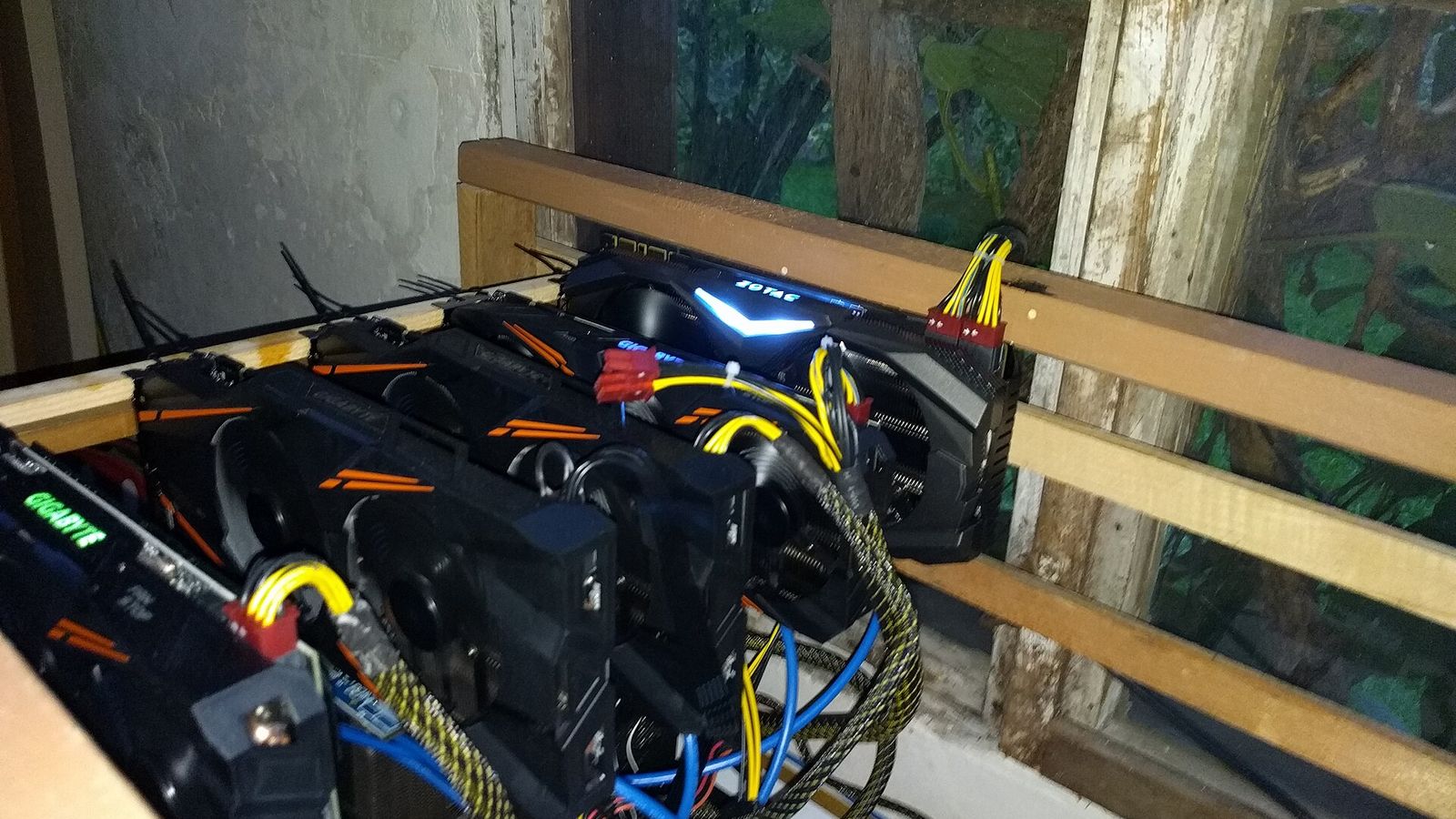
The claim is simple enough to be uncomfortable. Through 2017 and 2018 miners bought GeForce cards by the pallet — the cover photo on this article is a five-card GTX 1070 Ethereum rig from that era — and the revenue landed in gaming. An analysis commissioned by the plaintiffs estimated that crypto-related GPU sales were understated by $1.1 billion between May 2017 and July 2018.
The disclosure arrived in two steps. Guidance was cut in August 2018; then on 15 November 2018 Nvidia lowered its quarterly revenue forecast and blamed a “sharp falloff in crypto demand”. The plaintiffs say the stock fell 28.5% over the following two sessions.
Nvidia's defence was never that miners skipped the cards. It was that the split could not be quantified with confidence. That defence survived a dismissal in 2021 and an appeal that revived the claims in 2023, and it outlasted a trip to the Supreme Court, which declined review in December 2024 without ruling on the merits. The class was certified in March 2026 and the settlement followed eight months later.
A $5.5 million footnote the SEC already collected
This is not the first time the same disclosure was priced. In 2022 Nvidia paid $5.5 million to settle SEC charges over how it described crypto mining's impact on its gaming business — a rounding error next to $290 million, but the same theory of the case, settled by the regulator without a courtroom.
Read together, the two outcomes say something about where the risk sat. The regulator fined the disclosure; the shareholders sued for the demand signal it hid. The second bill came in 53 times larger.
Why a 2018 chip file matters in a 2026 drawdown
Because the shape of the mistake is repeating. Bitcoin closed October at 77,582 on Binance's BTC/USDT pair and trades near 60,466 now — 22.1% lower for the month, with a 57,300 low printed in the current session. Bloomberg-compiled flow data has US spot bitcoin ETF redemptions at $4.94 billion through 24 November, the worst month since the funds launched in January 2024.
That is the same kind of demand withdrawal that forced the November 2018 guidance cut: an end market that was never inside the segment being sold. The miners who bought those GTX 1070s were not gamers, and the institutions redeeming ETF shares today are not discretionary retail.
For anyone still holding mining exposure — rigs, hosted contracts, or the second-hand cards that came out of that cycle — the settlement works as a pricing precedent rather than a headline. A demand source that gets relabelled is a disclosure liability, and the bill arrives years after the revenue does.
What this is not
It is not a finding of fraud. The settlement still needs court approval, Nvidia disputes the allegations, and the class period closed eight years ago. Nor does a payout ratio say anything about where bitcoin trades next month.
What it does establish is that the crypto cycle leaves a paper trail inside companies that never called themselves crypto companies. Nvidia's gaming segment carried the demand, the shareholders carried the risk, and the insurers carried the cheque.
Cover photo: Jasper Reichardt, CC BY-SA 4.0, via Wikimedia Commons.
Written by
EarnCrypto.dev Editorial
The EarnCrypto.dev editorial team researches and reviews AI mining platforms, pools and earning tools — publishing only what passes our own checks.
Related reading
Portal Squeezed 214% on 135x Volume With Nothing Announced — Open Interest Went Six-Fold and 0.0340 Decides 0.0437 or 0.0279
Portal ran from 0.0125 to 0.0437 in one session on 135 times its average volume, open interest up six-fold and 76.7% of accounts short. 0.0340 is the line.
The 20-Year Bitcoin Lockup Is One House Vote Away — and Calendar No. 789 Still Cannot Buy a Single Coin
H.R. 8957 is on the House Union Calendar as No. 789 with a 20-year bitcoin lockup, 23 cosponsors and no floor date set — in a month bitcoin fell 20.5%.
A Forged Route Stole 1.9 EH/s From Bitcoin Miners — 1,000 Sites Went Dark in the Same Second and the Fix Is One URL
Braiins says a forged BGP route redirected miners on plain Stratum V1 to an imposter pool from 7 to 20 November, peaking at 1.9 EH/s. No breach was needed.