
A Dozen Accounts, 13 Exahashes and 0.162 BTC: What Luxor's Commander Hijack Actually Paid Out
Luxor says attackers redirected customer hashrate through its Commander tool on 14 November. The only on-chain settlement is 0.162 BTC - 44 minutes of 13 EH/s.
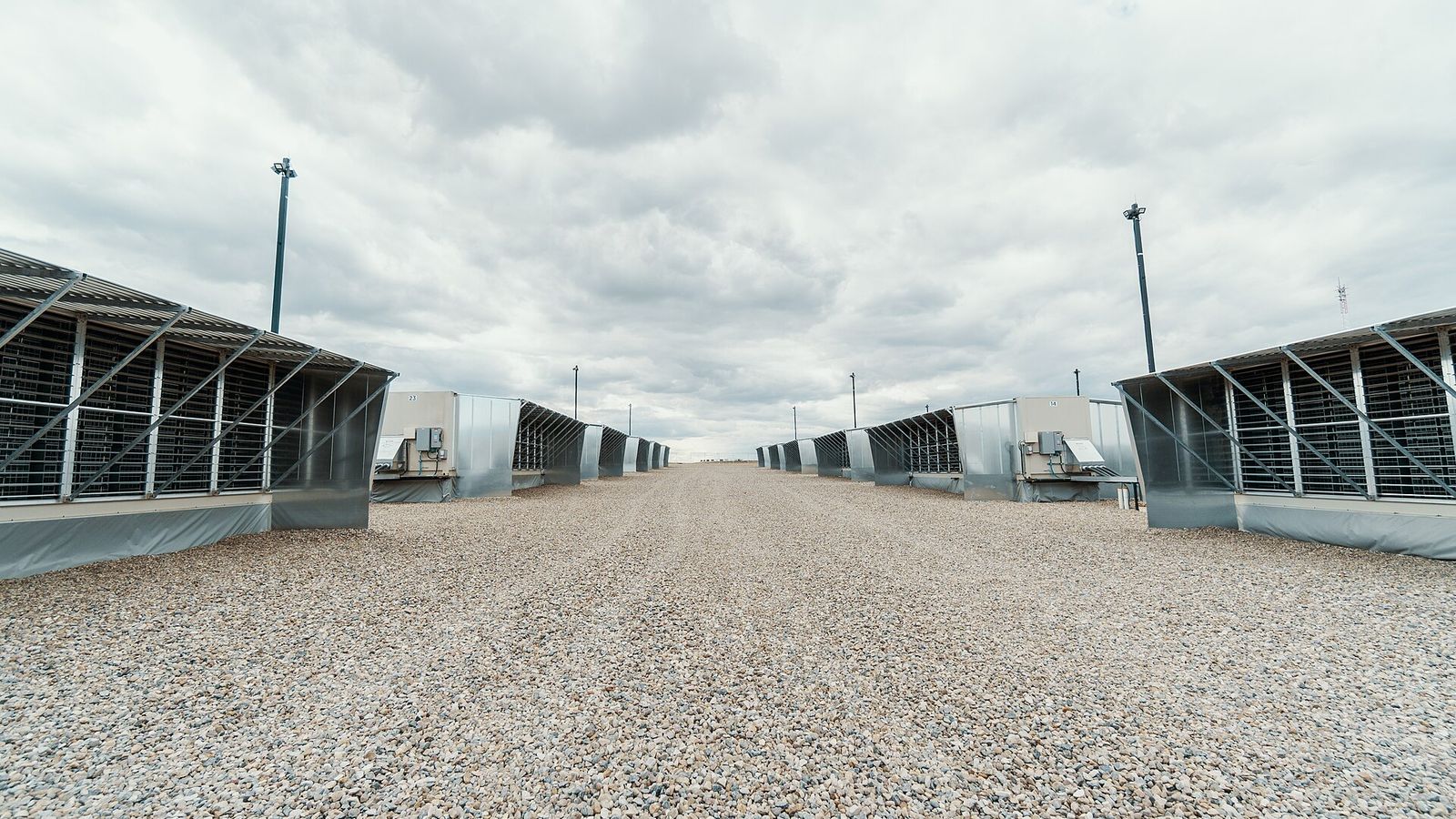
Luxor's Commander tool is the layer that tells a mining customer's machines where to send their work. On Saturday 14 November, according to the company, somebody else was doing the telling. Attackers made unauthorised changes to customer accounts and pointed their hashrate at a different pool. Luxor says it patched Commander within two hours of detecting the changes, began restoring the machines to their original pool settings, and will compensate the affected customers in full.
The event is the interesting part, not the loss. A mining business runs on a handful of software consoles that each speak for tens of thousands of machines at once, and this one was reached through what the chief executive called a 'sophisticated AI-enabled vector'. Luxor's own account is published in full, and it is narrow.
Advertisement
What Luxor has confirmed, and what it has not
Confirmed: just over a dozen customer accounts were affected, the unauthorised changes were isolated to Commander, and neither Luxor Pool nor the LuxOS firmware was touched. Commander is running normally and customers were told they need take no further action. A post-mortem has been promised but has not been published.
Not confirmed: the size. Initial reports put the redirect at roughly 64,000 machines and 13 exahashes per second pointed at OCEAN on Saturday. Luxor has not signed off on either number, and the two claims are not in conflict — a hosting customer with 5,000 rigs is still one account — but only one of them tells you how much revenue moved, and it is not the one about accounts.
Advertisement
Chief executive Nick Hansen described the intrusion as a 'sophisticated AI-enabled vector' without saying how AI was used, then widened the claim: automated models probing a company's entire surface around the clock, attacks accelerating as models improve, an 'AI-powered dark forest'. Luxor has put most feature work on hold to harden its systems and bought GPUs to run unrestricted open-weight models against its own infrastructure. Treat that as an operator telling you his threat model changed. It is not a technical finding — no root cause has been published.
Thirteen exahashes is 1.2% of the network and about $344,000 a day
Put the disputed figure against the chain. mempool.space has the network at 1.102 ZH/s on its three-day estimate, with difficulty at 134.82 trillion. Thirteen exahashes is 1.18% of all Bitcoin hashrate, which at 144 blocks a day and a 3.125 BTC subsidy is 1.70 blocks a day — 5.31 BTC, or about $343,700 at $64,700. Subsidy only; fees are not in that number.
The machine count is internally consistent with it. 13 EH/s spread across 64,000 machines is 203 TH/s each, which sits between a 140 TH/s S19 XP and a 270 TH/s S21 XP. Consistent is not confirmed, but it does mean the two figures were not plucked independently of each other.
It also helps to know what an exahash is worth this week. At $64,700 a coin, the network's 450 BTC daily subsidy is roughly $29.1 million spread across 1.102 ZH/s of hashrate — about $26.40 per PH/s per day. One exahash is $26,400 a day of revenue. Thirteen of them, for two hours, is about $28,600.
0.162 BTC is 44 minutes of that hashrate
The only number in this story that has been settled on-chain is far smaller. An address identified by CoreX as linked to the incident received two OCEAN payouts totalling about 0.162 BTC, worth roughly $10,500. Early reports said the attackers took nothing. The blockchain says they took 0.162 BTC.
Run the arithmetic against the disputed hashrate. 0.162 BTC against 5.31 BTC a day at a full 13 EH/s is 3.05% of a day: 43.9 minutes. Had the redirect run the full two hours Luxor needed to detect and patch, thirteen exahashes would have expected around 0.44 BTC. It collected 36.6% of that.
Three readings fit, and they are not mutually exclusive. The window was shorter than the patch. The fleet actually pointed at OCEAN was smaller than 13 EH/s. Or part of the redirected work never cleared a share that paid out at that address. All three sit comfortably with 'just over a dozen accounts'. None of them sit comfortably with the headline number — which is exactly why the post-mortem should publish hashrate-hours rather than machine counts.
The pool leaderboard cannot see it. The coinbase can.
mempool.space's 16 November snapshot puts OCEAN at 3.04% of blocks and 28.60 EH/s, the smallest of the nine pools above 3%: Foundry USA 24.89%, AntPool 20.22%, F2Pool 16.96%, ViaBTC 8.91%, SpiderPool 7.50%, MARA Pool 5.87%, Luxor itself 4.78% at 44.94 EH/s, SECPOOL 3.48%, then OCEAN.
Thirteen exahashes arriving at a 28.60 EH/s pool is a 45% jump. You will not find it in the data. A two-hour redirect is 1.08 exahash-days, which spread across a three-day average is about 0.36 EH/s: a 1.3% bump that block-share estimates cannot resolve. OCEAN's own weekly path shows nothing of the kind — 35.59 EH/s on 19 October, 29.95 on 26 October, 43.12 on 2 November, 54.65 on 9 November, 28.60 on 16 November. The post-attack snapshot is 26 exahashes below the week before.
Why the sats were traceable at all is structural. OCEAN is non-custodial and pays out of the block's coinbase transaction straight to the payout address written into the block: no pool-held balance, no withdrawal step. Redirected hashrate that lands on a custodial pool becomes an internal ledger entry against a worker name. Redirected hashrate that lands on a coinbase-direct pool pays an address, and addresses can be followed. Two payouts to one of them is how 0.162 BTC became public.
What to check if you rent, host or resell machines
The breach was not in the coins. It was in the management layer that speaks for a whole fleet at once, and the response most operators will copy is the wrong one — assuming the dashboard that was compromised is the last place the truth will show up. After any vendor incident, read the pool URL, worker name and payout address off the machine itself, or off the config file on it. 'No action required' is a statement about the vendor's remediation, not a substitute for a check on your own rigs.
Ask what 'full compensation' is measured in. A dozen accounts at 200 TH/s each and 13 EH/s for two hours differ by more than two orders of magnitude in the claim, and the basis is the number that decides which one a customer receives. Hashrate-hours at a stated reference difficulty is the version that can be checked afterwards.
And price the margin being protected. Difficulty is 22.7% through the current epoch, with a +7.77% adjustment estimated in about 1,559 blocks, after a -9.13% retarget at the previous one. The network is holding 1.10 ZH/s while Bitcoin trades $64,700 — down 0.27% on the day and 0.3% under Monday's 64,882.87 close, a session that printed a 63,905 low. At a subsidy-only hashprice near $26.40 per PH/s per day, a redirected exahash is $26,400 a day of somebody's revenue, and two hours of it is a small farm's power bill.
Luxor's post-mortem is the document to read when it lands. Until then, the single figure in this story that has been signed by something other than a company or a reporter is 0.162 BTC — and it says the redirect ran for minutes at the scale being reported, not hours.
Written by
EarnCrypto.dev Editorial
The EarnCrypto.dev editorial team researches and reviews AI mining platforms, pools and earning tools — publishing only what passes our own checks.
Related reading
Portal Squeezed 214% on 135x Volume With Nothing Announced — Open Interest Went Six-Fold and 0.0340 Decides 0.0437 or 0.0279
Portal ran from 0.0125 to 0.0437 in one session on 135 times its average volume, open interest up six-fold and 76.7% of accounts short. 0.0340 is the line.

The 20-Year Bitcoin Lockup Is One House Vote Away — and Calendar No. 789 Still Cannot Buy a Single Coin
H.R. 8957 is on the House Union Calendar as No. 789 with a 20-year bitcoin lockup, 23 cosponsors and no floor date set — in a month bitcoin fell 20.5%.
A Forged Route Stole 1.9 EH/s From Bitcoin Miners — 1,000 Sites Went Dark in the Same Second and the Fix Is One URL
Braiins says a forged BGP route redirected miners on plain Stratum V1 to an imposter pool from 7 to 20 November, peaking at 1.9 EH/s. No breach was needed.