
Kaspa Hit a 360 PH/s Hashrate Record While Its Reward Fell to 2.06 KAS — the $0.03384 Base Decides $0.0419 or $0.0317
Kaspa's hashrate reads 360 PH/s while the 5 October emission step cut its reward to 2.06 KAS — and price is back at the 0.03384 base that began the run.
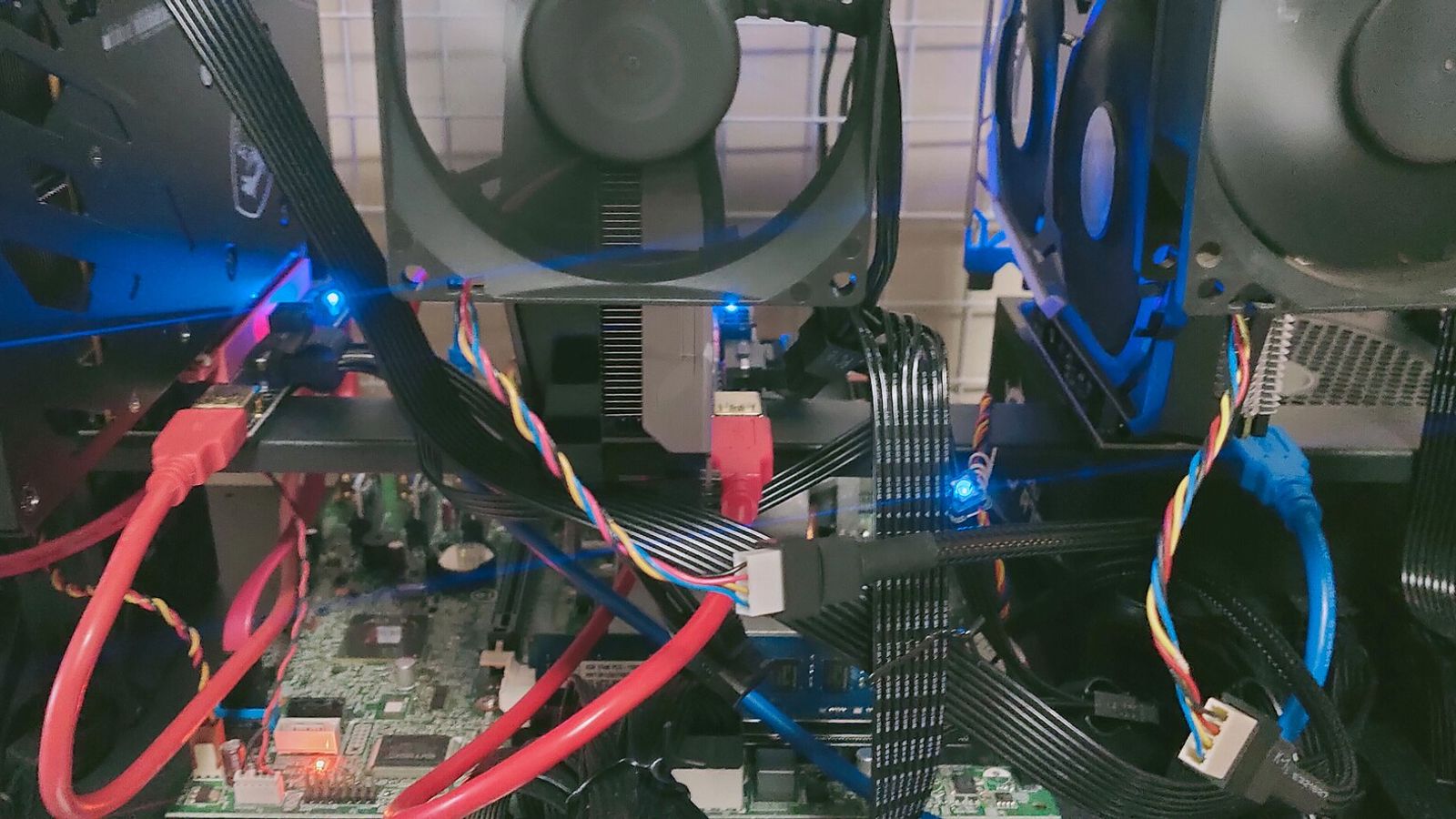
Kaspa cut its block reward again on 5 October, from 2.18 KAS to 2.06 KAS — a 5.61% step. The same week, the network's hashrate pushed higher. Kaspa's public API reads 360,833 TH/s, or roughly 360.8 PH/s, up from the 339 PH/s the network printed in early September. Fewer coins per block, more machines pointed at it — that is the whole Kaspa story in one line.
The price tells a different one. KAS trades at $0.03585, down 9.1% on the week and back at the 0.03384 level it broke out of on 18 September. The entire 48% September rally has been given back while the fundamentals improved. Here is what each side of that gap actually contains.
Advertisement
What Actually Changed on 5 October
Kaspa does not halve once every four years. Since the deflationary phase began in May 2022, the block reward is multiplied by (1/2)^(1/12) every month — about a 5.6% cut, twelve times a year, compounding to exactly one halving per twelve months. The community calls it the chromatic phase, because the monthly ratio is the same one that separates two semitones in a musical octave.
That is why the 5 October step did not make headlines the way a Bitcoin halving does. Daily issuance fell from 1,885,832 KAS to 1,779,989 KAS, according to Kaspa Pulse's halving tracker. No vote, no countdown, no event risk. The next step lands roughly 30.4 days later, in early November, and the reward after it will be about 1.94 KAS per block.
Advertisement
What it does to miners is arithmetic: every unit of hashrate earns 5.61% less at an unchanged price. The oldest hardware slides toward break-even and eventually switches off, which is why the hashrate chart usually dips and recovers around each step. This time it did not dip. It set a high.
A Hashrate Record on a Smaller Reward, and 96.7% Already Mined
Kaspa's network difficulty sits at 1.80e16 and the chain has produced 1,221,427 blocks. Against that, the supply counter is the number that matters for anyone modelling dilution: 27,758,327,339 KAS are already in circulation out of a maximum of 28,704,035,605 KAS. That is 96.71% of every Kaspa that will ever exist, mined in under five years since the fair launch on 7 November 2021 — no premine, no ICO, no team allocation.
Because the emission curve decays geometrically rather than stopping at a cliff, the remaining 945 million KAS arrive as a shrinking trickle. Any new-supply argument for Kaspa is close to over. What is not over is demand, and that is where the roadmap sits.
The Part That Is Not Price: Toccata and the Token Rulebook
Kaspa stopped being a payments-only proof-of-work chain on 30 June, when the Toccata upgrade activated on mainnet. It added covenants — enforceable spending rules attached to a coin — transaction introspection and native zero-knowledge proof verification, all while keeping the 10-blocks-per-second GHOSTDAG base. That is what makes assets, vaults and escrow rules expressible on the chain itself.
The follow-through is a rulebook. KCC-20, the standard that defines how a token is created, transferred and identified on Kaspa, moved into Last Call on 7 October — the final comment window before the spec freezes — after KCC-1 and KCC-2 opened the same window on 1 October. A reference implementation written in Argent was published to GitHub the same day, together with the SilverScript it compiles to, and the coordination forum opened the code for public battle testing.
Around that standard, three things are already built and waiting: the .k name service that replaced long addresses with readable names in September, the KaChat messaging app now testing those names on testnet-10, and Kaspa Order Book — an exchange for KCC-20 tokens whose planned executors hand their rewards to miners as extra income. None of it is live on mainnet yet. All of it is the reason the emission chart is no longer the only thing to watch.
The Chart: An Entire September Run Given Back
On 18 September KAS closed at 0.03384 and broke a base it had held since mid-month. Nine sessions later it printed its window high at 0.05011 — a 48% move, and the best stretch of 2026 for the token. The give-back since has been just as complete: 0.04466 on 22 September, then a sequence of lower highs at 0.04308, 0.04188 and 0.03941, and finally a flush to 0.03418 on 15 October. That is 31.8% off the high, in a market where a hot 3.7% September CPI print knocked Bitcoin under $81,000 and a single 24-hour window liquidated $359 million of BTC and ETH positions, 91% of them longs.
The structure is now simple enough to trade off two lines. The 0.03384 base — the exact close that started the run — is the line that decides whether September was an accumulation range or a spike. Hold it on a daily close and the road back runs through the 0.03663 shelf, then 0.03842, with 0.0419 as the first real lower-high test, the 50% retrace of the whole 0.03384-to-0.05011 leg. Lose 0.03384 and the 0.03225 low from 15 September is the next stop, with 0.03172 — the 16 September low — as the level that would invalidate the base entirely.
A 5.6% monthly step is not a catalyst; it's background physics. Anyone selling you a "Kaspa halving play" is borrowing a story from a different chain.
That line, from the Kaspa Pulse halving tracker, is the honest way to read the emission cut. The reward step removes supply slowly and predictably; it amplifies whatever demand already exists and nothing more. Which leaves three dates worth watching: the next emission step in early November, the moment KCC-20 leaves Last Call and tokens can be issued against a frozen standard, and DAGKnight — the consensus research aimed at pushing the chain well past its current 10 blocks per second — moving from testnet toward mainnet.
A record hashrate on a smaller reward is miners betting on that list. A price back at the base is the market refusing to pay for it yet. Both are true, and the 0.03384 line is where they will settle it.
Written by
EarnCrypto.dev Editorial
The EarnCrypto.dev editorial team researches and reviews AI mining platforms, pools and earning tools — publishing only what passes our own checks.
Related reading
Crypto Lending Vaults Just Passed $10 Billion — and S&P Built the Six-Part Scorecard That Decides What Pays 3% and What Pays 20%
Crypto lending vault deposits jumped from $4 billion to over $10 billion, paying 3% to 20%. S&P's new six-part scorecard and the SEC now grade the risk.

REX-Osprey's Staked SEI ETF Goes Effective Friday — SEI Is 24% Off Its October High and $0.0631 Is the Gate
SEI trades at $0.0605, 24% below its 4 October high, four days before REX-Osprey's staked SEI ETF turns effective — and $0.0631 is the gate that decides it.
Uniswap's First CME Futures Contract Trades Monday — 34% Off Its September Peak, and $7.06 Decides $8.47 or $6.00
CME opens UNI futures on Monday, 19 October, on 10,000-token contracts — while Uniswap's fee switch printed $15.5M in September. $7.06 decides $8.47 or $6.00.