
El Salvador Broke the IMF's Bitcoin Limit and Still Got Its $139 Million — the Treasury Now Holds 7,789 BTC
The IMF waived El Salvador's Bitcoin accumulation breach and released $139 million, and the treasury still holds 7,789 BTC — about $226 million above cost.
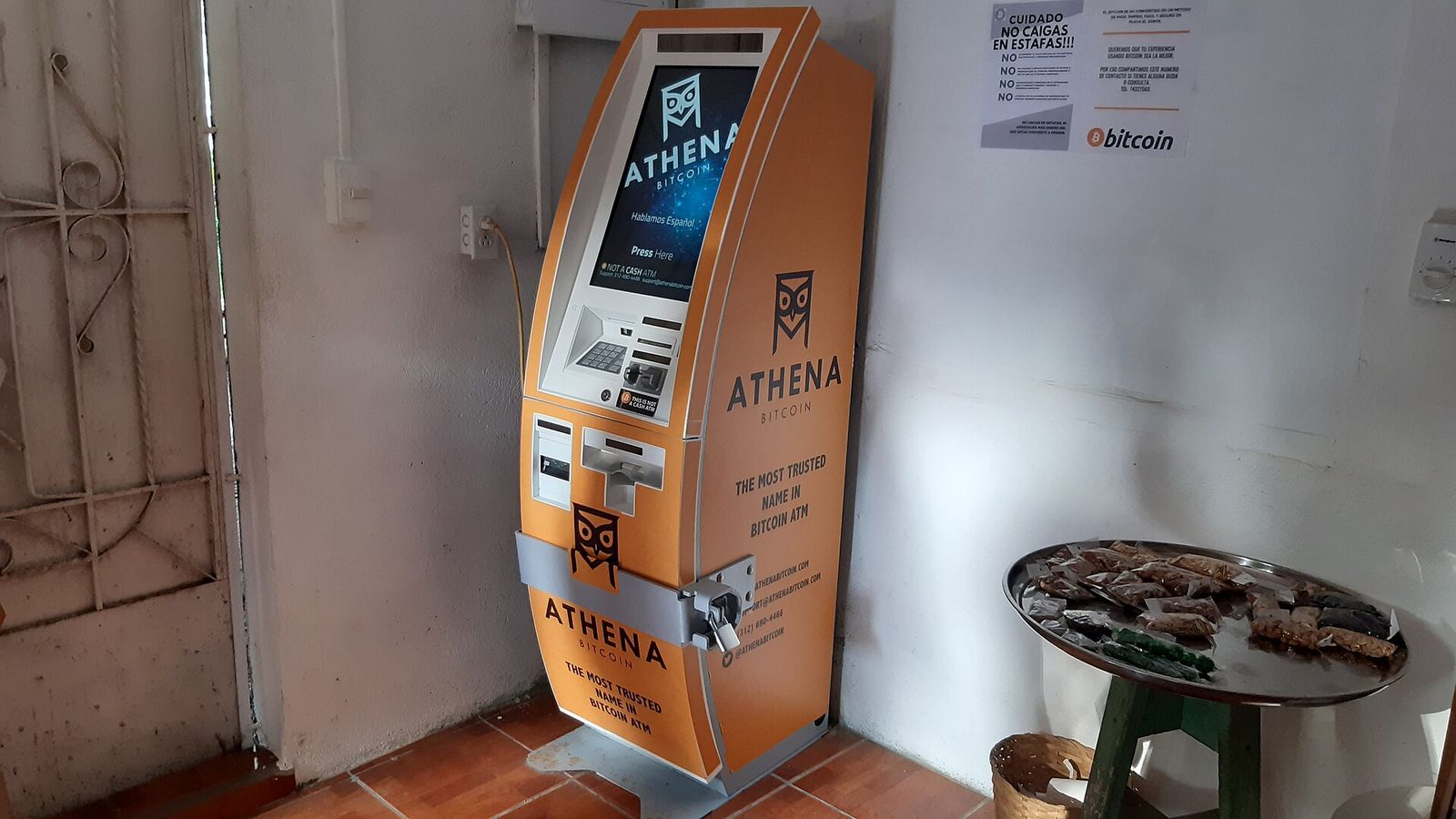
El Salvador went into its October review with the International Monetary Fund carrying a breach of the program's Bitcoin rules — and came out of it with the money anyway. On October 1, the IMF Executive Board completed the second and third reviews of the country's 40-month Extended Fund Facility, releasing an immediate disbursement of SDR 101.96 million, about $138 million, and reported across the wires as $139 million. The same decision granted waivers for performance criteria the country had missed, including the limit on how much Bitcoin the state was allowed to keep accumulating.
The Bitcoin Criterion Was Missed — and Waived
The board's own summary does not hide it: certain performance criteria were not met, “including on the Bitcoin accumulation front, for which waivers were granted based on strong corrective measures and renewed commitments.” The 40-month arrangement was approved on February 26, 2025, with total access equivalent to SDR 1,033.92 million — roughly $1.4 billion — and this review moved the program past its halfway point.
Advertisement
What saved it was the paperwork behind the coins. IMF staff said documentation had been provided verifying that Bitcoin accumulation since the first review “reflects private donations and that no public resources were used.” That is the distinction that turned a missed criterion into a waived one: the treasury's stack kept growing, but on donors' coins rather than on the budget. The staff-level agreement reached on September 3 had already flagged the same finding before the board voted.
What the IMF Took in Return
The waiver came with a list. No further Bitcoin accumulation is envisaged beyond documented donations. The government's Chivo e-wallet has had majority ownership and operational control transferred to a private operator, and the board wants the residual public-sector exposure fully unwound. Transparency and disclosure around public-sector crypto-asset holdings has to be strengthened, and the regulatory, supervisory and governance framework for crypto-asset providers — including through amendments to the Digital Asset Issuance Law — is next on the agenda.
Advertisement
The macro side of the review is where the program is delivering. The IMF projects real GDP growth of 4.5% in 2026 after a stronger-than-expected 2025, a primary fiscal surplus widening from 1.9% of GDP in 2025 to 2.9% this year and 3.7% in 2027, and gross international reserves climbing from $4.81 billion in 2025 toward $5.35 billion in 2026 and $6.17 billion in 2027.
The Treasury Still Sits on 7,789 BTC
None of that changes the balance sheet. El Salvador's national treasury holds 7,789 BTC. At the $84,761 price the decision landed on, that stack is worth about $660 million — and against an average cost basis of $55,718 it carries roughly $226 million of unrealized gains. The arithmetic is worth spelling out: 7,789 coins at a $55,718 average is about $434 million of what the country actually put in, and the same coins at $84,761 are worth about $660 million.
The country has published its holdings since making Bitcoin legal tender in September 2021, and the receipts are public: the national Bitcoin Office tracker and independent countings such as nayibtracker both carry the running total, alongside a live Bitcoin price for the mark-to-market.
Documentation has been provided verifying that Bitcoin accumulation since the first review reflects private donations and that no public resources were used. — IMF staff statement on El Salvador, September 3, 2026
That sentence is the whole story of why the coins survived the review. The program never asked El Salvador to sell, and the board never demanded it. It asked the state to stop buying with public money, and to prove the coins it already had came from somewhere else.
Bitcoin Was Above $86,000 While the Board Was Meeting
The waiver landed into a market busy proving the accumulation case. Bitcoin pushed to $86,913 on October 2 — its highest level since September 23 — after the cluster of sell orders that had capped the price around $85,000 to $85,500 for a week was filled and pulled, leaving the coin roughly 15% above its September 15 low of $74,968 (forklog).
The flow behind the move was institutional. US spot Bitcoin ETFs took in $102.7 million on October 1, flipping direction after a $148.7 million outflow the session before, while September's net inflows totalled about $2.6 billion and cumulative inflows since launch passed $57.6 billion (cryptobriefing). Liquidations across crypto hit $333 million in 24 hours, $244 million of them shorts. For a country whose reserve was formally criticised by the Fund one day earlier, the timing was hard to miss.
What to Watch Next
Three things. First, the donation route: with state purchases off the table, documented private donations are the only way the reserve grows, so the tracker is where the next chapter shows up. Second, the Digital Asset Issuance Law amendments and the Chivo unwind, both flagged by the board as priorities. Third, the remaining reviews under the 40-month facility — each one has to clear the same Bitcoin criterion that was waived this time. The full board text is in the IMF press release, with the market coverage in crypto.news and KuCoin.
Meanwhile the numbers the program actually cares about keep improving: reserves tracking toward $5.35 billion this year and $6.17 billion next, a widening primary surplus, and 7,789 BTC sitting about $226 million above cost. The IMF waived the breach and released the tranche. El Salvador kept the coins.
Written by
EarnCrypto.dev Editorial
The EarnCrypto.dev editorial team researches and reviews AI mining platforms, pools and earning tools — publishing only what passes our own checks.
Related reading

Derive Moved Its $14.2 Billion Options Book to Ethereum and Picked Celestia for the Data — TIA Ran 34% to a $0.6333 High
Derive V3 finished its move to Ethereum on October 8 and publishes state data to Celestia. TIA then ran 34% into $0.6333, where $0.5302 decides the next leg.

ESMA Just Closed the Stablecoin Loophole EU Platforms Were Using — January 8 Is the Deadline for $184 Billion of USDT
ESMA's October 8 opinion extends MiCA enforcement to custody, transfers and advice: a January 8 deadline, with $184 billion of USDT the largest asset in scope.

80% of Crypto Trading Was Off-Limits to US Institutions — Coinbase Just Merged It Into One Regulated Order Book
Coinbase folded Deribit into one venue: a single regulated order book for US and global derivatives, $30 billion of bitcoin options and 10x spot margin.