
Bitcoin Reclaimed 1 Zettahash While Miners Handed Power to AI — Thursday's 5.88% Difficulty Jump Makes $70,200 the Breakeven
The seven-day hashrate is back above 1,000 EH/s and difficulty rises 5.88% on 29 October. At 13-cent power, an S23 Hyd now needs $70,200 bitcoin to break even.
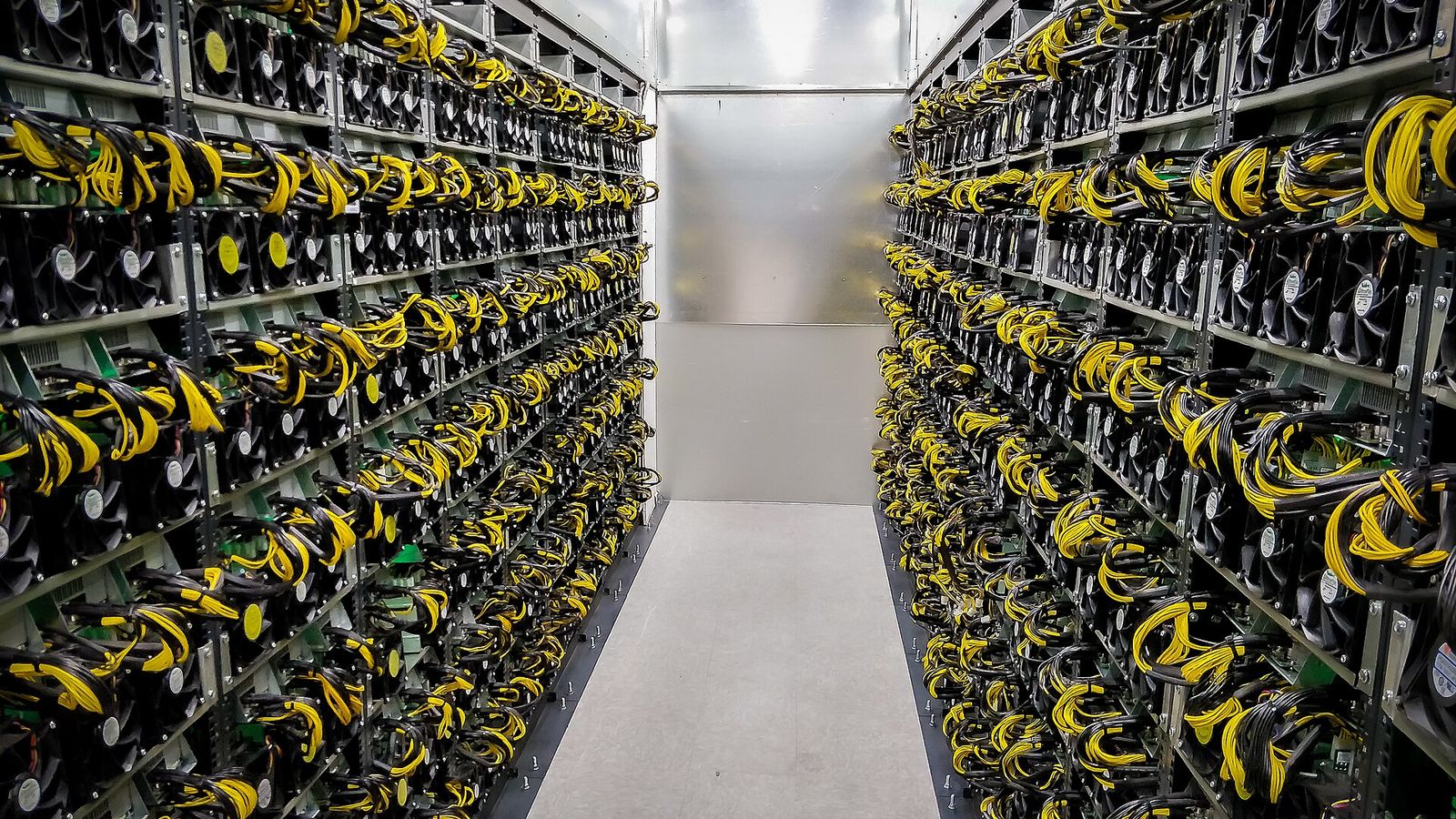
Bitcoin's mining network is hashing at 1,072 exahashes per second on the three-day estimate at mempool.space as of 20:15 UTC on 26 October, and its seven-day average has held above 1,000 EH/s — one zettahash — since the week of 22 October. BlocksBridge Consulting puts that weekly average at its highest reading since 3 March 2026.
Difficulty sits at 140.58 trillion after the 5.92% increase that landed on 16 October. The next adjustment is due at block 973,728, 444 blocks past the current tip of 973,284, and mempool.space's estimator — 78% of the way through the epoch — reads +5.88%, which would leave the network at 148.84 trillion. That converts to roughly 18:10 UTC on Thursday 29 October. The estimates quoted around the market on Monday range from +4.8% to +6.44%, so treat the exact figure as provisional and the direction as not.
Advertisement
Two jumps of about 6% inside one month, and blocks are still 33 seconds early
Bitcoin retargets every 2,016 blocks to hold the gap between blocks near ten minutes. Across the current epoch the average has been 567 seconds — 9 minutes 27 seconds — and blocks arriving early is precisely what pushes difficulty up. The last four adjustments read +1.31% on 5 September, +4.16% on 19 September, −0.03% on 3 October and +5.92% on 16 October. Add Thursday's projection and the network absorbs close to 12% more difficulty in a month.
It is still not the hardest the network has ever been. The record is about 156 trillion, set in October 2025, and 148.84 trillion would sit 4.6% underneath it. What is unusual is the combination: hashrate recovering while the price of the asset it secures drifts lower.
Advertisement
One caution about the two hashrate numbers that get quoted together. The 1,072 EH/s figure is a short-window estimate of machines hashing right now. The roughly 1,006 EH/s implied by 140.58 trillion is what the protocol is calibrated against — difficulty multiplied by 2^32 and divided by 600 seconds. Both are correct, they measure different windows, and only the second one sets what a miner actually earns today.
The AI unplug did not take the hash with it
The defining move of 2026 has been public miners converting sites, power contracts and capital to artificial intelligence and high-performance computing, where revenue per megawatt is steadier and does not get cut in half every four years. That migration is real and it is in the filings. It is also, so far, invisible in the network total. Hashrate pushed back through one zettahash anyway — which says the marginal machine being switched on this quarter is not a listed company's. It is a hosted fleet sitting on a cheap, long-dated power contract.
For anyone mining from a browser tab or a rented contract rather than a 5,510-watt machine in a shed, the practical read is simpler: the network got more competitive, and every unit of hashrate now competes against 12% more of it than it did four weeks ago.
Hashprice: $40.03 to $33.76 in twenty-six days
Hashprice is what one petahash per second earns in a day, and it is the only number that decides whether an operator is profitable. It can be built from protocol constants. Bitcoin pays 144 blocks a day at a 3.125 BTC subsidy, which is 450 BTC. At Monday's $79,930 on Binance that is $35.97 million of new coins per day. Spread it across the 1,006 EH/s that 140.58 trillion implies and the result is $35.74 per PH/s per day. Divide the same revenue by the 1,065 EH/s implied after a 5.88% retarget and it is $33.76 — a 5.55% pay cut in one adjustment, with the price unchanged.
On 3 October the same calculation was worth $40.03 per PH/s. It was $36.23 on 18 October and $35.74 on 26 October. Recovering all of that ground requires either a materially higher bitcoin price or a materially lower hashrate, and neither has shown up.
The fee market has nothing to add either. At block 973,284 mempool.space was quoting 1 sat/vB across every band — fastest, half-hour, hour and economy all sitting on the floor. Fees that thin make the block subsidy effectively 100% of miner revenue, which is exactly the condition in which a difficulty increase is felt in full.
What a 5.88% jump does to one machine
Take a current-generation unit: the Antminer S23 Hyd, 580 TH/s at 5,510 watts. At $33.76 per PH/s per day it grosses about $19.58 a day before pool fees. Power is the rest of the arithmetic. At 5.2 cents per kWh — the kind of rate a hosted contract signs — the daily bill is $6.88 and the machine keeps $12.70. At 8 cents it keeps $9.00. On a 13-cent household tariff the bill is $17.19 and the machine keeps $2.39.
Invert it and you get the level that really decides whether hardware stays plugged in: the bitcoin price at which that machine's revenue equals its power bill. At 5.2 cents it is $28,071. At 8 cents, $43,186. At 13 cents, $70,177. Bitcoin is at $79,930, which is why nobody with cheap power is switching off, and why an operator paying retail is doing sums every morning.
The number that decides
Two lines matter from here. The first is $84,628 — the bitcoin price needed to keep hashprice at today's $35.74 after Thursday's retarget, holding difficulty constant. Spot sits 5.9% below it, and that gap is what makes the jump a cut rather than a rounding error. The second is $70,177, the break-even for a 13-cent operator on current silicon. Between those two numbers sits the entire squeeze: one protects network hashrate from shrinking, the other protects the marginal miner from capitulating.
The mechanics of the last jump at block 967,680 were covered here when it happened, and nothing about them has changed — only the level. If you want your own numbers rather than a current-generation showcase, the mining profitability calculator runs the same arithmetic on your rig, your hash rate and your electricity rate, and shows how little of the difference is the hardware and how much of it is the tariff.
Thursday, 29 October, around 18:10 UTC, at block 973,728. Watch the hashprice line rather than the difficulty number: difficulty only tells you how crowded the network got, while hashprice tells you what the crowd is being paid for showing up.
Written by
EarnCrypto.dev Editorial
The EarnCrypto.dev editorial team researches and reviews AI mining platforms, pools and earning tools — publishing only what passes our own checks.
Related reading
KNTQ Went From $0.2941 to a $0.5962 Record in Twelve Days — Nine Days Before Elysium, $0.5249 Decides $0.7116 or $0.4808
Kinetiq's KNTQ more than doubled from $0.2941 to a $0.5962 record, and $0.5249 is the retrace that decides whether Elysium's sequencer fees get priced in.

Stellar Votes on Bell on November 3 — but a Four-Session 0.1665 Floor Broke First, and 0.1764 Decides 0.1974 or 0.1524
Stellar's Bell vote lands 3 November with XLM at its lowest low since August. A four-session 0.1665 floor broke, and 0.1764 now decides 0.1974 or 0.1524.

Binance Hot Wallets Drained of $3.3 Billion Through an EIP-7702 Delegation — CZ Says It Looks Like a Hack, Tether and Circle Freeze $1.8 Billion
Roughly $3.3 billion left Binance hot wallets in 40 minutes via an EIP-7702 delegation. Tether and Circle froze about $1.8 billion; BTC, BNB and ETH fell.