
Bitcoin Difficulty Jumps 4% at Block 967,680 — the Biggest Increase Since June, With Hashrate Back at 954 EH/s
Bitcoin's difficulty rises 4.04% at block 967,680, the largest jump since June, as hashrate returns to 954 EH/s and fees cover just 0.65% of the block reward.
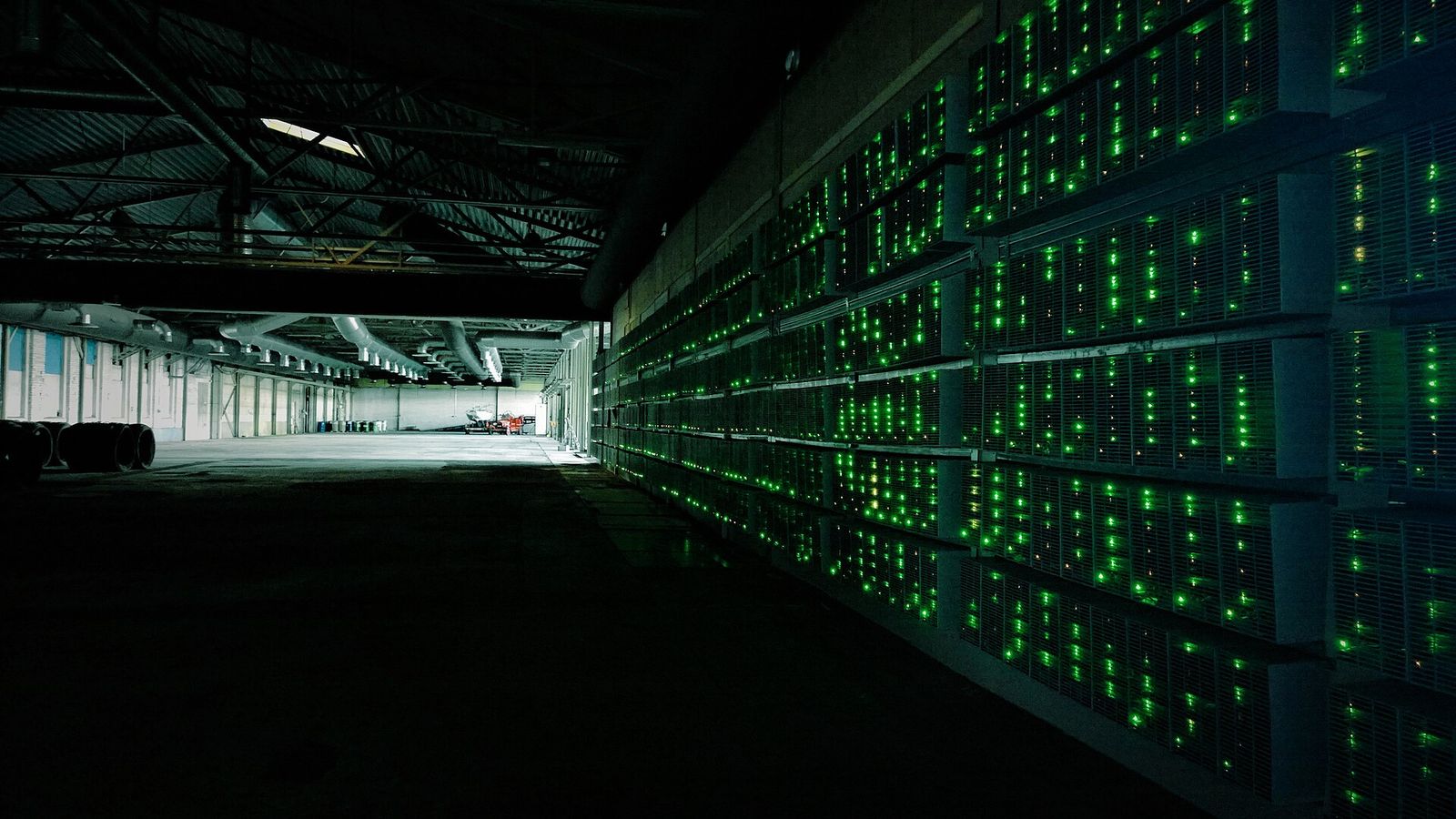
At block 967,680 — eight blocks from the tip when this was written — Bitcoin's mining difficulty steps up by 4.04%. It is the largest upward adjustment since June, and it lands in the same week hashrate climbed back to 954 EH/s while the price pushed into the mid-$81,000s for the first time since the spring ceiling.
What happens at block 967,680
Bitcoin re-targets difficulty every 2,016 blocks, aiming for one block every ten minutes. This epoch ran fast: mempool.space measured an average block time of 9.62 minutes, and that ~4% overshoot is exactly what the protocol pays back in the adjustment. Progress stood at 99.6% with the retarget estimated for 07:40 UTC on September 19.
Advertisement
Difficulty sits at 127.45 trillion right now and the step takes it to roughly 132.6 trillion. The previous adjustment, at block 965,664 on September 5, was +1.31% — so this is a three-times-larger step than the last one.
The biggest upward step since June
Anyone who has only watched price this year has missed what the mining market did. Difficulty peaked at 155.97 trillion on October 29, 2025, and today's 127.45 trillion is 81.7% of that record. Fourteen of the last twenty-five re-targets were negative.
Advertisement
The drops were not small: -11.2% on February 7 was the deepest of the year, then -10.09% on June 14 — one of the largest single-day difficulty declines in five years — and -5.00% on July 11. Against that, upside steps have been rare and shallow: +7.15% on June 27, +3.87% on April 3, +3.12% on May 15, +1.72% on May 29, +0.99% on August 8 and +1.31% on September 5. A 4.04% increase is the biggest ask the network has made of miners in almost twelve weeks.
Hashrate is climbing back into the machine
The three-day average hashrate printed 953.9 EH/s on September 19, with the live estimate at 938.8 EH/s. For context, the twelve-month peak was 1,305.7 EH/s on October 25, 2025, and the year's trough was 781 EH/s on July 17. That means the network is up about 22% from its July floor and still roughly 27% below its record — the hashrate was never destroyed, it was just switched off and is now switching back on.
That is the part that makes this re-target interesting. Difficulty adjustments are a lagging mirror: they confirm what hashrate already did during the previous two weeks. A positive step of this size is the network telling you that machines were plugged in during a rally, not that they are about to be.
Fees cover 0.65% of the block — and that is the real story
Across the last 430 blocks, the average block collected 0.0205 BTC in fees against a 3.125 BTC subsidy. Fees are therefore 0.65% of miner revenue. The recommended fee rate on the network is 1 sat/vB and blocks are running close to empty, which is what a quiet mempool looks like when everyone is waiting for a breakout instead of fighting for a slot.
Do the arithmetic on what miners actually earn: 144 blocks a day at 3.1455 BTC each is 452.96 BTC, which at $80,959 is about $36.7 million of daily issuance. Spread across the current network hashrate that is roughly $38.45 per PH/s per day — the number miners call hashprice.
A 4.04% difficulty increase asks about 4% more work for the same block. At an unchanged price, holding the same revenue line now takes roughly 4% more hashing power, which is why the hashprice figure matters more than the difficulty headline. At a fleet efficiency of 15 J/TH — 15 kW per PH/s, or 360 kWh per PH/s per day — that revenue covers electricity only up to about $0.107 per kWh. At 17 J/TH the break-even power price is around $0.094, and at 11 J/TH it stretches to about $0.146. Everything above those lines is a loss, which is precisely why difficulty falling through 2026 was good news for anyone paying retail power.
The mechanism has not changed since the first block. The Bitcoin whitepaper described it in one sentence:
The proof-of-work difficulty is determined by a moving average targeting an average number of blocks per hour — Satoshi Nakamoto, Bitcoin whitepaper, 2008.
Who is actually finding the blocks
In the last seven days mempool.space counted 1,045 blocks. Foundry USA found 266 of them (25.45%), AntPool 212 (20.29%) and F2Pool 158 (15.12%), so three pools produced 60.9% of the chain. ViaBTC took 95 blocks (9.09%), SpiderPool 80 (7.66%), MARA Pool 58 (5.55%) and SECPOOL 43 (4.11%). With fees at 0.65% of revenue, pool choice is almost entirely about variance and payout scheme rather than fee capture — there is very little fee to capture.
Why the difficulty print matters for the $82K ceiling
Bitcoin traded at $80,959 at the time of writing, up 4.5% on the day and 16.8% over thirty days. The September 18 session closed at $80,883.87 after trading between $76,296 and $81,400 on 23,908 BTC — 1.75 times the twenty-day average volume. Today's high so far is $81,741.
The levels that matter are all real numbers rather than opinions. The twenty-day average sits at $78,328.53 and has become the first support to defend, with the 200-day at $70,496.10 and the 100-day at $68,152.54 well below. To the upside the road runs through the September 3 high of $82,300 and then the 200-day window high of $82,850 set on May 6 — the level that rejected price twice since spring. Below, the September 15 low of $74,967.97 is the line that would turn this into another failed push.
Put the two halves together and the picture is coherent. Sentiment has already repriced — the Fear and Greed Index jumped from 50 on September 17 to 71 on September 19 — while the network is about to make every remaining miner work 4% harder for the same subsidy. A close above $82,850 is what keeps the hashrate curve bending upward and keeps the marginal 15 J/TH machine inside its break-even band. Stalling back under $78,000 does the opposite, and this time the difficulty has already been booked.
Watch it print at block 967,680, and watch whether fees wake up at the same time. Difficulty is the slowest-moving number in crypto and the least watched — which is exactly why it tells you what the machines did before the chart did.
Written by
EarnCrypto.dev Editorial
The EarnCrypto.dev editorial team researches and reviews AI mining platforms, pools and earning tools — publishing only what passes our own checks.
Related reading
ZRO Ran 57% in a Week as America's First Crypto Bank Put Its Stablecoins on LayerZero — the $1.34 Floor Decides What's Next
Anchorage Digital Bank made LayerZero the rail for its stablecoins and Tether's USAT is first through it. ZRO's 57% week printed a five-month high of $1.566.

HBAR Ran 40% Into the $0.1007 Gate It Has Not Closed Above Since June — With $109 Million of ETF Buying Behind It
HBAR ran 40% in six sessions into $0.10072, the gate it has not closed above since June, with $109.1M of ETF inflows and 10 million mainnet accounts behind it.

Helicon Goes Live Today: Avalanche Cuts the Staking Lock-Up From 14 Days to 48 Hours — and AVAX Ran 64% Into It
Avalanche's Helicon upgrade activates today at 15:00 UTC with 48-hour staking, auto-renewal and Continuous Execution — after AVAX ran 64% in five sessions.