
1,309 Bitcoin That Never Touched the Blockchain: Datavault Booked Them as Its Own, Four Quarters of Filings Went Void and the Stock Lost 50%
Datavault booked 1,309.04 BTC credited to a Biconomy wallet as its own asset. The withdrawal has been stuck since June and $92.2 million just left the books.
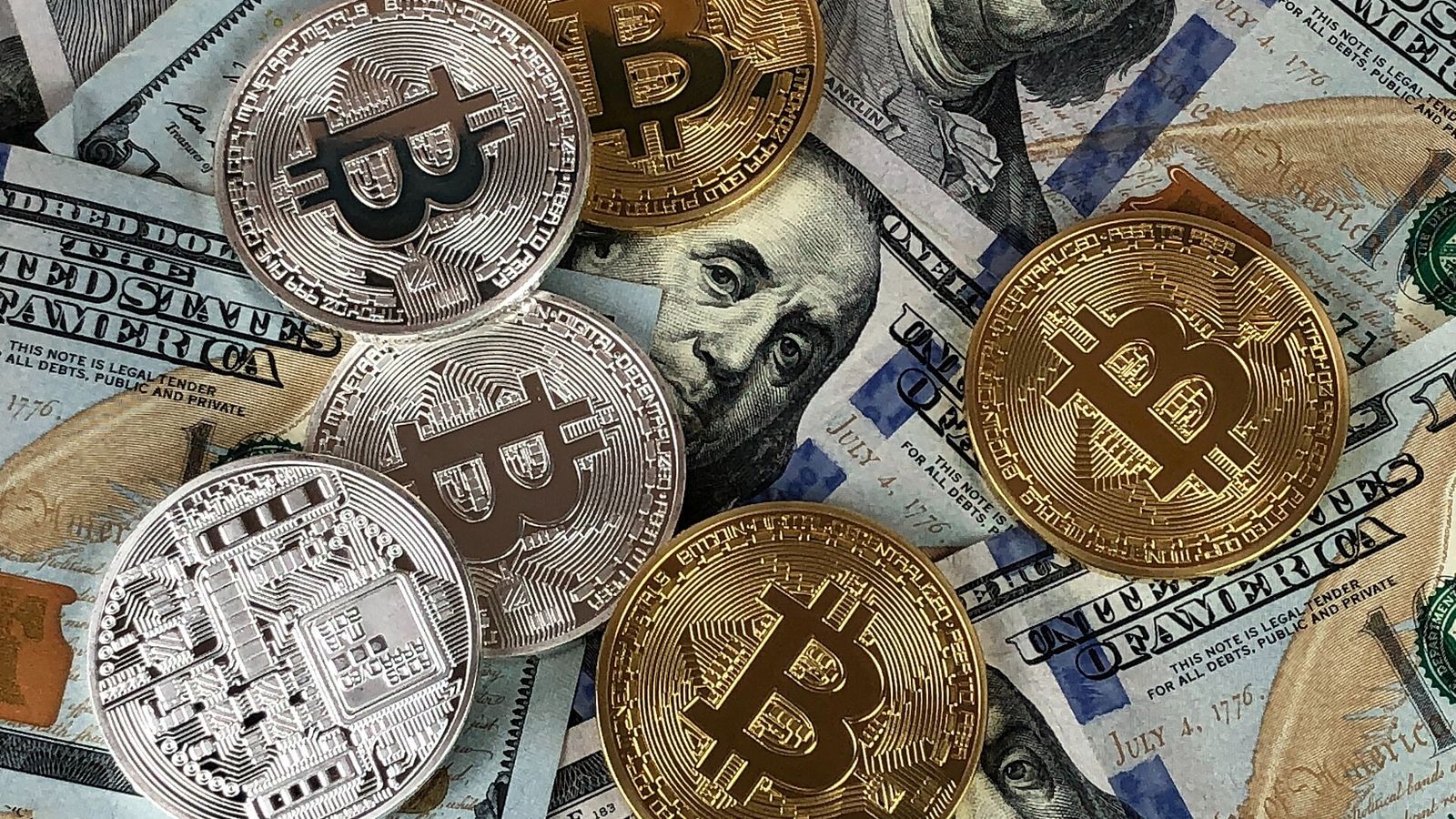
Datavault AI filed a Form 8-K on Monday 26 October that most of its shareholders will have read as an accounting footnote. It is not one. The Nasdaq-listed company told the SEC that four sets of financial statements published since November 2025 should no longer be relied upon, because 1,309.04 bitcoin it had booked as its own digital asset never qualified as an asset of the company at all. The market did not need a second read: DVLT closed at $0.067 on Tuesday, down 49.55% from $0.133, on roughly 244 million shares.
The mechanism behind that collapse is more interesting than the number, and it has almost nothing to do with the price of bitcoin.
Advertisement
A $150 million purchase paid in bitcoin that never moved
On 25 September 2025 Datavault signed a securities purchase agreement with Scilex Holding Company. Scilex would take 15,000,000 shares plus a pre-funded warrant covering 263,914,094 more, for $150 million, payable in bitcoin at a spot rate of $112,915.52 — approximately 1,328.43 BTC. On 26 September and again on 25 November 2025, Scilex credited 1,309.04 BTC to the digital wallet Datavault maintained at Biconomy Pte. Ltd. The 19.39 BTC gap was not an oversight: it reflected cash advances Scilex had made to Datavault between signing and closing.
Every one of those credits arrived by off-chain transfer, and that is the detail the filing turns on. No bitcoin moved on the Bitcoin blockchain. Balances changed inside Biconomy's internal ledger, the way a number changes when one customer of a bank pays another customer of the same bank.
Advertisement
Between 26 September 2025 and 30 January 2026 Datavault sold 491.431 of the credited bitcoin back to Scilex, again off-chain, for about $40.5 million in cash. That works out to roughly $82,400 a coin — against the $112,915.52 the agreement had valued them at four months earlier.
A withdrawal that has been pending since June
In June 2026 Datavault asked Biconomy to move its bitcoin to an external account. As of the 8-K filed on 26 October, that withdrawal was still not complete. The filing says so in a single sentence and does not say why. CoinDesk reported that Biconomy did not respond to questions about the request or about the bitcoin behind Datavault's account.
That leaves 817.609 BTC — the 1,309.04 credited minus the 491.431 sold back — still recorded as credited to a wallet the company has, on its own account, been unable to draw from for four months.
Why it stopped being an asset
After reviewing the transaction, Datavault concluded that the bitcoin associated with the Scilex equity purchase did not meet the requirements for recognition as a digital asset of the company. The correct treatment, it said, is a subscription receivable arising from the issuance of common stock, presented as a reduction of stockholders' equity under ASC 505-10-45-2 and Rule 5-02.29 of Regulation S-X. Cash received from the coins sold back to Scilex reduces that receivable instead of counting as a disposal.
The consequences are itemised. Total assets fall by $8.1 million as of 30 September 2025, by $92.2 million as of 31 December 2025, by $57.1 million as of 31 March 2026 and by $49.0 million as of 30 June 2026, and the associated crypto asset gains and losses are reversed.
The $92.2 million is not an abstract figure. 817.609 BTC at the agreement's own $112,915.52 rate comes to $92.32 million. The write-down is the leftover coins, valued at the price the shares were sold for, taken off the balance sheet in a single line.
The going-concern sentence is the one that matters
Management's evaluation under ASC 205-40 treated those bitcoin balances as a source of liquidity. Datavault had been counting the coins as money it could draw on to keep operating. Because the balances will no longer be presented as an asset, and because collection of what Scilex owes is uncertain, management is now reassessing its going-concern conclusion for the year ended 31 December 2025 and for the quarter ended 31 March 2026. It has not ruled out identifying a material weakness in internal control over financial reporting, it has not set a date for filing the restatements, and it warned that the 10-Q for the quarter ended 30 September 2026 may be delayed. Both CBIZ CPAs and former auditor BPM LLP have been drawn into the discussion.
Strip away the ticker and the lesson is portable. A treasury company's bitcoin is only as real as its enforceable claim on whoever holds it. When that claim stops working, the position does not simply shrink — it changes species, from a digital asset the company controls into a receivable from a counterparty, with a different risk attached and a different line on the equity statement.
What the coins are worth on Wednesday
Bitcoin traded near $80,663 on 28 October, 28.6% below the $112,915.52 rate written into the Scilex agreement a year earlier. At that price, the 817.609 BTC still credited at Biconomy would be worth about $65.9 million rather than $92.2 million. The restatement removes the larger number from the books. The market had already applied the smaller one.
What to watch is short. Whether Biconomy explains a four-month withdrawal. Whether Scilex pays the receivable. Whether restated filings land before Nasdaq's patience does. And whether the dozens of other listed treasuries holding coins at a third-party exchange can produce a document proving those coins are theirs — rather than a number in somebody else's database.
Written by
EarnCrypto.dev Editorial
The EarnCrypto.dev editorial team researches and reviews AI mining platforms, pools and earning tools — publishing only what passes our own checks.
Related reading
KNTQ Went From $0.2941 to a $0.5962 Record in Twelve Days — Nine Days Before Elysium, $0.5249 Decides $0.7116 or $0.4808
Kinetiq's KNTQ more than doubled from $0.2941 to a $0.5962 record, and $0.5249 is the retrace that decides whether Elysium's sequencer fees get priced in.
Stellar Votes on Bell on November 3 — but a Four-Session 0.1665 Floor Broke First, and 0.1764 Decides 0.1974 or 0.1524
Stellar's Bell vote lands 3 November with XLM at its lowest low since August. A four-session 0.1665 floor broke, and 0.1764 now decides 0.1974 or 0.1524.

Binance Hot Wallets Drained of $3.3 Billion Through an EIP-7702 Delegation — CZ Says It Looks Like a Hack, Tether and Circle Freeze $1.8 Billion
Roughly $3.3 billion left Binance hot wallets in 40 minutes via an EIP-7702 delegation. Tether and Circle froze about $1.8 billion; BTC, BNB and ETH fell.