
Crypto AI MultiMiner 1.2 Review - A 40% Kernel Lift, Eight Algorithms and What a 10 kH/s Desktop Pays
A 40% kernel lift over stock miners, eight algorithms in one 134 MB desktop build and the live maths: what 10 kH/s of RandomX pays on Monero at $613.85 today.
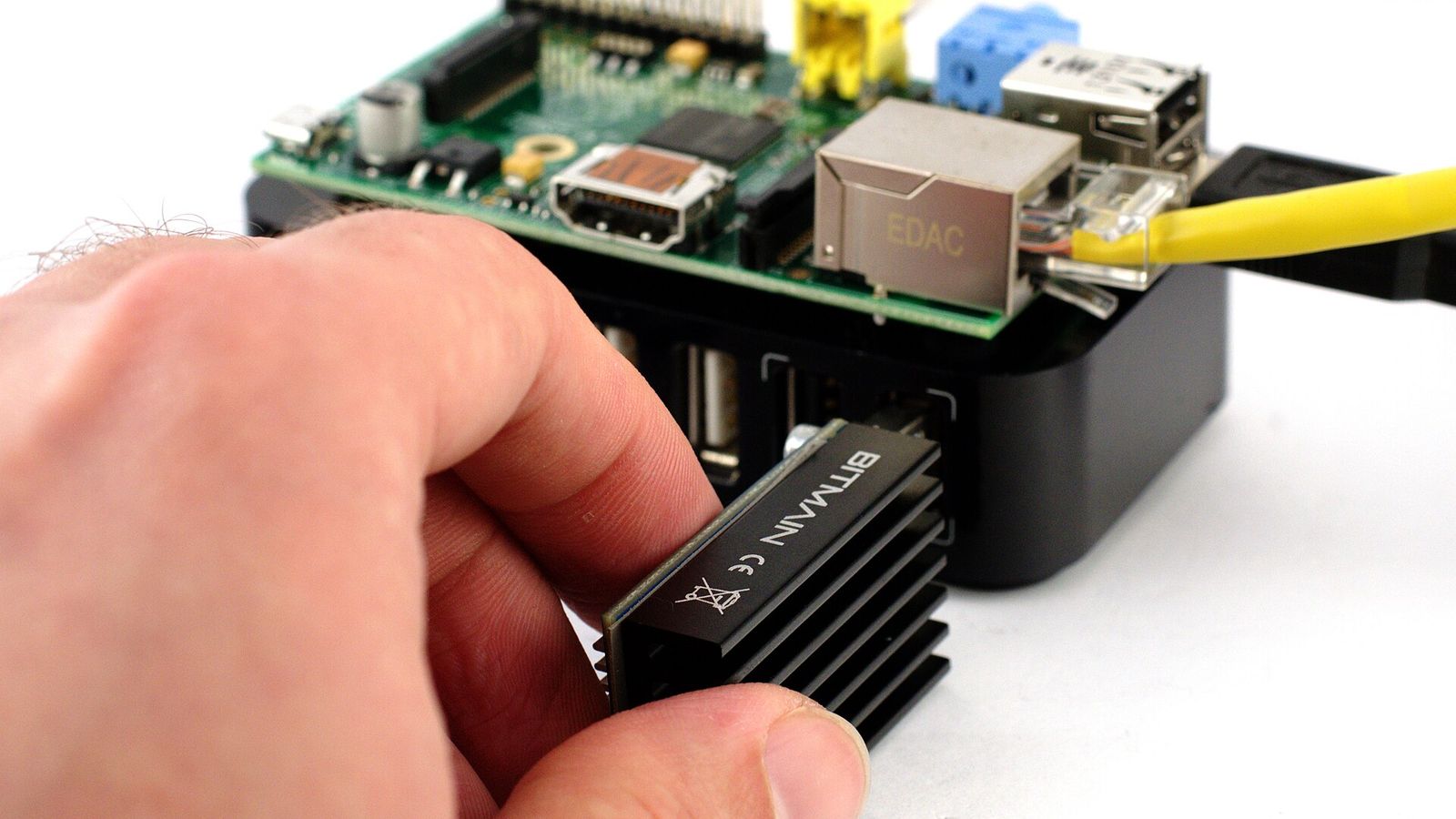
Crypto AI MultiMiner 1.2 is a desktop mining build with a rewritten kernel, eight algorithm modules and a vendor claim of 40% more hashrate than stock miners on the same hardware. The download is 134 MB, it lands as a single installer from bbio.app, and every number below is the number that decides whether it is worth running: what one unit of hashrate actually pays this morning.
That last part gets skipped in most reviews, so here it is first. Mining revenue is network revenue divided by network hashrate, and both are public. On 7 November 2026 at 15:15 UTC, Bitcoin was $75,873.47 with 1.006 ZH/s of hashrate and difficulty at 148.36T; Litecoin was $51.83 on 3.02 PH/s; Monero was $613.85 on 6.99 GH/s; Zcash was $1,264.26 on 32.8 GSol/s.
Advertisement
The Live Rate Card, Per Unit of Hashrate
Divide the daily block reward by the network hashrate and the rate card falls out: BTC pays $0.03414 per TH/s per day, LTC pays $0.01544 per GH/s, XMR pays $0.07590 per kH/s and ZEC pays $0.13894 per kSol/s. Turned into monthly terms, one TH/s of SHA-256 is worth $1.02 and one kH/s of RandomX is worth $2.28.
Bitcoin's next difficulty retarget sits 800 blocks out and reads minus 4.30% right now, which lifts every SHA-256 hashprice by that same percentage when it lands. On the two networks a desktop can reach, XMR and ZEC, the rate card is what the kernel has to beat - and the 40% claim is measured against exactly those per-unit numbers.
Advertisement
A 10 kH/s Desktop, Priced in Dollars and Cents
Ten kilo-hashes a second is a realistic RandomX figure for a modern 12- to 16-core desktop, and at today's rate it is $0.759 a day, $22.77 a month, or 0.0371 XMR. Electricity decides the rest: at 95 W and $0.20 a kWh the machine burns $0.456 a day, which leaves $0.30. Break-even sits at $0.333 a kWh - above that price the wall socket takes the difference.
This is where the kernel claim becomes a dollar figure. Fourteen kH/s instead of ten is $1.063 a day on the same wattage: $0.304 more per day and $9.11 more per month, with no change to the power bill. On a GPU pointed at Equihash the same arithmetic runs through the $0.13894 per kSol/s line, where a card holding 0.7 kSol/s earns $0.097 a day before power.
Where the 40% Comes From, and Where It Does Not
The comparison is against stock miners - the reference builds you compile yourself or pull from a pool's download page, with default thread counts and no per-algorithm tuning. Against those there is real room, and that is the gap the 40% describes. Against a hand-tuned build with huge pages locked, MSR mod applied and a thread table fitted to the core layout, the gap is single digits. Read the claim as a floor for a machine that has never been tuned, and it holds.
What 1.2 adds on top of the raw hashrate is the operational side: eight modules in one install instead of eight downloads, algorithm switching without a reinstall, and a dashboard that reports every module in the same units so the rate card above can be applied without a spreadsheet. The 1.0 suite was the wide version - every algorithm unlocked, remote dashboard, mobile notifications. 1.2 is the faster version of the same idea.
The Download and the First Ten Minutes
The build is 134 MB and carries the kernel, the modules and the dashboard in one file. The setup is four fields: pick the coin, paste the wallet address, choose the pool, start. The three-minute walkthrough runs through it on a Windows desktop and is the fastest path to a first accepted share; the same steps apply to the ZEC and ETC modules, only the algorithm dropdown changes.
One detail worth setting before the first run: cap the power target. A desktop that mines at 95 W is still a desktop you can use at 95 W, and the arithmetic above is built on that number - at 150 W the same 10 kH/s drops to $0.04 a day of margin at $0.20 a kWh.
Verdict
MultiMiner 1.2 is the version that stops being a toy. The 40% is a real number against an untuned baseline, the eight-algorithm coverage means one install covers RandomX, Equihash and the Ethash-family chains, and the rate card above is what any of them pays today. On a 16-core desktop at $0.20 a kWh it is a $22.77 a month machine on Monero, and the kernel is the reason it gets there without a week of thread tuning.
The build, the algorithm list and the download link are on the Crypto AI MultiMiner 1.2 page.
Written by
EarnCrypto.dev Editorial
The EarnCrypto.dev editorial team researches and reviews AI mining platforms, pools and earning tools — publishing only what passes our own checks.
Related reading

Rationale Review: 8 Platforms, 50 Posts a Day and 3.6 Cents a Post at Beta Pricing
Rationale's beta board prices 12, 24 and 50 posts a day at $17.99, $29.99 and $53.99 — that is 5.0, 4.2 and 3.6 cents a post across eight connected platforms.

Crypto MEV Bot 2026 Review — One File, a Pasted Contract and 0.4 ETH: The ETH Arbitrage Loop Priced at $2,234
One browser file, a pasted contract and 0.4 ETH of your own liquidity: what the Crypto MEV Bot 2026 loop costs today, with ETH at $2,234 and gas at 0.22 gwei.
Polymarket Mirror Agent Review: Nine Signal Desks, One Execution Feed and the ETH Wallet That Unlocks the Terminal
Nine named signal desks, a live mirror PnL curve, an execution feed that narrates every move and a pause switch that fires itself. What v1.0 ships with.